President William Ruto’s latest assurance that Junior School intern teachers will only transition to permanent and pensionable (PnP) terms after two full years has reignited debate over the government’s handling of staffing under the Competency-Based Education (CBE) system.
While State House insists the model is a deliberate strategy to plug a severe teacher deficit, the announcement exposes deeper policy fractures, growing institutional contradictions and an emerging credibility crisis within the education sector.
The President’s comments, made at the Kitui State Lodge on Thursday, appear aimed at calming an increasingly agitated group of 20,000 Junior School interns who have long complained of exploitation, low pay and uncertainty over their future.
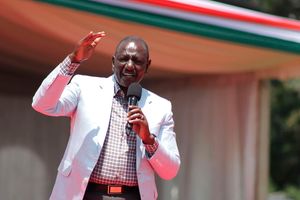
President William Ruto.
Photo credit: Boniface Mwangi | Nation Media Group
But instead of offering clarity, the President’s remarks have brought to the surface new questions about planning, fiscal discipline and the government’s commitment to labour rights.
The most glaring issue arising from the President’s remarks is the widening disconnect within the government’s own ranks.
Only two weeks ago, Treasury Cabinet Secretary John Mbadi told Parliament that funds had already been allocated to convert all interns to permanent and pensionable terms by January 2026, a seemingly firm assurance that put interns at ease.
But Education Cabinet Secretary Julius Ogamba issued a starkly different message before the National Assembly, cautioning that unless Treasury releases additional resources, the ministry might be forced to extend internships beyond 2025.
“Unless we get more resources to confirm them, one of the available options is to extend their contracts,” he told MPs two weeks ago.
Taken together with the President’s now-firm two-year rule, these contradictory statements expose a government struggling to speak with one voice on one of the most sensitive issues within the education sector.
For interns, it signals an administration whose internal planning mechanisms appear out of sync. For TSC, it raises questions about whether its operational independence is being eroded by political pronouncements.
President Ruto was emphatic that the teacher shortage once stood at 110,000, and that his government will have hired 100,000 by early next year. Yet TSC statistics tell a more sobering story.
Junior School alone faces a deficit of 72,000 teachers, nearly half of all staffing needs in Grades 7, 8 and 9. TSC has only 83,129 teachers deployed so far, despite the rapidly expanding demands of CBE.
The government plans to recruit 24,000 more interns by January 2026, with additional recruitment through natural attrition. But even with these measures, the gap remains formidable, with questions over whether the internship plan was simply postponing a live problem.
Junior Secondary School teachers hold a protest match.
Photo credit: Isaac Wale | Nation Media Group
Intern teachers take home less than Sh18,000 after deductions, yet they shoulder the full workload of their permanently employed colleagues—lesson planning, assessments, classroom management and extracurricular duties.
The Kenya Junior School Teachers Association (KEJUSTA) has gone further, labelling the programme illegal, citing an earlier Labour Court ruling that flagged the model for violating labour standards.
Their chairperson, James Odhiambo, has described the scheme as “inhumane” and has threatened a fresh legal challenge. Interns themselves say they were initially promised a shorter transition period to PnP—a key source of their current frustration.
“The President is not the Cabinet Secretary nor the Chief Executive Officer of the Teachers Service Commission; he should not be trying to handle everything. The interns are very frustrated by his declaration. We want to end this internship programme once and for all. We are going back to court,” he added.
Mr Odhiambo, a Junior School teacher, said the government extended their contracts for another year with a promise of eventual absorption into PnP.
“Serving interns often have an advantage, as they are guaranteed 50 percent of the marks during the interview process. But it is inhumane,” he said.
CBE demands highly skilled, specialised teaching, especially in Science, Technology, Engineering and Mathematics (STEM) subjects, yet the programme is heavily dependent on low-paid, temporary staff with no job security.
The President’s defence—that the internship programme allows the government to gradually absorb unemployed teachers—is pragmatic. The Head of State said Kenya has more than 300,000 trained teachers outside formal employment.
“That is why we introduced the internship programme. However, we did so with the assurance that after serving for two years, interns are confirmed to permanent and pensionable terms without negotiation. I want to assure every intern that after two years, they will be automatically absorbed—that is the plan,” he said.
But if absorption is capped strictly after two years, the backlog could persist indefinitely, especially with continued population growth and limited funding.
President Ruto said the programme helps the government meet its staffing targets while giving unemployed teachers a pathway into the TSC payroll after two years.
“I want to assure every intern in the republic that we will absorb you into permanent and pensionable terms once your contracts lapse. We agreed that you would serve for two years as interns, after which you would be confirmed,” he added.
The President also highlighted the role of MPs in classroom development, arguing that NG-CDF allocations, at least Sh180 million annually per constituency, are sufficient to meet infrastructure needs. Yet infrastructure remains severely stretched, especially in rural areas.
While NG-CDF has built 8,000 classrooms in three years, the President said the national government has built an additional 17,000.
Without adequate classrooms, even a fully staffed system would struggle.
For Junior School interns who will have completed nearly a year of service by December, the sense of betrayal is palpable. They argue that they were brought in under shifting promises, told one thing by TSC, another by ministries, and now something different by the President.
With nearly half the required teachers missing, infrastructure gaps unaddressed and policy uncertainty pervading all levels, the CBE system faces a defining moment.
The government appears committed to its staffing targets, but the tools it is using, particularly mass internship, are increasingly seen as unsustainable.
“Unless the State resolves its internal contradictions, fully funds its commitments and treats teachers as partners rather than stop-gap labour, Junior School risks becoming the Achilles’ heel of the CBE transition,” said Mr Odhiambo.
To address the crisis, the government has allocated Sh2 billion to recruit an additional 24,000 interns by January 2026, particularly in STEM subjects, where shortages are most acute.
“You are aware we don’t have enough teachers, especially in Junior School. But we are recruiting an additional 24,000 teachers who will be posted to schools by January to bridge the gaps,” said Teachers Service Commission (TSC) chairperson Dr Jamleck Muturi two days ago in Mombasa during the head teachers’ annual delegates conference.
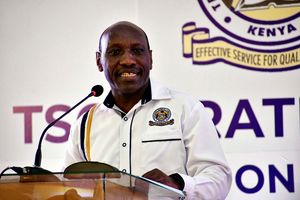
Teachers Service Commission (TSC) Commission Chairman Jamleck Muturi.
Photo credit: File | Nation Media Group
He further added that TSC will soon advertise for positions of teachers who have left the service due to natural attrition.
“We are going to advertise replacement of the teachers who have left the service under natural attrition. This will assist in bridging the gap; we want to address the issue of teacher shortages,” said Dr Muturi.
The shortage has compelled the government to rely on internship positions, but low pay and lack of job security have made many teachers unwilling to accept the offers.
President Ruto maintains that his administration has taken bold steps to stabilise the Competency-Based Education (CBE) system, including adopting recommendations from the Presidential Working Party chaired by Prof Raphael Munavu.
For now, interns remain in limbo. Schools remain understaffed and the promises of CBE, learner-centred, skills-driven education, hang in the balance.