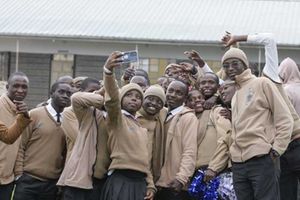
Thousands of secondary school learners across the country have not received government funding after their schools submitted erroneous data to the Ministry of Education.
The ministry is carrying out a data verification exercise and is only remitting money to schools that have been cleared.
Data from internal reports seen by the Nation shows that 719 schools were flagged for questionably providing incorrect bank details, raising fears of misdirected or delayed funds.
Some 900 schools submitted incomplete data, leaving thousands of their students unaccounted for.
Another 250 schools turned in the wrong templates, formats, or attachments, while 80 institutions uploaded corrupt files, blank forms, or failed to provide learners’ Unique Personal Identification (UPI) numbers.
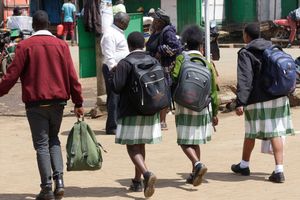
The funding delays come four weeks into the final term of the school calendar. Both primary, junior, and secondary schools are affected, with head teachers warning that the lack of funds is already crippling day-to-day operations.
“We cannot pay suppliers on time, and co-curricular activities have stalled. The situation is becoming untenable,” said one school head.
Counties hardest hit include Baringo, Bungoma, Busia, Kakamega, Kericho, Kisii, Kitui, and Nairobi, where multiple institutions were cited for errors ranging from locked files to missing UPI numbers.
The release of funds to schools for this term and beyond has been tied to the verification of schools’ profile, management, enrolment numbers and bank account details data, an exercise that has been ongoing since the start of the term.
While appearing before the National Assembly Education Committee, Basic Education Principal Secretary Julius Bitok revealed that, so far, more than 50,000 ghost learners in secondary schools across the country have been uncovered, exposing massive irregularities in enrolment records and raising questions over the integrity of government funding to institutions.
He said that the figure was recorded barely halfway through the ongoing nationwide verification exercise targeting all secondary schools.
“So far, we have been able to disburse funds to about 17,500 schools ... We have found that more than 50,000 secondary students so far cannot be accounted for, especially in secondary schools. That is the reality. For secondary schools, the numbers are not adding up. There are quite a number of students being reported separately. For primary and junior, the trend is slightly different, with enrolments appearing higher than expected,” he said.
This translates to a loss of Sh1.1 billion every year, adding up to about Sh4.4 billion siphoned from the government over the four years of secondary education.
Prof Bitok noted that although data from primary and junior secondary schools is still being compiled, early findings indicate that the issue is most pronounced in secondary schools.
He revealed that more than 60 percent of the 32,000 schools nationwide have been cleared and their money wired, while verification of the remaining institutions continues.
“Out of 32,000 schools nationwide, today we expect that 20,000 will have been cleared. By last week, 15,000 schools had been cleared. So far, we have disbursed more than 60 percent of the Sh23 billion allocation over Sh13 billion and the process is ongoing. Our teams are verifying, auditing, and releasing funds continuously. Progress stalled over the weekend after a fibre cut disrupted internet connectivity across government systems,” said Prof Bitok.
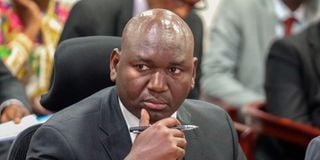
Tinderet MP Julius Melly, who is also the chairperson National Assembly Education Committee, on May 13, 2025 at Bunge Towers, Nairobi.
Photo credit: File | Nation
The Education Committee Chairperson, Mr Julius Melly, has urged lawmakers and education officials to ensure that stern action is taken against individuals implicated in the creation of fake schools to steal money from the government.
He said the scandal not only undermines the credibility of the education system but also results in the loss of billions of shillings meant to support genuine learners across the country. Mr Melly insisted that those responsible must be held accountable to deter similar fraud in future.
“We cannot allow public funds to be siphoned through fictitious schools and non-existent students. Anyone found culpable must face the full force of the law. Our children deserve better, and Kenyans must trust that every shilling allocated to education benefits real learners,” he said.
Speaking on Saturday at State House, Nairobi while hosting 10,000 teachers from across the country , President William Ruto acknowledged that delays in the 50-30-20 capitation allocation stem from the misalignment between Kenya’s financial year (July–June) and the education calendar (January–December).
The President directed the Cabinet Secretaries for Education and the National Treasury to develop a comprehensive solution within three months and present their findings by December, assuring teachers that the government is committed to resolving the issue before the start of the 2026 school year.