Schools have received Sh18.5 billion in third-term capitation, but the latest disbursement has still left the Basic Learning institutions with only 72 per cent of the annual allocation, with principals still waiting for about Sh6,102 per learner.
The release, announced as schools reopened for the final and shortest term of the 2026 academic year, is expected to help institutions settle some of their outstanding bills, but the Kenya Secondary School Heads Association (KESSHA) said the funds released so far remain below the annual allocation of Sh22,244 per learner.
KESSHA chairman Willie Kuria welcomed the timely release but said schools were still waiting for the balance.
“We appreciate the government for releasing the capitation in good time; it will help schools to try and settle some of the debts.
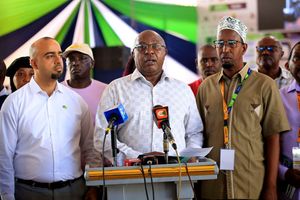
The national chairman of Kenya Secondary Schools Heads Association Willie Kuria speaks during the Muranga County Conference in Mombasa on April 15, 2026.
Photo credit: Kevin Odit | Nation Media Group
However, the capitation so far released is 72 per cent for the whole year. We hope that the balance will come soon,” said Mr Kuria, who is also the Murang’a High School chief principal.
According to the association’s analysis, schools were expected to receive Sh22,244 per learner in capitation for the year.
By the beginning of Term Three, however, Sh16,141.89 had been released, representing 72 per cent of the expected annual amount.
This leaves a balance of about Sh6,102 per learner against the annual expected allocation.
The figures show that schools received Sh7,952.04 per learner in Term One, followed by Sh4,852.09 in Term Two and Sh3,337.76 at the beginning of Term Three.
The latest release was announced by President William Ruto on August 23, 2026, as schools prepared to reopen for the third term.
President Ruto said the government had released the funds before the beginning of the term to ensure that learning activities continued without disruption.
“Initially, funds used to be disbursed two months after schools reopen; however, since January this year, I directed the release of the funds before the term begins. So those claiming there are no capitation funds for our children and that there are debts are behind schedule. We have already disbursed funds before schools reopen because we want to ensure all children have a good opportunity to learn,” he said.
The President further assured parents and learners that learning would continue without disruption, dismissing claims that schools were struggling because of a lack of government funding.
Education Cabinet Secretary Julius Ogamba.
Photo credit: Lucy Wanjiru | Nation Media Group
Education Cabinet Secretary Julius Ogamba said the Sh18.5 billion had been released to support operations and school activities in public pre-primary, primary, junior and senior schools.
The money has been distributed across three programmes, with Sh1.4 billion allocated to Free Primary Education, Sh6.14 billion to Free Day Junior School Education and Sh10.96 billion to Free Day Secondary Education.
The release comes as schools begin the final term of the 2026 academic year, with the government saying the funds are intended to facilitate the smooth running of institutions and learning activities.
However, the KESSHA figures show that the latest disbursement has not covered the full annual allocation expected by schools.
Mr Kuria said the funds would help schools settle some of their outstanding debts while expressing hope that the government would release the remaining amount.
The Ministry of Education directed school heads and principals to use the funds prudently for the benefit of learners.
“School heads and principals are directed to ensure prudent use of these public resources entrusted to their care for the benefit of learners and to desist from imposing any unauthorised levies. The ministry will deal firmly with any verified cases of misappropriation of resources and imposition of unauthorised levies,” said Mr Ogamba.
The CS said the government remained committed to its constitutional obligation to provide free and compulsory basic education as provided under Article 53(1)(b) of the Constitution.
President Ruto said education remained a priority for his administration, describing it as an equaliser between children from poor and wealthy families.
“Education is important because it is an equaliser. A child of the poor and the rich becomes the same because of education. That is why we must ensure we educate our children up to the highest level. I have prioritised the education sector to ensure there is equity,” said President Ruto.
He said the education sector faced several challenges when he assumed office in 2022, including uncertainty over the transition under the Competency-Based Curriculum and where Junior School learners would be domiciled.
However, he said his administration had since stabilised the sector and addressed some of the challenges.
“We changed CBC to competency-based education. Our children did not know where they would be placed in Junior School and Senior School, but we have now streamlined everything. We had challenges with classrooms, but my administration has built 25,000 classrooms across the country,” he said.
President Ruto also said his administration had employed 100,000 teachers since 2022 to address staffing shortages, with another 20,000 teachers expected to be hired before the end of the year.
He said prioritising education was one of the commitments he made during the 2022 General Election and that his administration had taken steps to ensure more children could access education.
The President's remarks come amid criticism from opposition leaders over challenges facing the education sector, including concerns about funding and the implementation of reforms.
As Term Three begins, schools now have Sh18.5 billion in the latest capitation release, but according to KESSHA, institutions are still awaiting about Sh6,102 per learner to reach the expected annual allocation of Sh22,244.