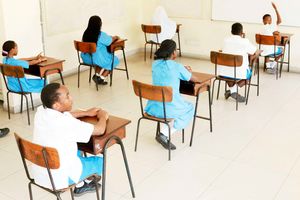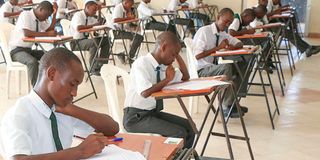
Nakuru High School Form Four candidates take Kenya Certificate of Secondary Education English Paper One examination on November 2, 2026.

The 2026 Kenya Certificate of Secondary Education (KCSE) written examinations began yesterday amid heightened security, logistical challenges and renewed efforts to curb cheating.
Authorities have tightened rules on items allowed in examination rooms, with candidates barred from wearing all types of watches, including conventional timepieces. The ban on wristwatches is among the additional measures introduced to curb examination malpractice.
The restriction applies to everyone in the examination room, including invigilators and other examination personnel.
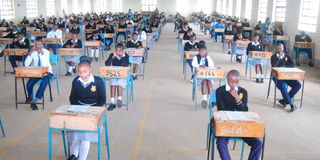
Form Four candidates write the English examination paper at Elburgon DEB Senior School in Molo, Nakuru County, during the start of the Kenya Certificate of Secondary Education exams on November 2, 2026.
Candidates are to rely on wall clocks provided in examination rooms to keep track of time.
The start of the examinations was also marked by security concerns in some areas, including stray bullets and threats from bandits, forcing authorities to take additional measures to protect candidates and ensure the smooth administration of the tests.
In Moyale, at least 220 KCSE candidates have been forced to sit their examinations away from their schools after stray bullets from clashes across the Ethiopian border threatened their safety.
Moyale Deputy County Commissioner Benedict Munywoki said Sessi Mixed Secondary School, located less than 100 metres from the border, had been hit by stray bullets, prompting the relocation of its candidates to Sessi Primary School. Candidates at St Mary’s Mixed Secondary School were moved to Heillu Primary School, about 1.5 kilometres from the border.
Mr Munywoki said the sub-county had 12 examination centres, with arrangements made to ensure that examination materials reached all of them.
Kenya Defence Forces and Border Patrol Unit officers have stepped up security, Mr Munywoki said, assuring parents that their children were safe. He added that there was relative calm in the area after fighting across the border subsided.
In Kisumu, Kenya National Examinations Council (Knec) Chairperson Julius Nyabundi assured candidates and parents that the integrity of the 2026 examinations would be safeguarded.
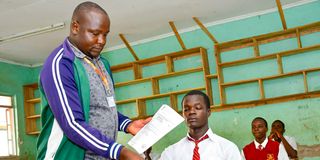
An invigilator distributes examination papers to candidates during the Kenya Certificate of Secondary Education examinations at Kisumu Boys High School in Kisumu on November 2, 2026.
“We are happy that the integrity of the examinations has remained beyond question, with no reports of irregularities so far. We hope the same trend will continue throughout the examination period,” Prof Nyabundi said.
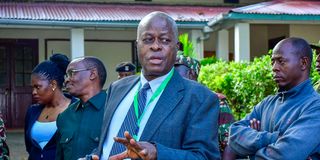
KNEC Chairperson Prof Julius Nyabundi speaking during the distribution of KCSE examination materials in Kisumu on November 2, 2026.
He urged examination centre managers to take personal responsibility for protecting the credibility of the examinations, saying their vigilance would be critical in preventing malpractice.
Some 25,849 candidates from 246 senior schools are sitting the examinations in the county.
County Director of Education Magara Onduso said the exercise had proceeded without major incidents by Monday morning. He added that each examination centre had been assigned two security officers and expressed optimism that the arrangements would remain in place throughout the examination period.
In Uasin Gishu County, Ainabkoi Sub-County Education Director Kenneth Wesonga said the ban on wristwatches was meant to curb technology-enabled cheating.
“We are leaving nothing to chance this year. Technology has evolved, and some individuals are attempting to use smartwatches and other high-tech gadgets to leak examination materials. To safeguard the integrity of these exams, wristwatches of any kind are strictly barred from the examination rooms,” he said.
Mr Wesonga also directed examination officials to display their official name tags prominently to facilitate identification and accountability.

A Kenya National Examinations Council (Knec) official opens a container holding Kenya Certificate of Secondary Education (KCSE) examination papers in Kisumu Central Sub-County during the distribution of examination materials on November 2, 2026.
Ainabkoi Deputy County Commissioner Henry Rop warned school heads against allowing candidates into examination rooms in civilian clothes or unofficial shoes, saying adherence to school uniforms would help prevent impersonation and other forms of malpractice.
“We will not allow students in civilian attire or unofficial shoes into the examination rooms. Such anomalies create unnecessary loopholes that compromise the credibility of the national exercise,” he said.
Officials have also been required to carry their original national identity cards, while unauthorised persons and strangers have been barred from examination rooms.
Uasin Gishu has registered 22,593 candidates in 246 examination centres, according to county education officials. Public schools account for 20,690 candidates, while private schools have registered 1,803 candidates.
County Commissioner Eddyson Nyale assured candidates, education officials and other stakeholders of adequate security, saying measures had been put in place to ensure a smooth and credible exercise.
Secondary school heads in the county praised the security arrangements, with Moi Girls High School Chief Principal Juliana Kurui saying they had created a conducive environment for candidates to sit their papers without unnecessary anxiety.
Paul Boit High School Principal Shem Busolo cautioned candidates against taking shortcuts, urging them to rely on their preparation and hard work.
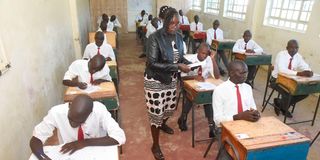
An invigilator distributes Kenya Certificate of Secondary Education examinations English Paper to candidates at Paul Boit Boys High School-Kapkong in Turbo-Sub County of Uasin Gishu County on November 2, 2026.
In Turkana, school heads urged the Ministry of Interior to strengthen security around examination centres in areas vulnerable to bandit attacks. County Director of Education Henry Lubanga said 68 centres were hosting more than 7,000 candidates.
At Katilia Girls Secondary School, Principal Ann Amana appealed for additional security deployment to protect candidates in banditry-prone areas.
Weather conditions are also being monitored, with officials warning that flooding of seasonal rivers and rising water levels in Lake Turkana could affect access to some examination centres.
Turkana Central Deputy County Commissioner Joseph Kipkorir said security officers were escorting examination materials from containers to centres.
At St Kevin’s Senior School, which has 138 candidates, one classroom has been designated for an inmate from Lodwar GK Prison.
In Baringo County, 16,549 candidates are sitting the examinations in more than 196 centres. County Director of Education Dr Kipruto Kosgei said the exercise had started without challenges.
He said contingency plans had been put in place to deal with heavy rains that could disrupt access to examination centres. These include transporting examination materials to accessible locations or moving candidates where necessary.
Some 28,353 candidates are sitting the examinations in 253 centres in Trans Nzoia County, with 27,398 enrolled in public schools and 955 in private institutions.

Starehe examination centre manager Anne Wahito (left) receives KCSE examination materials from Kenya National Examinations Council Chief Executive Officer Dr David Njengere at Starehe Deputy County Commissioner's office in Nairobi on November 2, 2026.
At the start of the examinations, a Knec official barred journalists from covering the distribution of examination materials at the county commissioner’s office in Kitale without giving a reason.
County Director of Education Pamela Akello said the examinations had started well, while a spot check at several schools in Kitale found calm and orderly arrangements.
Candidates sit papers in hospitals
In Nyeri, four candidates are sitting their examinations in hospitals after being admitted for treatment.
County Director of Education John Thirigi said two candidates were at Nyeri County Referral Hospital while the other two were at Mwai Kibaki Hospital in Othaya. He said arrangements had been made to ensure they receive their examination papers on time.
Three candidates in Bomet are also sitting their examinations in hospital, according to County Director of Education Leonard Ngugi. Two are pregnant: one candidate from Migori County admitted to AGC Tenwek Hospital, and another at Dr Laboso Mother and Child Hospital in Longisa. The third candidate is receiving treatment at Kaplong Hospital.
Mr Ngugi said Bomet had registered 27,827 candidates across public and private schools in five sub-counties.
Questions over missing candidates and school welfare
In Murang’a, 32,487 candidates began their examinations without any major incidents.
However, the County Security and Intelligence Committee declined to provide data on missing candidates amid reports that nearly 600 learners who enrolled in Form One four years ago had dropped out.
Some candidates also told the Nation that they were receiving rationed food because of reduced or delayed capitation.
County Commissioner Hassan Bule said the examinations would be conducted in a secure environment and that emergencies would be addressed in real time.
County Director of Education Philip Wambua said the region had 336 examination centres and that preventing cheating was a priority.
“We are committed to the integrity of the whole exercise. Our leading goals are security and integrity around the exams,” he said.
In Kisii County, security was also heightened. Deputy County Commissioner Gladys Nyongesa warned the public against approaching examination centres unnecessarily.
“We are on the lookout, we do not want people near examination centres. We have to guard the examination with all it takes. I assure parents that their learners will have a conducive environment to do their exams,” she said.
Coast reports smooth start
A total of 63,415 candidates began the KCSE examinations across the Coast region, with Kilifi accounting for the largest share at 25,617, representing about 40 per cent of the regional candidature. Mombasa registered 12,187 candidates, while Kwale had 12,171. Taita-Taveta had 7,994, Tana River 3,082 and Lamu 2,364.
A spot check in Lamu East, including the insecurity-challenged Boni Forest and Kiunga areas along the Kenya-Somalia border, found that examinations had started on time without any reported incidents.
Lamu East Deputy County Commissioner Hussein Simiyu said security had been adequately deployed across the area.
Follow our WhatsApp channel for breaking news updates and more stories like this.
Reporting by David Muchui, Mercy Mwende, Mwangi Muiruri, George Munene, Titus Ominde, Sammy Lutta, Florah Koech, Evans Jaola, Domnic Ombok, Wycliffe Nyaberi, Winnie Atieno, Kalume Kazungu and Vitalis Kimutai.