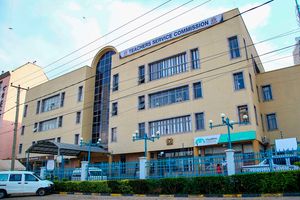
The Teachers Service Commission (TSC) will recruit and register teachers with only one teaching subject, instead of two, in a major policy shift aimed at plugging severe staffing gaps in specialised learning areas of the competency-based education (CBE).
The move marks a significant departure from the long-standing requirement that secondary school teachers be trained in at least two teaching subjects before they can be registered and employed by the commission.
TSC says the new approach responds to the realities of senior school under CBE, where learners are taking up highly specialised pathways and subjects that do not fit neatly within the traditional staffing model.
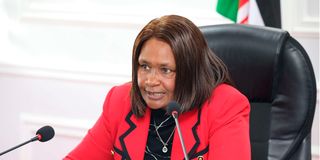
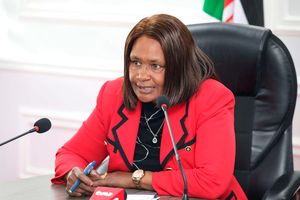
TSC Acting Chief Executive Officer Evaleen Mitei said the commission had reviewed Legal Notice No. 50, the regulation that sets out the requirements for teacher registration, to align it with the changing demands of the education sector and the implementation of CBE.
“The Legal Notice No. 50 is in the Code of Regulations. It is the legal notice that defines the requirements for registration of a teacher. To support CBE, the commission has reviewed that legal notice to be in compliance with CBE requirements,” Ms Mitei said during the ongoing Kenya Senior School Heads Association (KESSHA) annual conference in Mombasa.
Teachers Service Commission Acting CEO Evaleen Mitei.
Photo credit: File | Nation Media Group
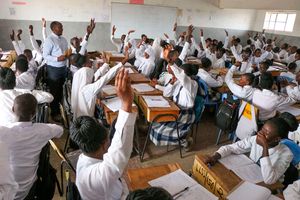
The reforms come barely six months after more than 1.1 million learners transitioned to senior school, exposing the severe shortage of teachers required to handle the new pathways under CBE. While the new curriculum has expanded subject choices and introduced more technical, creative and applied learning areas, schools across the country are struggling to find qualified personnel to teach them.
Subjects such as aviation, building construction, electricity, marine and fisheries, media technology, theatre and film, sports science, fine arts and Mandarin are among those that have left schools scrambling for specialised teachers, with many principals saying the country simply does not have enough trained personnel to support the transition.
The staffing crisis has forced schools to dig into already strained budgets to hire instructors using boards of management (BoM) funds, even as principals complain of delayed capitation and rising operational costs.
KESSHA National Chairman Willie Kuria said the shortage of specialised teachers is one of the most urgent challenges facing senior schools as they implement the new curriculum.
“We have a serious staffing deficit. Under CBE, we need qualified personnel for specialised subjects like aviation, marine technology and building and construction. Currently, we don’t have these staff. I doubt there is a school in the country that is fully equipped with these teachers,” said Mr Kuria, who is also the chief principal of Murang’a High School.
He said schools continue to struggle to recruit teachers for newly introduced learning areas under the CBE framework, with some principals being forced to look for professionals outside the conventional teaching pool.
He added that the shortage was no longer confined to a few schools but had become a nationwide problem affecting all categories of senior schools.
“Principals are forced to source these professionals independently because the Teachers Service Commission has yet to provide them. These specialists are scarce in the labour market; you have to literally ‘tarmac’ to find someone capable of teaching building construction,” he said.
National chairman of Kenya Secondary Schools Heads Association Willie Kuria (centre) speaks to the media in Mombasa on June 22, 2026.
Photo credit: Kevin Odit | Nation Media Group
Mr Kuria urged the Ministry of Education, TSC and universities to fast-track the training and deployment of technical teachers to spare school administrators the burden of hiring their own instructors at a time when schools are already struggling financially.
According to TSC, there are currently 132,335 teachers serving in senior schools, but the specialised nature of the new curriculum has outpaced traditional staffing structures.
The data shows that the Science, Technology, Engineering and Mathematics (STEM) pathway, which has absorbed the largest share of learners transitioning to senior school, requires the highest number of teachers.
TSC estimates that STEM alone, which has taken up about 60 per cent of the 1.1 million learners (roughly 677,144 students), require 35,111 teachers across 15,046 classes.
The Social Sciences pathway requires an estimated 14,630 teachers, while Arts and Sports need another 8,778 teachers.
Among the areas facing acute shortages are agriculture, creative arts, home science, Mandarin, marine studies and fisheries.
The commission says the decision to allow single-subject teachers into the profession is part of a broader package of reforms intended to modernise teacher management and align the teaching service with the demands of the new curriculum.
“One of the key priorities of Kenya’s education reforms is the provision of equitable access to quality education for all learners. To support this, the commission undertakes the recruitment and deployment of qualified teachers across the country as guided by its Teacher Selection and Recruitment Policy, which supports schools to have the human resources necessary to deliver quality education,” Ms Mitei said.
She said the reforms are expected to reduce teacher shortages, improve learner-teacher ratios and support inclusion, particularly in marginalised and hard-to-staff areas.
Beyond the shift to single-subject teachers, TSC has also revised entry requirements into the teaching profession at the primary school level. The commission has moved away from the old P1 certificate route and now requires diploma-level training for entry into primary teaching.
It has also introduced stage-based pathways for Special Needs Education learners in a further attempt to align teacher training and registration with the needs of the new curriculum.
“As a response to the needs of the new curriculum, that legal notice is also going to register teachers with one teaching subject so that we can address the challenges that we have in the new areas of the curriculum,” Ms Mitei said.