When she graduated from Maseno University eight years ago with a degree in Early Childhood Development Education (ECDE), Getray Munyelele was brimming with hope. She believed her hard work and sacrifice would soon pay off with a teaching job in either the county or national government.
But nearly a decade later, the mother of two is still jobless. Armed with her degree and a Teachers Service Commission (TSC) number, she has knocked on the doors of countless schools, only to be turned away.
“When I joined Maseno University, we were advised to take a Bachelor of Education in ECDE alongside two teaching subjects. We were told this combination would guarantee employment by TSC or the county. Being a firstborn and an orphan, I saw this as a golden chance,” she recalls.
Ms Munyelele chose Kiswahili and Christian Religious Education (CRE) as her teaching subjects. She excelled in her Kenya Certificate of Secondary Education (KCSE) exams, scoring a B-.
But in December 2025, her dream collapsed.
“TSC officials told me I could not be employed because I mixed my courses with ECDE. I had the subjects, I passed well, but the system locked me out,” she says, her voice heavy with disillusionment.
“I paid over Sh400,000 in fees, did teaching practice in both secondary and lower classes, yet I remain at home with a useless degree. I didn’t know about the TSC rule. All my life I wanted to teach,” she said.
Now 30, Ms Munyelele says she is willing to take any job, even as a cleaner, to fend for her children.
“I am so disillusioned. I was misled, wasted and abandoned by the system,” she laments.
For Ann Thuo, 25, from Kiambu County, the story is strikingly similar. She graduated from the University of Eldoret in 2024 with a Bachelor of Education (Secondary Option), specialising in Geography and Home Science.
But when she applied for a TSC number, she was rejected. The reason? She had not taken Home Science in KCSE.
“I was told to go back to university for an enhancement course. I had spent over Sh400,000 on my degree, only to be told I was misled,” she says.
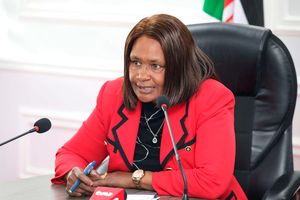
Teachers Service Commission CEO Evaleen Mitei speaks to the media at the Ministry of Health offices in Nairobi on March 10, 2026.
Photo credit: Bonface Bogita | Nation Media Group
Ann insists she is qualified. “I studied Home Science at university, I passed, and I can teach it. Why should KCSE dictate my future? TSC should look at the highest qualification, not high school grades,” she said.
She is now paying Sh90,000 at a private university for an enhancement course.
“It is draining. I had to change direction completely. My parents are struggling to raise the money. What happens to those who cannot afford it?” she asks.
“Heads of departments knew TSC would not employ me without KCSE Home Science, yet they let me proceed. Universities mislead students for money, leaving us stranded. The Ministry of Education must intervene,” she said.
Despite her frustration, Ann soldiers on.
“I felt like giving up, but I am still young. I hope the enhancement will work out. But honestly, I was wasted,” said the teacher.
In Laikipia County, Anthony Ndirangu, 33, faces a different hurdle. He graduated from Chuka University in 2015 with a degree in English, Literature and History.
When he enrolled, the minimum KCSE requirement was a C (plain), with teaching subjects at C+. He met the criteria. But midway, TSC upgraded the requirement to a C+ mean grade.
“We consulted and were told the new rules would not affect us. But when I applied for a TSC number, I was rejected. They said I did not meet the minimum requirement,” he says.
“How can I be denied after investing years and money? I have been stuck since 2015. The Ministry must intervene,” he said.
Getray, Ann and Anthony are not alone. They represent hundreds of graduate teachers across Kenya who find themselves jobless due to TSC’s rigid recruitment criteria.
There are no clear numbers on just how many such teachers exist, but a parliamentary committee this week said the number could be in thousands.
The Commission insists that subject combinations must align with KCSE grades, regardless of university qualifications. But critics argue this policy is outdated and unfair.
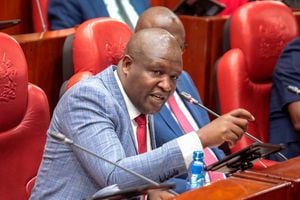
Chairperson of the National Assembly Committee on Education Julius Kibiwot Melly.
Photo credit: Dennis Onsongo | Nation Media Group
Members of Parliament have recently called for a review of the rules, urging TSC to consider the highest academic qualification attained rather than KCSE grades.
For Getray, the cost is personal.
“I am an orphan. I struggled through university, sometimes sleeping in lecture halls because I couldn’t afford hostels. I believed education was my ticket out of poverty. Now I am stuck,” she said.
“My parents sacrificed everything. Now they are paying again for enhancement. It is heartbreaking,” she said.
Anthony, too, feels robbed of his youth.
“I graduated at 22. Now I am 33; I feel wasted,” he said.
These are: Should KCSE grades continue to dictate employment decades later? Why are universities allowed to admit students into courses that TSC will not recognise? Who is accountable for misleading students and wasting their futures?
Kathiani MP Robert Mbui said many parents went out of their way to take their children to universities, even selling their property to raise fees.
“Some of these students had grades as low as C– and D, but along the way the Kenyan university system allowed them to pursue degrees. Remember the era of bridging courses and parallel degree programmes? Many Kenyans enrolled and graduated with education degrees. Unfortunately, TSC has consistently rejected those qualifications. What recourse is there for these Kenyans who spent their fortunes to ensure their children received quality education and prepared for jobs in the teaching profession?” asked Mr Mbui.
He said parents who sacrificed to send their children to university are not guilty of any offence, and neither are the students who studied teaching.
“It is the same government that permitted those universities to offer those courses under those entry requirements. So why punish these graduates?” asked Mr Mbui.
“Remember, without a TSC number you cannot even teach in the private sector, so that degree becomes useless. How can you make thousands of Kenyans be disenfranchised with a document that they are holding?” asked Mr Mbui.
“When you go to secondary school, you do not know the qualifications of a teacher. When you go to university and they admit you and allow you to do a Bachelor’s degree in Education, it means that by the time you qualify, you are able to teach. How do you have a university degree in education and cannot teach in Kenya?” he asked.
“Where was the regulator when somebody goes to an institution of higher learning with an expectation of getting a certain qualification, but upon completion you are told you are not eligible? TSC does not recognise your qualification, so it is as good as nothing. But where is the regulator?” posed Kigumo MP Kamau Munyoro.
However, Acting TSC Chief Executive Officer Everleen Mitei blamed institutions of higher learning for enrolling aspiring students in teaching courses without the requisite qualifications.
“The institutions of higher learning are to blame because our registration requirements are clearly set out in the law. Why admit students with lower grades?” she asked in a meeting with MPs last month.
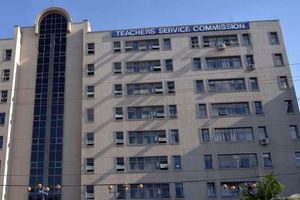
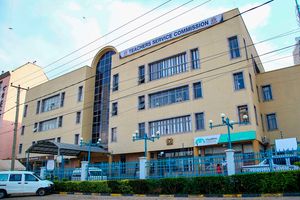
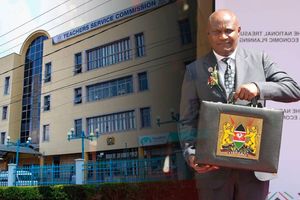
Teachers Service Commission (TSC) headquarters in Upper Hill, Nairobi.
Photo credit: File | Nation Media Group
According to the Teachers Service Commission Code of Regulations for Teachers, a person is eligible to be registered as a teacher if they are of good moral character, hold relevant academic and professional qualifications from a recognised training institution in Kenya, and meet the requirements set by the Commission from time to time.
A person qualifies to be registered as a graduate teacher if they hold a Bachelor’s degree in Education and obtain a minimum of C+ (plus) or its equivalent in the two teaching subjects in KCSE, or hold a Bachelor of Arts or Science degree with a Postgraduate Diploma in Education and meet the specified minimum qualifications.
The Commission said it may review the minimum qualifications for teacher registration from time to time in line with emerging trends in education curricula and other government policies in the teaching service.