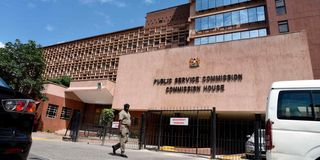
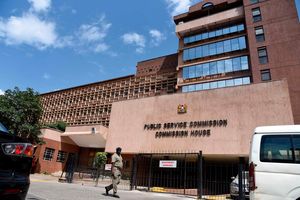
University lecturers have moved to the Court of Appeal seeking to suspend a Public Service Commission (PSC) circular lowering the retirement age for academic staff.
The Universities Academic Staff Union (Uasu) argues that the policy will result in the compulsory retirement and loss of employment of staff who have attained 70 years, causing irreparable prejudice to those affected.
The PSC circular, issued on March 2, 2026 and amended on April 28, 2026, reduced the retirement age for professors from 74 to 70 years, while senior lecturers and other academic staff will retire at 65 and below, depending on one’s cadre.
The union had challenged the circular, but the Employment and Labour Relations Court dismissed the case on July 29.
“If the orders sought are not granted, the appellant’s members would suffer irreparable loss and damages, and the instant application will be deemed nugatory because execution will have occurred,” Uasu lawyer Titus Koceyo says in the application.
The dispute comes as public universities are struggling to maintain academic staffing levels, with lecturers warning that implementing the policy could deepen the shortage and undermine the quality of teaching.
Already, the University of Nairobi (UoN) says it is staring at another 40 per cent reduction of its academic workforce, translating to about 480 lecturers, leaving the institution with around 800 dons.
UASU-UoN Secretary-General, George Osanjo, said the university’s academic workforce has contracted sharply in the last six years, from 2,000 to the current 1,200.
Dr Stephen Onyango, the Uasu Maseno University Chapter Secretary, said the institution could lose half of its academic staff if the PSC circular is effected.
According to the Uasu court filings, the changes on mandatory retirement age for university academic staff interferes with collective bargaining agreements and were introduced without adequate consultations.
The union wants the Appellate Court to halt the implementation of the policy, pending determination of its appeal against the Employment and Labour Relations Court decision that upheld the PSC’s revised retirement age framework.
Universities Academic Staff Union National Chairperson Grace Nyongesa, Secretary-General Constantine Wasonga, and Organising Secretary Onesmus Mutio in Nairobi on September 10, 2025.
Photo credit: Bonface Bogita | Nation
Public universities are operating under severe workload pressures, with some dons handling far more courses and students than would ordinarily be recommended by the Commission for University Education (CUE).
At Maseno, one lecturer is compelled to handle five courses in a semester. The CUE-prescribed normal workload is three courses per lecturer per semester.
A similar script plays out at Tom Mboya University, where some lecturers handle as many as eight courses.
The heavy workloads compromise the quality of teaching and place lecturers under immense pressure. A don may be required to teach classes with hundreds of students, administer and mark continuous assessments, and set and mark examinations. For science courses, a lecturer also supervises experiments and assesses laboratory reports.
The loss of experienced academic staff would further stretch universities, with some departments left without enough lecturers to run programmes.
Uasu also questions the timing of the PSC directive, saying universities need experienced lecturers as they struggle to meet staffing requirements and maintain the quality of programmes.
Lecturers argue that there is a difference in career path between university academic staff and other civil servants.
University academics enter the profession after completing several levels of education and join the lecturer cadre relatively late, the union says.
One would ordinarily complete an undergraduate degree, master’s degree and doctorate before entering the academic profession, meaning many join universities in their late 30s.