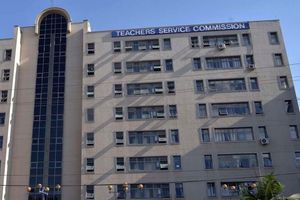
Teachers have rejected Phase II of their 2025–2029 collective bargaining agreement (CBA), accusing their unions of accepting a deal that has delivered little relief despite months of negotiations.
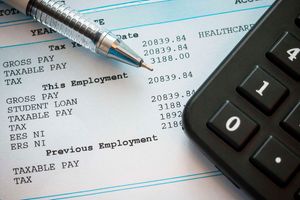
The reactions follow details of a circular by the Teachers Service Commission (TSC) for the implementation of the second phase of the CBA, with many teachers discovering that their long-awaited salary increments ranged from just Sh693 to slightly above Sh2,000 depending on grade and salary point.
The revised salary structure, contained in a TSC circular dated July 16, directed regional, county and sub-county directors to implement the new scales for all teachers in service as at July 1, excluding interns.
The adjustments will run until June 30, 2027, as part of the four-year agreement signed between TSC and the Kenya National Union of Teachers (Knut), Kenya Union of Post Primary Education Teachers (Kuppet) and Kenya Union of Special Needs Education Teachers (Kusnet).
A teacher in Nairobi said the figures announced by unions and TSC created expectations that were not matched by the actual increase in take-home pay.
“According to the CBA, a teacher in Job Group C3 was supposed to receive a salary increase of Sh2,055. What was not made clear is that this is the amount before statutory deductions. The agreement fell far short of teachers’ expectations. An increase of this magnitude cannot even support a Sacco loan,” the teacher said.
According to the CBA, the total value of the agreement was Sh33.75 billion over four years, covering salary adjustments, structural changes and welfare components. Under the deal, basic salaries were set to rise by between 16 per cent and 32 per cent overall, with adjustments spread across the different phases of implementation. The second phase was backed by a Sh8.4 billion allocation from the government.
But for many teachers, the focus has now shifted from the headline figures to the actual amounts on their payslips, with teachers questioning whether their unions secured the best possible deal.
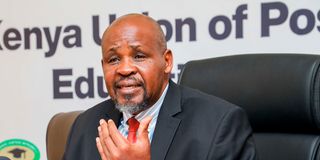
Kuppet Vihiga Executive Secretary Sabala Inyeni said the increments did not reflect the rising cost of living.
Vihiga branch Kuppet executive secretary Mr Sabala Inyeni.
Photo credit: Derick Luvega | Nation Media Group.
“Then again, there are components of our earnings which were never given consideration. For instance, commuter allowance has remained the same for over 15 years since it was introduced, yet the cost of fuel has been rising monthly,” Mr Inyeni said.
Teachers argue that after waiting years for salary progression, the increase does not match the rising cost of living, especially after deductions including PAYE, Housing Levy, Social Health Insurance Fund (SHIF) contributions and pension deductions.
The national secretary of the Kenya Teachers in Hardship and Arid Areas Welfare Association, Ndung’u Wangenye, noted that many teachers serving in arid and semi-arid lands (Asals) feel betrayed.
“One teacher told me she got an increment of 430 shillings. The unions gave teachers a raw deal. Teachers from ASALs did not get any increment in hardship allowance, which is the only token that keeps them going in these hardship zones. They are demoralised,” said Mr Wangenye.
National Secretary of the Kenya Teachers in Hardship and Arid Areas Welfare Association Ndung’u Wangenye.
Kuppet Deputy Secretary-General Moses Nthurima said the increase was not enough to offset deductions and statutory contributions that have reduced workers’ disposable income.
“Up to now, we have not received the schedules to ascertain whether that is what we agreed on. But in a nutshell, teachers are very dissatisfied,” Mr Nthurima said.
“The conundrum is that the government has taken more money from teachers than it is injecting back. We have money for SHA, money for housing, money for NSSF. What teachers have lost through taxes and statutory deductions cannot be compared with what has been given through the CBA,” he said.
Mr Nthurima said teachers were still waiting for the government to fulfil promises on improving their earnings and reviewing the CBA structure to ensure future adjustments provide meaningful relief.
Key allowances remained the same under the new deal. House allowance, commuter allowance, hardship allowance, annual leave allowance, baggage allowance and disability guide allowance were not increased.
“The unions must engage the employer before July next year so that the CBA can be reviewed to address issues such as allowances. Teachers cannot wait until 2029 for solutions. We need meaningful improvements now,” said a teacher in Bungoma.
“For someone serving as a deputy principal, an increase of less than Sh1,000 is difficult to accept after a four-year CBA was negotiated. Teachers were made to believe this agreement would significantly improve their welfare, but the reality on the payslip is very different,” said a Nairobi teacher.
“President [William] Ruto promised us that the CBA phases will be reduced from four to two years. It is very unfortunate that this is one of the many promises that have not been actualised by the president,” said Mr Inyeni.