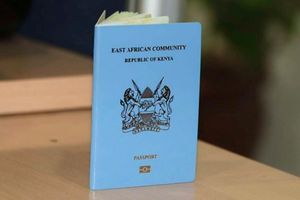
The government’s loud silence over reports a Sudan paramilitary leader holds a Kenyan passport is raising eyebrows, even as lawyers warn of the implications of questionable issuance of the document.
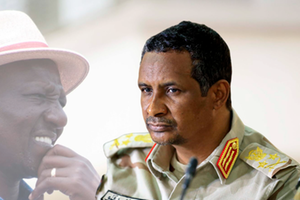
Days after it emerged that Algoney Hamdan Dagalo Musa—the younger brother of Rapid Support Forces (RSF) commander Mohamed Hamdan Dagalo alias Hemedti—is listed in a United States sanctions notice as holding a Kenyan passport, Nairobi has yet to issue a public explanation.
By virtue of her position as the Director-General of Immigration Services, Ms Evelyn Cheluget, who has risen through the ranks over 30 years, finds herself in the eye of a storm, as was the case in early 2000 during a scandal over the issuance of Kenyan work permits to two shady Armenian brothers.
The latest revelation has thrust Kenya’s stance on Sudan’s brutal civil war into uncomfortable focus. The disclosure, contained in fresh measures by the United States Department of the Treasury, has triggered questions not just about immigration procedures, but about Kenya’s national security architecture and diplomatic posture in a volatile region.
It has also raised troubling questions about how a senior figure in one of Africa’s most controversial militias obtained a document that symbolises not just citizenship, but the sovereign credibility of the Kenyan state.
Mr Algoney, a key RSF operative involved in logistics and procurement, is listed as holding multiple travel documents, including a Kenyan passport—AK1586127—alongside Sudanese passports and residency in the United Arab Emirates.
In October 2024, Washington sanctioned him over his role in procuring weapons and vehicles that sustained the RSF’s violent campaign in Darfur, including operations in El Fasher. On January 29, the European Union followed suit.
In modern warfare, logistics is power. Wars are no longer sustained purely by territorial control but by access to weapons, money, fuel, vehicles and banking systems. Those who secure supply chains shape the battlefield as decisively as those commanding troops.
As such, passports are not mere travel documents. They enable sanctioned individuals to open bank accounts, move funds, secure residence and establish operational networks far from the front lines.
That is why the implications stretch far—when a Kenyan passport is linked to a sanctioned war figure, the damage is diplomatic, economic and strategic.
For years, Nairobi has styled itself as a regional mediator in Sudan’s conflict between the Sudanese Armed Forces and the RSF. Sudan’s military authorities have previously accused Kenya of being overly accommodating to RSF leaders—claims Kenya has denied. Relations between Nairobi and Khartoum have at times grown frosty, with Sudan recalling its ambassador in protest and even imposing trade restrictions that hurt Kenyan tea exports.
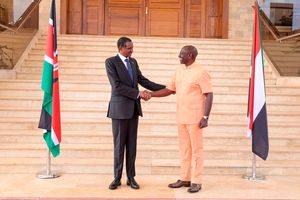
The optics have not helped. In January 2025, Hemedti held talks with President William Ruto at State House, Nairobi. The meeting triggered backlash, with critics questioning Kenya’s neutrality. The government insisted it was facilitating dialogue in pursuit of peace.
Now, with the revelation that Hemedti’s brother holds a Kenyan passport, neutrality is being questioned again.
The Artur brothers, Margaryan (left) and Sargsyan.
Photo credit: File | Nation Media Group
A parliamentary inquiry in 2007, co-chaired by MPs Paul Muite and Ramadhan Kajembe, concluded that the two Armenians were “conmen and drug traffickers” who enjoyed protection “by the high and mighty in government”.
Ms Cheluget, then an assistant Principal Immigration Officer, had chaired the inter-ministerial committee that reviewed their work permit applications. She later testified that only suspicious files were forwarded to security agencies for vetting.
Questionable circumstances
Reports now suggest that other foreign nationals—including Sudanese, South Sudanese and Ethiopian individuals—may also have obtained Kenyan passports under questionable circumstances.
Former Chief Justice David Maraga called for transparency over the scandal. Wiper leader Kalonzo Musyoka warned that issuing passports to militia figures risks turning Kenya into a safe haven for individuals linked to atrocities.
“It is so shameful that the government is issuing crucial documents to militias. We cannot allow Kenya to be turned into a refuge for individuals whose activities threaten peace and stability in the region,” Mr Kalonzo said.
Jubilee Deputy Party Leader Fred Matiang’i echoed the concern, arguing that the integrity of Kenya’s passport is a matter of national pride and security.
Lawyer Wahinya Peter has formally written to the Immigration department, invoking Article 35 of the Constitution, to demand disclosure of how at least 28 foreigners allegedly obtained Kenyan passports. He argues that the issue transcends politics and strikes at the heart of constitutional order.
Evans Ogada, an advocate and law lecturer, explained that under Article 18 of the Constitution and Sections 24 and 27 of the Kenya Citizenship and Immigration Act, citizenship is clearly defined, and only citizens are eligible for Kenyan passports.
“A passport is a sensitive government document. As a holder, you are vouching for the credibility of the issuing State. When questionable individuals obtain it, we soil our national reputation,” he said.
The consequences of the illegal issuance of the Kenyan passport are dire. Passport strength is measured globally through indices such as the Henley Passport Index. If Kenya’s travel document is perceived as compromised, visa-free access arrangements can be reviewed. Ordinary Kenyans could face heightened scrutiny abroad, longer processing times or outright travel restrictions, Mr Ogada cautioned.
But beyond the inconvenience during travel lies something more serious; national security is at risk.
“If we fail to act decisively, this could evolve into a full-blown national security threat. This is no longer a minor administrative issue. It undermines our security agencies and hampers their ability to carry out their work effectively. National security demands accountability and immediate action,” Mr Ogada said.
Procedure requires that foreigners seeking citizenship undergo vetting by the National Intelligence Service and the Directorate of Criminal Investigations. They must demonstrate lawful residence and compliance with all statutory requirements.
If such safeguards were bypassed, intentionally or negligently, the consequences could be profound. In a region already destabilised by conflict in Sudan, Ethiopia and South Sudan, the appearance that Kenya’s documentation system can be penetrated by sanctioned actors could erode international confidence in Nairobi as a security partner.
The geopolitical stakes are even higher. The RSF has been accused by United Nations of committing atrocities in Darfur that bear “hallmarks of genocide”. In this environment, the issuance of a Kenyan passport to a senior RSF figure risks entangling Kenya in diplomatic disputes and potentially exposing it to reputational or economic blowback.
There is precedent for decisive action. Barely two weeks ago, the South African Special Investigating Unit (SIU) recommended that the Department of Home Affairs vet all its employees to address vulnerabilities in South Africa’s immigration system.
The probe, authorised by President Cyril Ramaphosa, found the system had become “a marketplace” where permits and visas were sold to the highest bidder. The report showed that officers in the department colluded with external actors to exploit loopholes and secure fraudulent residence permits.
“Officials entrusted with safeguarding the integrity of the Department of Home Affairs instead turned their positions into profit-making schemes, while external actors, including religious figures and entertainment industry personalities, exploited influence, fabricated documentation, and manipulated systemic weaknesses to secure fraudulent residence permits,” Acting SIU Head Leonard Lekgetho said.
If Kenya fails to act with equal urgency, this controversy could metastasise into a full-blown national security threat. Immigration systems underpin border control, counter-terrorism efforts and international cooperation.
Efforts to obtain a response from Ms Cheluget on the matter were unsuccessful by the time of going to press.
In a set of questions sent to her, the Nation asked her to clarify the criteria her office uses when issuing Kenyan passports to foreign nationals, particularly in light of recent revelations by the US that individuals such as Algoney are in possession of the Kenyan travel documents.
Zimbabwean entrepreneur and regional investor Wicknell Chivayo paid a distinguished courtesy call on President William Ruto.
Photo credit: Pool
We also asked whether individuals linked to controversial outfits or politically exposed persons, including businessmen such as Wicknell Chivayo and members of the RSF, are subjected to additional scrutiny before being granted Kenyan citizenship and passports.
Further, we asked whether her office takes into account concerns raised by diplomacy experts who argue that issuing passports to foreign nationals in such circumstances risks diluting the strength and global standing of the Kenyan passport, potentially complicating travel for ordinary citizens to destinations such as the Schengen area and the US.
Additionally, we asked her to provide data on how many foreign nationals have been issued with Kenyan passports over the past five years.