It's not laziness: The scientific truth behind why menopausal women can't lose belly fat
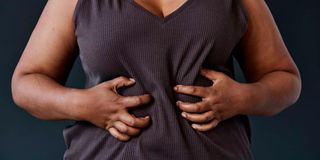
During menopause, the body stores fat between chest and pelvis as a survival mechanism when ovaries reduce oestrogen production.

What you need to know:
- Many menopausal women silently endure a body transition they cannot control, despite gym sessions and dietary changes that society expects to work.
- Prof Anne Kihara explains that when ovaries reduce oestrogen production during menopause, the body compensates by storing fat between the chest and pelvis to produce the hormones it still needs.
When Rukia Muli turned 50 last year, she found herself looking back at her 20s with nostalgia. "I had that smooth, flowing waist, like the neck of a clay pot," she recalls. "In fact, my boyfriend then, now my husband, used to joke that it was the first thing he noticed when I walked into the lecture hall in that figure-fitting dress, even before he saw my face. When I ask him about it now, he says he sees my face first. We usually laugh so hard about it."
Rukia is no longer the "figure eight" she once was, something she wishes she could regain to fit into her youthful dresses. Instead, she has a stubborn fat deposit around her waist.
"My husband told me to eat only goat meat so that my belly can reduce, since it is easily digestible," she says.


"I also go to the gym twice a week, on Mondays and Fridays, and drink a lot of water. I tried taking vinegar and lemon, but my system couldn't handle it. I was always bloated. When I went to the hospital, the doctor informed me that I had an acid reflux problem and should avoid acidic foods. So, I have stopped stressing myself. If the belly goes, fine. If it doesn't, then my husband will just have to keep seeing my face first, forever," she laughs.
Rukia's experience mirrors what many menopausal women silently go through—a body transition with changes they cannot compete with. Yet society often responds with judgment, unsolicited advice, and subtle (or not-so-subtle) shaming that suggests these women have simply "let themselves go."
This harmful narrative not only ignores the biological reality of menopause but can also lead to decreased self-esteem, social withdrawal, and unhealthy behaviours as women desperately try to reclaim their pre-menopausal bodies.
The pressure to maintain a youthful figure can drive women to extreme dieting, over-exercising, or developing unhealthy relationships with food—all while fighting against their body's natural protective mechanism, experts say.
Body shaming during menopause essentially punishes women for a biological process as natural as puberty, creating unnecessary psychological distress during an already challenging life transition.
Science behind menopausal weight gain: Separating myth from reality
Prof Anne Kihara, President of the International Federation of Gynaecology and Obstetrics, puts into perspective why Rukia and women like her struggle with body changes, and why they should never be body-shamed for it.
"Menopause is simply the cessation of periods, one year without menstruation, with no intervention such as family planning methods or other drugs. It is a natural phenomenon," she defined the transition process during a menopause conference held in Nairobi on August 20, 2025.

Dr Anne Kihara, President of the International Federation of Gynaecology and Obstetrics, speaks during the National Dialogue on Menopause and Women's Rights at Radisson Blu Hotel, Upper Hill, Nairobi, on August 20, 2025.
Contrary to popular misconceptions that attribute menopausal weight gain to reduced activity or poor eating habits, the reality is rooted in essential biological processes. At puberty, the ovaries begin menstruation, and one becomes reproductively active, Prof Kihara explained. By menopause, periods stop, and the reproductive clock has closed, she added.
But it is not always an ageing process. "You have those who go into premature menopause because of cancer therapy or surgery. For example, with conditions such as deep-seated endometriosis, surgery may scar or remove the ovaries, shutting down oestrogen production early, even at 34 or 40 years old. Oestrogen is the principal hormone that keeps women looking vibrant," she elaborated.
Through natural ageing, the ovaries gradually reduce production of this hormone, and here comes the catch. "The body compensates by storing fat between the chest and the pelvis to produce the oestrogen it needs. That's why women gain weight around the waist, and it doesn't easily go away; it is a survival mechanism," she said.
This scientific explanation reveals why Rukia's gym sessions, while beneficial for overall health, may not eliminate her waist fat. The body is essentially protecting itself, ensuring continued hormone production through fat storage. Understanding this can help women approach their changing bodies with compassion rather than frustration.
Also read: Why women's weight settles around the waist
Prof Kihara explains that perimenopause can occur between five and ten years before menopause, while post-menopause can last a decade or more after menstruation ceases, sometimes called the climacteric phase. This extended timeline helps explain why women may notice gradual changes over many years, rather than sudden weight gain.
It is during this period that hormonal replacement therapy (HRT) can make a difference, but it has to be tailored carefully to avoid other risks such as cancer, she said.
"So what is the role of HRT? Simple. I'm replacing particularly oestrogen. But I also have to know, do you have a uterus or not? Because if I bombard you with just oestrogen, I may actually end up giving you a predilection to getting cancer of the lining of the uterus," she noted.
Understanding the biological necessity of menopausal weight changes should shift how society views and treats women during this transition. Rather than offering unsolicited diet advice or expressing disappointment about changed appearances, we should recognise that women's bodies are performing remarkable adaptive functions to maintain health and vitality.
Rukia's acceptance—"If the belly goes, fine. If it doesn't, then my husband will just have to keep seeing my face first, forever"—represents a healthier approach than the self-criticism and extreme measures many women subject themselves to.
Body shaming menopausal women not only ignores scientific reality but also undermines the dignity and wellbeing of women navigating a natural life stage that deserves understanding, not judgment.


