A microphone, a poem and a fight against FGM
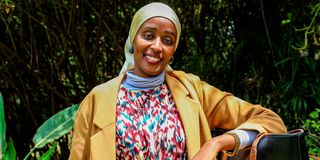
Spoken-word artist and FGM survivor Dahabo Guracha Damballa has turned her lived experience into advocacy, using poetry and community outreach to campaign against female genital mutilation and child marriage. She was photographed at the British High Commissioner's residence in Nairobi on September 1, 2026.

What you need to know:
- After undergoing FGM at seven, Dahabo Guracha has dedicated her life to protecting girls from the practice.
- With FGM prevalence at about 90 per cent, Dahabo is confronting deeply rooted traditions in Marsabit.
Dahabo Guracha from Marsabit was only seven when she and several other girls were cut. At the time, she thought it was normal. Good, even.
It was only after she joined a secondary school outside Marsabit that she began to question it.
"When I joined secondary school, which was outside Marsabit, I realised from our conversations that the other girls had not been cut, except those who came from northern Kenya and Asal (arid and semi-arid lands) regions. They wondered what FGM was and could not understand it. This made me so confused and bitter," she tells Nation.


That confusion turned into activism.
"I decided that I had to do something to stop those outdated cultural practices. I vowed that I had to be part and parcel of those fighting to eliminate FGM and other harmful practices such as child marriage," she says.
Dahabo, a survivor from the Borana community in Sololo village, has since become one of the more visible anti-FGM voices in the region, a role that comes with both admiration and hostility.
She performs spoken word at events across Marsabit and posts on TikTok and other platforms. For older residents, she switches to the local language, saying it helps her message land.
She is also a certified counsellor, and offers psychosocial support to survivors.
"Many of them develop trauma, fear and mental health complications that require psychosocial support. We also offer a safe space for survivors where they can seek these services without being exposed or judged," she says.
Through the Scars to Stars initiative, run with other organisations, she and fellow campaigners share survivor stories to raise awareness and press for accountability. She takes the message to barazas, schools and churches too, focusing on pupils, students, teachers and parents. She visits five schools every term and has reached roughly 5,200 pupils and students so far.
Sanitary towels
"During the school visits, we usually offer talks and raise awareness about reproductive health, menstrual hygiene for girls, child marriage and FGM. We also give sanitary towels to the girls and underwear to the boys," she says.
It hasn't been smooth going.
"I get a lot of abuse from some community members who call me a shameless girl, while others call me a rebel for questioning the culture and traditions of the community. I never allow their criticism to affect my work. I soldier on," she says. Money is also a constant problem, Marsabit is a huge county, and covering it properly takes resources she often doesn't have.
She founded Trio-Hub, an indigenous community-based organisation in Marsabit working at the intersection of gender equality, climate justice, health and education. She's currently pursuing a master's degree in development studies at the University of Nairobi, alongside her work as a research associate, community development practitioner, and gender and climate advocate. Her efforts also extend to ending child marriage and gender-based violence, and pushing for women's and girls' leadership.
She is a member of the Survivor Leadership Initiative (Kenya), which works with survivors of FGM, human trafficking and modern slavery to lead advocacy and healing efforts in their own communities.
The numbers explain why her work remains important. Marsabit's FGM prevalence sits at about 90 per cent, according to the 2022 Kenya Demographic and Health Survey, against a national rate of 15 per cent.
Among the Rendille, Borana and Gabra communities specifically, prevalence climbs to between 92 and 98 per cent, driven by entrenched cultural norms, preparation for early marriage, and cross-border practices.
The county also has a high prevalence of child marriage: 40 per cent, nearly double the national average of 23 per cent, and higher still, above 50 per cent, in some pastoral areas, according to localised studies. Only Tana River, at 43 per cent, ranks higher nationally.