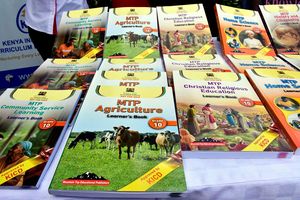
More than 24,000 public primary schools across the country will receive new mathematics, English and Kiswahili textbooks from January next year, as part of the government’s initiative to replace worn out learning materials under the competency-based education (CBE) curriculum.
The Chief Executive Officer of the Kenya Institute of Curriculum Development (KICD), Prof Charles Ong’ondo, said that learners in Grades One, Two and Three will receive the new books, which are expected to improve access to adequate and up-to-date learning materials.
Prof Ong’ondo said that the decision followed concerns raised in a Ministry of Education report and a World Bank study on the state of existing textbooks. These studies established the need to replace worn-out books and update their content.
“We have started reviewing some of the books that we have been using. Very soon, we shall be distributing Grade One, Two and Three English, mathematics and Kiswahili books. We are aware that the books you have been using are torn and worn out, so from January we start giving new books in the three subjects,” he said.
He asked school heads to contact their respective sub-county directors of education by the end of January if they had not received the learning materials, in order to facilitate distribution.
The KICD boss said that the World Bank was funding the provision of English and Kiswahili textbooks for three year groups, with one book expected to be provided for each learner.
He said that, although the textbooks had been approved in 2024, they were subsequently reviewed to ensure their content was up to date before the procurement process began.
Publishers whose books had been approved submitted financial bids, which are currently being evaluated for compliance. The successful bidders are expected to be awarded contracts later this month. Other learning areas will also be considered for replenishment, subject to funding being confirmed.
At the same time, Prof Ong’ondo cautioned school heads against purchasing ready-made assessment materials, saying the practice undermined teachers' responsibility to evaluate learners according to their individual abilities and learning needs.
He particularly warned against commercially produced question-and-answer booklets and revision materials sold to schools by private assessment entrepreneurs.
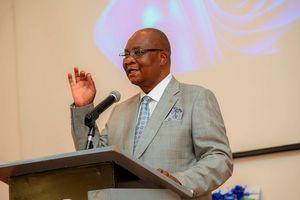
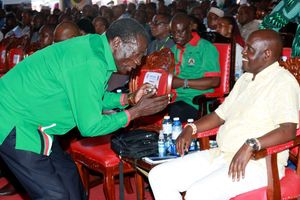
Kenya Institute of Curriculum Development CEO Prof Charles Ong'ondo during the 2026 Kenya Comprehensive Schools Head Teachers Association AGM and Conference in Mombasa in Mombasa on November 10, 2026.
Photo credit: Kevin Odit | Nation Media Group
“KICD is against ready-made assessment materials. These materials come to you in the name of questions and answers. The task of assessment is the task of a teacher,” he said.
Prof Ong’ondo asked teachers to take responsibility for preparing assessments, noting that they have a better understanding of their learners’ abilities, differences, and areas requiring improvement than external content providers.
“You know your learner, you know the difference between them, you know whom to give what kind of assessment and in any other areas. Why do you go and buy assessment from people who are not even teachers in the first place?” He asked.
Prof Ong’ondo further questioned the qualifications of some assessment material providers, saying they were not registered teachers and lacked Teachers Service Commission (TSC) registration numbers.
“They do not have TSC numbers; they have copied these materials from you. Don’t buy them,” he said.
Prof Ong’ondo asked schools to prioritise approved learning materials and ensure that assessments were designed to support the development of learners rather than encourage dependence on memorised answers.
The CEO also called on school heads to pay greater attention to learners with exceptional abilities as they transition to senior school. He said educators should follow the progress of such learners and guide them towards institutions that offer opportunities to nurture their talents instead of choosing schools based solely on prestige.
“We have produced learners who are exceptional in various talent areas. Can we follow these learners as they join senior school to ensure they join schools which will continue nurturing their talents and not just schools which will make them feel prestigious?” he said.
He further urged teachers and school administrators to strengthen engagement with parents by involving them in school activities, including the release of assessment results, sports events, parents' meetings and tree-planting exercises.
The curriculum boss said greater parental involvement would help families understand what was happening in schools and enable them to participate more actively in their children's education.