Are you a father or a ‘baba’ figure? New manual challenges men to reclaim their role as nurturers
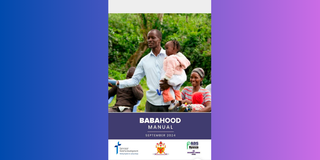
The BabaHood Manual cover—a comprehensive guide helping modern fathers navigate the evolving journey of fatherhood through key areas including leadership, provision, mentorship, and masculinity.

What you need to know:
- The Early Childhood Development Interfaith Advisory Council launched a BabaHood manual to address the crisis of fathers who abdicate caregiving roles from birth to age three.
- The guide teaches fathers about presence, leadership, provision, mentorship, protection, discipline, and masculinity, emphasising that "Daddy is here" brings peace of mind.
Picture this: a three-year-old runs towards the door as footsteps approach, arms outstretched, face beaming with joy. But instead of finding comfort in a warm embrace, they're met with a tired wave and a distracted "Hello" as Dad heads straight for his phone or the television. The child's excitement deflates, another moment lost, another opportunity for connection missed.
This scene plays out in countless homes daily, perpetuating a cycle that stretches back generations. From biblical times to modern-day playgrounds, where children once played "Cha Mama and Cha Baba," society has assigned caregiving to women and providing to men. Even in innocent childhood role-play, girls prepared to nurture babies while boys were groomed to venture out as providers—a societal script that has endured for generations.
But this traditional narrative is now under fresh scrutiny. Its persistence, while deeply ingrained, is emerging as a significant contributor to dysfunctional families and emotional neglect during children's crucial early developmental stages.


Prof David Kodia, a religious leader, scholar, and National Chairperson of the Early Childhood Development Interfaith Advisory Council, witnesses this crisis first-hand. Many fathers today proudly celebrate their children's academic and professional milestones, yet what they often fail to acknowledge is their absence during the crucial formative years.
"From birth to age three, most fathers abdicate the role of primary caregiver, leaving the responsibility entirely to mothers. Many won't even change a nappy, considering such tasks beneath them—a woman's duty," Rev Kodia observes.
He laments that many fathers miss the opportunity to smile with their children, to play, to notice changes in their health or emotions. This disconnection leaves a lasting void in a child's life—a gap that can manifest later as rebellion, emotional instability, or deep psychological wounds that are difficult to heal.
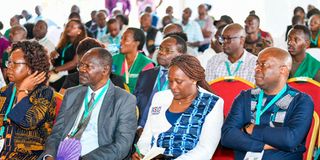
Anglican Bishop David Kodia (second left) during the 2025 Devolution Conference in Homa Bay County on August 14, 2025. He led the launch of BabaHood Manual during a session on "Investing in the Future: Promoting Nurturing Care for Early Childhood Development" .
In response to this growing concern, the Early Childhood Development Interfaith Advisory Council—a coalition of religious groups advocating for responsive caregiving and early childhood development—has crafted a powerful new tool: the BabaHood Manual.
Launched in September 2024, this 56-page manual represents more than just guidance—it's a call to action, a roadmap, a heartfelt plea to fathers to reclaim their roles as nurturers, leaders, and protectors, not just providers.
Structured across seven comprehensive chapters, the manual explores key themes that define modern fatherhood: presence, leadership, provision, mentorship, protection, discipline, and masculinity. It's being adopted across faith communities, guiding both new and seasoned fathers to become intentional, loving, and present caregivers during what the manual calls the "Moments That Matter."
Power of presence
"Presence brings peace of mind; it offers a unique form of nurturing that only fathers can give. It signals to the child that all will be well, because Daddy is here," the manual states.
A father's presence teaches children calculated risk-taking, disciplined love, and a profound sense of safety. It assures them they won't be left vulnerable or abandoned—neither to the elements of nature nor to the cruelty of others. Children raised in the secure embrace of both parents enjoy holistic stability, a balance that anchors them through life.
Rev Kodia underscores the importance of physical and emotional closeness: "The more often a child sees their father's face, the more trust they develop. Parents must be seen not only as caretakers but as the first and best friends and mentors in their children's lives."
For fathers pressed by work and societal demands, the manual offers practical wisdom: incorporate bonding into daily routines. Meal times, bath times, and even chores can become moments of connection. Weekends and holidays should be opportunities for shared experiences—visits to the market, nature walks, family projects, or simply playing together.
The manual urges fathers to be fully present: "Avoid distractions like phones or work. Actively participate in play, conversations, and shared activities. Your child must feel your engagement and passion."
A father's leadership should be strong yet gracious, the manual insists. It must be anchored in love, not control. The father must seek the best for his children, guiding with firmness but also with compassion and patience.
The Advisory Council urges congregations to challenge cultural stereotypes that distance men from caregiving, encouraging them instead to embrace leadership grounded in humility and presence.
The manual draws richly from scripture, offering spiritual insight and biblical examples of fatherhood. Archbishop Jackson Ole Sapit of the Anglican Church of Kenya highlights Genesis 2:15—"The Lord God took the man and put him in the Garden of Eden to work it and take care of it"—as a divine commission for men to care, protect, and provide.
"We are challenging men to become the fathers they were created to be—mentors, caregivers, and leaders who leave lasting impacts on their families," Dr Sapit adds.
Case studies within the manual reflect on biblical figures, linking their traits to modern-day parenting and helping fathers see themselves in those ancient yet relatable stories.
As children mature, mentorship becomes more intentional. Fathers are encouraged to share life lessons, offer emotional support, and hold open conversations about challenges and values. Mistakes are inevitable—both for children and parents—but what remains is the father's example: a template of resilience, integrity, and love.
Discipline, according to the manual, must begin early, be consistent, and be rooted in love. "Insist on honesty. Never lie to your children. Correction is not punishment; it is an act of love," it states. "A friend may tolerate your mistakes. A parent corrects them—even when it hurts—because they care."
The manual emphasises that discipline isn't about dominance but about guidance, helping children understand boundaries while feeling secure in their father's love.

From left: Siaya Governor James Orengo, Betty Murungi and other guests joined the session on "Investing in the Future: Promoting Nurturing Care for Early Childhood Development" during the 2025 Devolution Conference held in Homa Bay County on August 14, 2025.
Perhaps most revolutionary is the manual's approach to masculinity. Rather than a tool of dominance, masculine energy should be an instrument of strength, protection, and stability. A father's BabaHood should be a blessing to his family.
"The family must feel his presence in the way he speaks, decides, plans, protects, and provides," the manual reads. "Let his influence be a source of joy and security, not fear or distance."
The manual challenges the notion that providing financially absolves fathers from emotional responsibility. It argues that true provision encompasses emotional, spiritual, and physical needs—not just material ones.
This holistic approach to fatherhood recognises that children need their fathers' strength, wisdom, and gentleness in equal measure. The manual doesn't diminish the importance of providing but expands it to include presence, emotional availability, and active participation in daily life.
The BabaHood Manual acknowledges that many fathers are parenting without positive role models, perpetuating cycles of emotional distance passed down through generations. By providing concrete guidance and spiritual foundation, it offers men the tools to break these patterns and create new legacies.
The manual recognises that changing ingrained behaviours requires intentional effort, community support, and spiritual grounding. It doesn't simply point out problems but provides practical solutions that fathers can implement immediately.
Ripple effect
The impact of involved fatherhood extends beyond individual families. Children who experience consistent, loving engagement from their fathers are more likely to develop secure attachments, emotional regulation skills, and healthy relationship patterns that they'll carry into their own families.
Communities benefit when fathers step fully into their roles as nurturers and guides. The manual envisions a society where children grow up secure in their worth, confident in their abilities, and grounded in love.
Ultimately, the BabaHood Manual is more than a guide—it's a heartfelt invitation to fathers, families, and faith communities to reimagine fatherhood as sacred work. It challenges societal norms, repairs generational gaps, and fosters a future where every child, from their earliest moments, knows the warmth, protection, and unconditional love of their father.
As Rev Kodia reflects, "The way we treat the little ones God has entrusted to us during their moment of vulnerability determines who they become. Let us raise not just children, but whole human beings—loved, nurtured, and known by their fathers."