Two Kenyans playing major roles in success of COP31
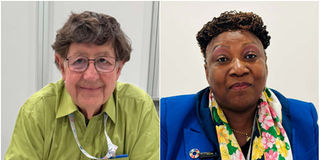
Tim Davis (left), manager of the International Broadcast Centre of the United Nations Framework Convention on Climate Change (UNFCCC) and Cecilia Kinuthia Njenga, Director for Intergovernmental Support and Collective Progress at the UNFCCC.

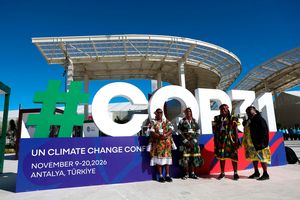
In Antalya, Turkiye
Every year, tens of thousands of people descend on one venue for two weeks of high-stakes diplomacy. The Conference of the Parties (COP) is loud, fast-paced and relentless.
Yet the logistics behind every microphone, every meeting room and every official decision often go unnoticed.


While the spotlight is on heads of state, ministers and negotiators in the main halls, there is a team working round the clock behind the scenes to make sure the summit doesn’t grind to a halt. Interestingly, some of the key cogs in the UN machinery at COP31 in Antalya are Kenyans.
Tim Davis, manager of the International Broadcast Centre of the United Nations Framework Convention on Climate Change (UNFCCC)
At the entrance of the media centre at COP31 in Antalya, a small Kenyan flag sits on a table. Beyond it is an open office where journalists covering the summit walk in whenever they need assistance, information or someone to point them in the right direction.
Seated in the room is Tim Davis, a Kenyan who has become a familiar face to the hundreds of journalists working here.
What makes his presence particularly remarkable is that this is not the only global summit at which he is working. He was in Baku for COP29 and, going back to COP16 in Cancun, Mexico, he was there with a tiny Kenyan flag on the table.
“I am very proud of where I live. I have lived in Kenya all my life. I am originally from Eldoret. I love meeting people who recognise the flag. As soon as people see it, they react. Many people are also surprised to hear me speaking Swahili,” he says.
“You can see that this room is very interactive. It has been like that since day one. I’ve been here for one month. The first three weeks were spent on preparation. We prepare everything in the media centre so that when the media arrive on day one, it is all ready. And that takes time,” he says.
A typical day for him starts at 7am, and he does not leave the venue until around 10pm. “Part of my job is to oversee the host broadcaster. So as long as there is filming going on, I am here to support them,” he says.
“This is my 21st year of doing this. The COP came to Kenya in Gigiri in 2006. The UN was one of my clients, so I was called upon to help. The people from UNFCCC must have seen that I did something good, so they called me and said, ‘Can you come and support the next one?’ This job didn’t exist before they employed me. So, I developed it, and look at how big it has become. When COP came to Kenya, we had 30 media outlets represented. Now, there are 4,000 here in Antalya. I can no longer do the job alone. I have a colleague to help me,” he says.
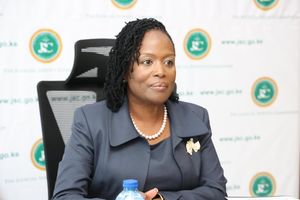
Cecilia Kinuthia Njenga, Director for Intergovernmental Support and Collective Progress at the UNFCCC
To get to her office, you must first go through security clearance. It is on an upper floor, away from the bustle of the negotiation rooms and meeting halls. But that does not mean the work has slowed down. Just outside her office are more than 400 UNFCCC staff members, working behind the scenes to keep the climate talks running.
“Our work begins when the day ends,” she says, referring to the reports and other documentation that must be prepared after the day’s negotiations. “This period of two weeks is the most intensive part of the year for me, but it is shaped by what we do throughout the year.”
Her role entails supporting parties as they meet, convene and negotiate, and work through different bodies to adopt decisions and agreements that enable the world to keep climate change under control.
“So basically, I’m responsible for 198 parties who are signatories to the convention and the Paris Agreement, and who meet regularly once a year. In June, they also meet between annual conferences for what we call the subsidiary bodies in Bonn, Germany, to ensure that we are taking action, making decisions and drafting policies to address the climate change crisis,” she says.
Ms Njenga has worked in various UN agencies over the years in different capacities. She first joined UN-Habitat, given her background in urban and regional planning. “I spent 13 years there, then spent 11 years working with UNEP as their representative in South Africa. I moved on to take on this role, which I have held for nearly six years, leading the work on intergovernmental support,” she says.
Interestingly, her career began not in the corridors of international climate negotiations, but in activism, where she worked closely with the environmental movement.
She recalls having the opportunity to work alongside the late Nobel laureate Professor Wangari Maathai, whom she accompanied to her first Beijing Conference on Women. There, she witnessed Kenyan women leaders in agriculture and environmental conservation bringing their voices and experiences to the global stage.
“I think this role has been the key highlight of my UN career. It is not easy. It’s not easy to bring a number of governments together to agree. You are bringing together countries from developing and developed worlds, all with differentiated responsibilities and unequal resources. So just getting them to agree on an issue, whether it’s on climate finance, how much is required to ad-dress a problem or how to meet the needs of vulnerable countries facing rising sea levels, is a challenge,” the climate diplomat says.
Follow ourWhatsApp channel for breaking news updates and more stories like this.