Empowered by the soil: The rural women cultivating change across Kenya
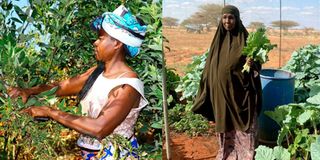
Avia Munyao (left) from Ndiang'ui, Kitui South, and Habiba Abdullahi, a 70-year-old widow from Makoror village, Barwaqo, Wajir East.

What you need to know:
- Rural women remain the backbone of Kenya’s food systems, yet they face deep-rooted gender inequalities that limit access to land, finance, and information.
- The success of farmers like Avia Munyao and Habiba Abdullahi highlights the transformative potential of investing in women farmers—a call echoed by UN Women as it urges global action to close the gender gap in food security and poverty reduction.
In Kenya’s rural heartlands, women are redefining survival through resilience and innovation. Despite battling with harsh weather, limited resources, and deep-rooted gender inequalities, they continue to power their families, feed their communities, and drive the nation’s food security agenda.
As the world marked the International Day of Rural Women on Wednesday, stories of determination like those of Avia Munyao from Kitui and Habiba Abdullahi from Wajir stood out—testaments to how rural women are transforming adversity into opportunity.
Avia, a maize farmer from Ndiang’ui village in Kitui South, has turned the dry terrain of the region into a field of promise. Not even the unforgiving weather can dampen her resolve to fight hunger and poverty.


On her farm, she plants maize and pigeon peas using Zai pits technology, introduced to her last year. Zai pits—also known as planting pits—are a water-efficient farming method used in arid and semi-arid lands to maximise moisture retention and improve yields.
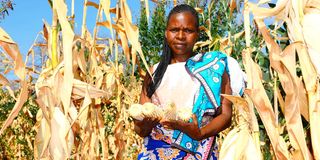
Avia Munyao, a farmer from Ndiang'ui, Kitui South.
The technique creates a micro-environment that boosts drought resistance and enhances soil fertility, making it ideal for the fragile, infertile soils where rainfall is scarce and unreliable.
Avia is one of 16 members of the Kawelu Farmers’ Self-Help Group, trained in climate-smart agriculture. In 2023, she harvested 65 bags (90kg each) of green gram, selling them at Sh120 per kilo and earning Sh702,000, part of which she reinvested into expanding her farm. The following year, she increased her harvest to 80 bags, which sold at Sh150 per kilo, netting close to Sh1 million.
In addition to maize and pigeon peas, Avia grows cowpeas, millet, and green gram, which she sells to traders from Nairobi. She is optimistic about an even better harvest this year.
Avia is also a successful Gala goat farmer, having started with just four goats in 2021. Her herd has since grown to over 100. The breed, known for its adaptability to dry weather, thrives in Kitui’s harsh conditions. Recently, she sold eight goats at Sh12,000 each, earning Sh96,000. Beyond the sales, the goats provide milk that keeps her family nourished and healthy.
“Farming has helped me. My family is now food-secure, and I can pay school fees for my children and meet other household needs. It has economically empowered me,” she says with pride.
Still, gender inequalities continue to hold many rural women back. Unequal access to land, credit, training, and agricultural inputs limits their productivity and income. Women, especially those heading households, often face higher vulnerability to food insecurity and malnutrition due to these systemic barriers.
About 600 kilometres away in Wajir, another woman, Habiba, is defying the odds in the arid northeast. The 70-year-old widow from Makoror village in Barwaqo, Wajir East, drilled her own borehole and turned the desert into a garden of life.
Habiba practises mixed farming, growing collard greens, spinach, pawpaw, eggplant, lemon, pepper, maize, and sweet potatoes. “I use water from the borehole to irrigate, so my crops survive the harsh climate. I eat fresh food from my garden and sell the rest. Farming has made my family food-secure,” she says.
Every month, she earns about Sh50,000 from selling her produce—money she uses to educate her grandchildren and meet daily needs. “Farming is good business. It pays,” she adds with a smile.
Her farm attracts buyers from Wajir town who flock to purchase her vegetables and fruits. Pawpaw and lemon fetch particularly good prices. Beyond crops, Habiba keeps 35 cows and 55 goats, and grows African foxtail and Napier grass for feed. She sells the surplus grass as hay at Sh60 per bale, adding another income stream to her ventures.
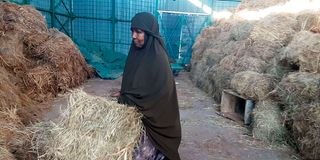
Habiba Abdullahi next to the hay she makes for sale in Makoror village, Barwaqo, Wajir East, on September 11, 2025.
According to the Food and Agriculture Organisation(FAO), the global gender gap in food insecurity widened in 2022, with 27.8 per cent of women experiencing moderate to severe food insecurity, compared to 25.4 per cent of men. Malnutrition among mothers, FAO notes, creates a cycle of deprivation, affecting child health, education, and productivity.
As the world honours rural women, UN Women has urged bold action to promote equality and empower women in agricultural and rural settings. “Every day, they feed communities, protect the environment, and power sustainable development. Investing in them is both an act of justice and a safeguard for our shared future,” UN Women said in a statement.
The agency noted that rural women continue to bridge the gap between local action and global progress, even as they face the harshest impacts of poverty, climate change, and inequality. If current trends persist, 351 million women and girls will still live in extreme poverty by 2030.
Yet, through women like Avia and Habiba, Kenya’s rural landscape tells a different story—one of resilience, ingenuity, and hope cultivated from the soil itself.


