From betting to violence: The hidden gender impact of Fifa men’s World Cup
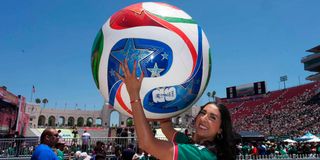
A Mexico female fan during the 2026 Fifa World Cup Fan Festival at Los Angeles Memorial Coliseum in California, USA, on June 11, 2026.

What you need to know:
- The men’s World Cup creates massive opportunities for men while exposing women to exploitation, violence and economic burdens globally.
- From stadium jobs to betting culture, football’s biggest tournament reveals deeply unequal gender dynamics affecting women worldwide.
Few things capture global attention as the Fifa men’s World Cup competition. Enthusiasm, heavy spending, rising emotions, and both cheers and jeers characterise the global bonanza held every four years. And it might appear like a gender-neutral fiesta. Not really. The World Cup affects women and men differently.
Given that this is a men’s World Cup, the immediate and direct financial beneficiaries are men, in terms of salaries, allowances, sponsorships, incentives, bonuses and visibility. Because each competing country wishes to lift the trophy, it invests huge sums of money in preparing, motivating, and maintaining its players. In the background are thousands of men working in the technical, medical, management, communication and logistical teams, with commensurate economic benefits.
Men officiating in the festival are another tier of beneficiaries. Taking refereeing, for example, there are only six women compared to 46 men. Coaching is another example, with no single woman coaching a team. The 2023 women’s World Cup also had more male (26) than female (six) coaches. So men remain the majority recipients of coaching benefits.


Although the improved sports infrastructure in host countries will eventually benefit both men and women, the former are the immediate beneficiaries, not only as players but also as the majority workers engaged in constructing, maintaining and providing security around the facilities. From a media perspective, the World Cup generates more economic benefits for men than women, given the former’s dominance in the industry. Entertainment places, which are the favourite watching stations, do booming business. Needless to say, most of them are owned by men.
Men spend a lot of money in social places waiting to watch matches, betting on outcomes and keeping their female acquaintances comfortable. The likely result is a squeeze on their domestic budgets, which can easily cascade into domestic tensions and violence. Betting fans, again the majority being men, certainly earn (and lose) from the bonanza.
Women also benefit economically. In host countries, those engaged in tourism and hospitality are sure of jobs for the duration of the festival. Moreover, they are poised to receive handsome tips and gifts from customers. But they face increased workload, translating into occupational stress, while many endure low pay, unsafe work conditions and late travel.
For women working as commercial sex workers in host countries, the bonanza is a windfall, notwithstanding that they also face high risks of violence and exploitation. Heightened security operations mean that many are displaced from their usual operational bases, hence have to seek alternatives. Past experiences show increased trafficking of women for sexual exploitation and cheap labour in the build-up to the tournament. Such women additionally face risks of arrest and detention by police for immigration offences. Physical and sexual abuse by the security officers cannot be ruled out. Many women will be financially extorted to buy their freedom from police detention.
One big area in which women will benefit is the sale of street food. But many of them around stadiums also face evictions and displacement, interrupting their businesses and income flows.
In Kenya, the businesses will benefit from the odd hours of the matches, the earliest ending at midnight and the others stretching up to 7am the next day. This means the entire night is a business opportunity for street and fast food sellers. Boda boda riders, most of them young men, will reap from the movement of fans from social places to home and vice versa. The opportunity to make and sell branded merchandise is also a big one for enterprising men and women, both locally and in host countries.
The World Cup is a platform for interactions not only across nationalities and races, but also gender. Many platonic and romantic relationships are established. Some will blossom while others will degenerate into violence, sexual exploitation and abuse, economic blackmail and fraud. There will be pregnancies, sexually transmitted infections, abortions, stigma, and economic burden in dealing with the results. A major area of concern is that of sexual harassment, enabled by congestion in stadiums, public transport, fan zones and entertainment spots.
Men’s absence from home is predictable, given the tradition that matches are mostly watched in the company of fellow fans in social places rather than at home. The risk of domestic violence is related to high consumption of alcohol by men, diversion of resources from domestic welfare and emotional reaction to match outcomes. Studies on England show that domestic violence increased by 26 per cent when the national team won or drew, and 38 per cent when it lost in past tournaments.
In short, the World Cup is not just a sporting event. It carries with it myriad gendered dynamics, some positive and others negative.
The writer is a lecturer in Gender and Development Studies at South Eastern Kenya University ([email protected]).


