Inside Mt Elgon forests where widows confront poverty, rape and silence
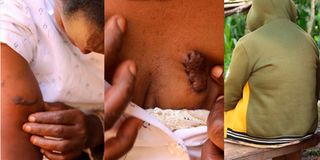
Mt Elgon widows. Some of these women suffered scars due to gang-rape attacks meted out to them while collecting firewood in Mt Elgon Forest.

What you need to know:
- Poverty is forcing widows in Mt Elgon into forests where many face sexual violence and trauma.
- Survivors recount attacks, economic hardship and efforts to seek justice amid rising gender violence cases.
In the early hours after dawn in Mt Elgon, women set out for what they describe as a routine search for firewood. For some, it is also a return to danger. In these forests, several widows say survival has come to depend on walking into spaces where they are vulnerable to sexual violence, and where silence often follows trauma.
Florence Nasimiyu* once lived what she describes as a stable and prosperous life in Mt Elgon.
The mother of seven was a farmer and businesswoman together with her husband. They owned a large parcel of land, used for farming, and had built a sizeable house. They also owned a tractor for ploughing and a family car. The couple ran a large wholesale business, which Nasimiyu says was among the biggest in Mt Elgon.


That life, she recalls, collapsed during the 2007 post-election violence.
In the violence that followed, Nasimiyu says she was gang-raped, an assault that later resulted in the birth of her last child. As the family tried to rebuild, Mt Elgon was engulfed by the emergence of the Sabaot Land Defence Force (SLDF), a guerrilla militia linked to violent conflict around the Chebyuk land settlement scheme, clan rivalries, and political incitement.
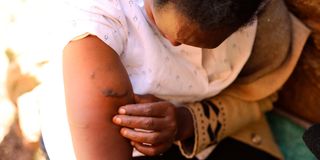
A widow and sexual violence survivor shows the scars she sustained when she was stabbed during an attack in Mt Elgon, on May 25, 2026. In 2024, she was gang-raped in Mt Elgon forest, where she had gone to collect firewood.
Nasimiyu says her husband was later arrested during the military crackdown that followed.
“It seemed like the end for us as a family, just as we were trying to rebuild after losing everything in the 2007 post-election violence. My husband was arrested in 2008 and remanded during the military crackdown. After he was released, he later died in 2017 from injuries sustained as a result of torture,” Nasimiyu tells the Nation during an interview in Cheptais, Bungoma County.
After his death, she says life changed completely. She was left to care for a large family with no stable income. “I had to take up any manual job that was available, including working as a farm hand. It helped put food on the table,” she says.
Read: ‘My husband was a criminal, I’m not’: Young widows of Mathare on fight against poverty and rejection
In 2023, she started a firewood business, like many other women in the village. The Mt Elgon forest provides a ready source of firewood, and many of the women involved are widows whose husbands died during the SLDF conflict.
For nearly a year, she says the business sustained her household. She would make about Sh600 in profit per day, which went towards food and school fees. “I would make at least four trips to the forest in a day and earn not less than 600 a day from the sale of firewood. The money helped me put food on the table and pay school fees for my children,” she says.
But in March 2024, she says she experienced an ordeal that changed everything. As she collected firewood with another woman, they were surrounded by a group of young men.
“The men were strong. I could not imagine that I was going to be raped for the second time in my life. Despite my struggles, they overpowered me. I was gang raped by four men until I became unconscious. When I regained consciousness, I was at Webuye Level Four Hospital. I had been rescued by well-wishers,” she recalls.
She developed fistula and sustained severe head and chest injuries. Since then, she has undergone two reconstructive surgeries in Eldoret and is awaiting a third. Although she can now control urine and stool, she says she is not fully healed. She also speaks of severe depression following the attack.
Nasimiyu says many women who go into the forest face similar risks but remain silent. She explains that she did not report the incident to police, as she did not recognise the attackers and feared community exposure.
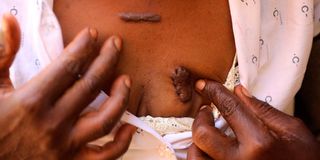
A widow and sexual violence survivor shows the scars she sustained when she was stabbed during an attack in Mt Elgon, on May 25, 2026. In 2024, she was gang-raped in Mt Elgon forest, where she had gone to collect firewood.
Joan Chebet* shares a similar experience. She recalls a rape incident in June last year during a morning firewood collection trip. There were four women in the forest. They were leaving when they were attacked.
“My three fellow women managed to escape, but I was not lucky. Three men caught up with me, wrestled me down and raped me in turns. After they were done, they ran into the bush and left me for dead,” Joan tells the Nation.
Failed to report
After the attack, she says she stayed indoors for three days and did not report the matter. She cites fear and lack of knowledge on referral pathways.
Every day, she says she used to earn about Sh400 from firewood sales, which supported her family. After the incident, she stopped going to the forest and now works as a casual labourer on farms. She also engages in farming, growing maize, beans, potatoes and cabbage.
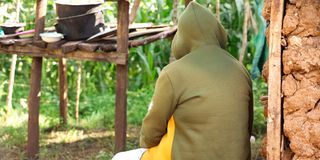
A survivor of sexual violence during the interview in Mt Elgon. She was gang-raped in Mt Elgon forest in 2024, where she had gone to collect firewood.
Both women say sexual violence in the forest is widespread, especially among widows. They say women are often at the mercy of young men who control access to the forest.
Local accounts indicate that many of the young men are from the Sabaot community, spanning areas up to Kitale, and that landlessness has contributed to their presence in the forest, where they are also accused of extorting locals.
Bungoma County has remained one of the regions with high cases of sexual and gender-based violence (SGBV). According to the 2022 Kenya Demographic and Health Survey, 62 per cent of women aged 15–49 in the county reported having experienced physical violence, above the national average.
About 30 per cent reported experiencing sexual violence, the highest among all 47 counties. On intimate partner violence, 60 per cent of ever-married women reported physical, sexual or emotional abuse by a partner.

Janet Khisa, the Bungoma County GBV programmes coordinator, while speaking to the Nation in Bungoma, in this picture taken on May 26, 2026. Janet says sexual and gender based violence cases in the county remain high, with defilement, rape, and incest being the most rampant.
Janet Khisa, Bungoma County GBV programmes coordinator, says Mt Elgon is among the most affected areas, with rape and defilement leading.
She attributes the situation partly to drug and substance abuse, noting the prevalence of local brews and bhang. “We are witnessing many rape and defilement cases. Intimate partner violence is also contributing to high cases of sexual violence. Cases are high in Cheptais and Kopsiro,” Janet tells the Nation.
County data shows 890 sexual violence-related cases were handled in health facilities between January and December 2025. Of these, 177 were from Mt Elgon, with 136 from Cheptais, identified as a hotspot. Among these, 120 involved widows.
“To reverse this situation, we are creating awareness through local radio stations and engaging men and elders in dialogue. We are also developing a community referral tool for sexual violence cases,” she adds.

Deputy County Commissioner Philip Sigei says he is unaware of any cases of sexual abuse against women in Cheptais. He wondered why survivors do not report such incidents so that the police can commence investigations.
“In all our security meetings, I have never heard of any reports of sexual violence against women in the forest while they are collecting firewood,” says Mr Sigei, who chairs the Cheptais Security Committee.
He appealed to survivors to report such incidents. “We have Cheptais and Chesikaki police stations where they can report.”
A police officer at Chesikaki Police Station, speaking in confidence, said no case of sexual abuse involving adult women has been reported during her four years at the station. “I have never heard of or received any reports of sexual violence involving women. Some of the cases reported are on defilement.”
In response to persistent cases, UN Women launched the ‘Let It Not Happen Again’ initiative in 2019, in partnership with the Office of the High Commissioner for Human Rights and supported by the Italian Agency for Development Cooperation. It is implemented with Physicians for Human Rights, the Centre for Rights Education and Awareness, and CSO Networks.
Antonia Sodonon, UN Women Kenya Country Representative, says the initiative has strengthened access to justice and institutional response systems. “Across Bungoma, Kisumu, and Vihiga counties, the initiative has contributed to tangible progress in advancing access to justice, strengthening accountability, and supporting policy and institutional reforms, including the establishment of specialised gender-based violence courts,” she says.
She adds that sustained progress requires continued investment in prevention, stronger data systems, and integrated survivor support services, including psychosocial and economic support. Some women have now abandoned forest-based work due to fear. Others have shifted to casual labour on farms.
Gertrude, one of them, says the change has come with economic strain. “I used to make at least Sh600 a day, but now as a casual labourer on local farms, I only make a maximum of Sh300 a day. This has strained my income and my ability to support my family,” she says.
Despite poverty pushing some women back into the forest, others say fear has become a stronger force than need.
Kenya Bureau of Statistics data shows about 28.8 per cent of residents in the area live below the national poverty line. The broader County absolute monetary poverty rate stands at 43.9 per cent, while the national poverty headcount is 39.8 per cent.
Local economy
The local economy is largely dependent on rain-fed subsistence farming. High population density, land fragmentation and environmental degradation have reduced agricultural yields.
The Loomba Foundation World Widows Report identifies Kenya as having severe socio-economic discrimination against widows. It estimates that between 1.4 and eight million widows face eviction, property grabbing, forced remarriage and harmful practices.
Dianah Kamande, a widows’ rights advocate, says legal protection is urgent. “To ensure there is lasting change and enable widowed persons to enjoy equality and equity, legal interventions are critical. The time is now for the rights, justice and dignity of widowed persons,” she says.
Fabio Minniti, Head of Nairobi Office, AICS, says gender equality and the fight against GBV remain central to their work. He says the initiative has supported reforms and improved service delivery at community level.
Paralegal assistance
Salome Matakwei, Chairperson of Cheptais Network of Widows, works as a human rights defender under the initiative. She also serves as a paralegal assisting widows with succession disputes, property grabbing and sexual violence cases.
Since 2013, she says 130 widows have received legal aid, including 90 succession cases and 40 sexual violence survivors supported through counselling and justice processes. Her group has more than 300 members, 20 percent of whom are survivors of sexual violence.
Nasimiyu says training under the initiative has helped her understand reporting pathways and evidence preservation. “The training has helped me understand how to report such cases and preserve evidence. I now feel able to speak out and report if it happens again or if I see it happen to someone else,” she says.
Joan also says the training has improved her awareness of referral systems. “Before the training, I had little information on what to do in case of sexual violence. Now I know where to go and what to do. It has been enlightening,” she says.
Sosi Ndiwa, Chairman of the Sabaot Supreme Council of Elders, says elders do not condone sexual violence. He, however, acknowledges rising cases in Mt Elgon. “It is true that cases of sexual violence in Mt Elgon are on the increase. We are investigating the causes and the perpetrators. Once we have information, we will brief the assistant chief on the way forward,” he says, noting low reporting rates among survivors.
Bungoma County Gender Director Ann Barasa describes SGBV as a major challenge, with Mt Elgon leading in prevalence. “Sexual abuse is almost culturally accepted here. Mt Elgon is leading all other areas. Something needs to be done to tame the menace,” she says.
County interventions now include community dialogues, health system strengthening, and awareness campaigns such as the “Tutembee Pamoja” initiative, aimed at addressing SGBV, teenage pregnancies and new HIV infections through behaviour and cultural change.
*Names changed to protect the identities of the women.


