Inside the Baringo coffee mill where every cup tells a story
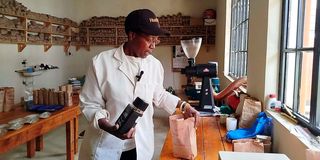
Coffee cupper Eunice Ndeti, 52, explains the processes of tasting coffee at the Baringo Cha Coffee Mill at Katimok in Baringo North on September 21, 2026.

What you need to know:
- Eunice Ndeti tastes more than 50 coffee samples a day to assess quality and help Baringo farmers improve their returns.
- At Cha Coffee Mill, careful cupping, grading and farmer feedback are helping position Baringo coffee in international markets.
The smell of freshly roasted coffee hangs in the air at a coffee mill in Baringo, where Eunice Ndeti bends over a row of small cups. In front of her are carefully measured coffee grounds. Each sample carries a number linking it to a farmer or coffee society and the season in which it was delivered.
She leans closer and inhales.
Every morning, Eunice puts her nose, tongue and years of experience to work at the Cha Coffee Mill in Baringo North. She tastes dozens of samples to assess their quality and help farmers earn better returns.


She smells the coffee, adds hot water, breaks the crust and smells again. Then she takes a sip and spits it out. On a busy day, more than 50 samples pass before her, each telling a story about the farmer who produced it.
For Eunice, 52, coffee is more than a morning drink. It is a profession that demands a trained palate, a sharp sense of smell and intense concentration. The quality of a cup can reveal how well the beans were harvested, washed and dried.
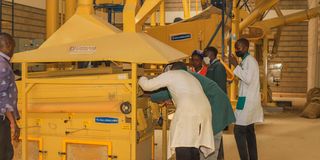
Workers at the Baringo Cha Coffee Mill in Katimok, Baringo North, ensure the machines grade the coffee to the recommended sections of the mill on September 21, 2026.
Before Baringo coffee reaches buyers in international markets, it must first pass through her trained senses. Her assessment helps determine the grade of each consignment and guides farmers on what they need to improve. It can influence whether the coffee earns a higher grade and, in turn, a better price.
Every cup she tastes is part of a growing effort to improve the quality of the county's coffee and position its beans beyond the local market.
The first test
The process starts with parchment coffee brought to the mill by farmers. Every morning, Eunice checks the samples, which carry serial numbers linked to the farmer or coffee society and to the week or season in which the coffee was delivered.
She takes less than a kilogram of parchment coffee and selects about 200g for testing. The parchment is hulled, and the coffee is weighed again to determine the milling loss. She also checks the moisture content. Coffee that has not been properly dried is flagged, and the farmer is advised on what to do differently. The process then moves to green beans and, eventually, roasted coffee.
Even before the coffee is tasted, its appearance can reveal weaknesses. Eunice examines the roasted beans, including their appearance and centre cut, then smells them to assess aroma and fragrance.
About 12g of roasted coffee is ground and hot water is added. She first smells the dry grounds. Once a crust forms on the surface, she breaks it and smells the coffee again before tasting. She spits it out and repeats the process, comparing the samples and looking for differences in acidity, body, aftertaste and fragrance.
"It is important because every coffee which is brought to the mill must be tasted, and the farmer will get a report on their coffee," she says.
A single batch can produce different results across the cups. One may qualify as AA while another is graded AB, depending on the characteristics detected during cupping. Coffee can be graded as EE, AA, AB, BB or TT. AA and AB grades may then go through a gravity separator, while Mbuni coffee is classified according to whether the beans are heavy or light and the method used to process them.
For Eunice, the differences are not merely technical. She describes good Baringo coffee as having citrus, chocolate or honey-like notes, with the climate and soil contributing to its flavour. Poor washing or drying, contamination and other problems can result in an "off flavour". Good coffee, she says, should have a balanced body and acidity, and a pleasant, consistent aftertaste.
Quality starts on the farm
The work in the cupping room is closely tied to what happens much earlier, on the farm. Farmers are expected to dry their coffee to between 10 and 10.5 per cent moisture. Proper harvesting, washing and drying can make the difference between a high-quality bean and one that attracts a lower grade.
Eunice records her findings and shares feedback with farmers on washing, drying, insect damage and other factors that affect bean quality. Her feedback is as important as the grade because it helps farmers understand what they are doing right and where they need to improve.
Her interest in the profession was influenced by her father, who was a coffee farmer. She trained for one year at a coffee college in Kiambu, then spent two years at the Coffee Board, where she tasted coffee from different grades and regions and developed her palate and sense of smell. She has worked at the Baringo mill for three years and has spent more than seven years developing the concentration and sensory skills required of a professional cupper.
There are also things a cupper must avoid. Coffee is highly hygroscopic and can absorb surrounding smells, so strong odours can interfere with tasting. Professional cuppers must therefore stay clean and avoid smoking, alcohol and strong perfumes. Smoking can leave a lingering taste on the tongue, while alcohol can affect the ability to tell flavours apart.
"You have to be able to recognise different smells and know where they come from," she says.
Cleanliness is equally important. "The testing equipment should be kept clean throughout," she says.
From Baringo to Korea
Her work has taken on added importance as Baringo seeks to position its coffee in international markets, including Korea, where the county has established a direct market for its produce. The county government has partnered with World Best Friends, a Korea-based non-governmental organisation, to promote the purchase and export of Baringo coffee to the Korean market.
The partnership also supported the establishment of the Sh100 million Cha Coffee Mill at Katimok in Baringo North. The modern facility is managed by a coffee farmers' cooperative union representing 23 societies. It can process more than 1.2 tonnes of coffee per hour and also houses packaging facilities and a business information centre that supports the marketing of Baringo coffee globally.
For farmers, the mill has reduced the cost and losses of transporting coffee to distant milling facilities. It also offers an alternative to middlemen.
Mill manager David Kendagor says the export market has helped cushion farmers from unscrupulous middlemen, while the Korean market offers more attractive prices than the local one.
In its inaugural season in 2022, Cha Coffee Mill processed 130 tonnes of coffee, earning farmers Sh30 million.
The county is now pushing for more Baringo coffee shops in Korea. By 2017, eight shops specialising in coffee from Baringo County had been established in Seoul and Suwon. The ambition is to build on that market and create stronger demand for coffee produced by farmers in the county.
Keeping a record of every cup
On the day of the visit, thousands of samples from the current coffee season were neatly stored on shelves at the mill, as a record of the coffee that has passed through the facility. The season began in October 2025 and is expected to end in October this year.
The samples are kept as references in case questions or quality disputes arise, and to help farmers track improvements in their coffee from one period to another.
A cup of coffee can reveal whether a farmer harvested the beans at the right time, washed them properly or allowed them to dry adequately. When farmers return with better coffee, Eunice knows that something has changed, and perhaps something was done properly.
While a grade gives the coffee its place in the market, the feedback can shape the next harvest. That is why she keeps returning to the cups every morning, smelling, tasting, comparing and recording.