No motorcade, no bodyguards, no illusions: Meet Parliament's most unconventional member

Bomet Woman Representative Linet Chepkorir Toto.

What you need to know:
- Linet Chepkorir Toto's journey from boda boda rides to the Bomet Woman Rep seat is a story of grit, grace, and growing pains.
- Three years into her term, she’s learning the ropes, managing voter expectations, and championing empowerment through training and health programmes—while fighting to break Bomet’s one-term curse.
A simple photograph changed everything. When Linet Chepkorir, then an ordinarily dressed young woman from a humble background, snapped a picture at a political meeting and posted it on social media, she had no idea she was about to become a national sensation. The meeting, held at then-Deputy President William Ruto's Karen residence, was packed with political aspirants. But it was the naive, fresh-faced girl in the photo who captured the nation's imagination.
The image went viral. Almost overnight, Linet—known to many simply as "Toto"—was catapulted from obscurity to the front row of Bomet and national politics. She became a poster girl for daring to dream, irrespective of background. When the dust settled on the August 9, 2022 General Election, the unthinkable had happened: at just 24 years old, she had become Kenya's youngest Member of Parliament.
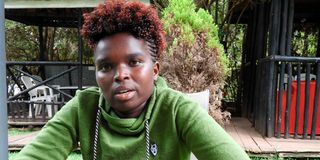
Linet Chepkorir Toto, Bomet Woman Representative aspirant, at Tai Resort in Bomet on March 3, 2022.


Today, at 27, Bomet Woman Representative sits in a Nairobi hotel for this interview, a phone and notebook in hand. No bodyguards. No motorcade. Patrons and waiters move about, seemingly unaware of the place she holds in society. It's a stark contrast to the flamboyant lifestyle of many of her parliamentary colleagues, but it's quintessentially Toto—humble, accessible, and still adjusting to the weight of her own political fairy tale.
Unlikely campaign
The campaign trail was anything but conventional. Without a car to her name, Linet walked from village to village, occasionally catching free rides from a generous boda boda rider who ferried her to social functions and church services where she sold her policies to voters. Almost everyone rallied behind her—donating equipment, motor vehicles, money. She was the underdog everyone wanted to see win.
And win she did. Spectacularly. In a county with 376,985 registered voters, Linet secured the United Democratic Alliance (UDA) party ticket on April 14, 2022, garnering 53,924 votes in the primaries. The General Election results were even more emphatic: she bagged 242,775 votes, crushing her closest rival, Dr Alice Milgo of Chama Cha Mashinani, a former nominated Senator who managed only 43,180 votes—a staggering 199,595-vote difference that the Independent Electoral and Boundaries Commission (IEBC) declared in Linet's favour.
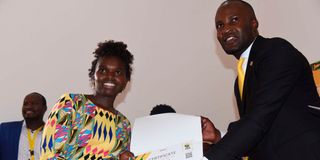
Toto receives her Certificate of nomination to vie for Bomet woman rep on a UDA ticket from the party's Executive director Nashon Odanga Pessa at Hustler Centre in Nairobi on April 27, 2022.
In a region accustomed to electing elderly politicians, choosing a 24-year-old Woman Rep was a feat unlikely to be erased from Bomet County's political history anytime soon. A fresh graduate from Chuka University with a Bachelor's degree in Business Administration, conferred in 2021 just months before the party primaries, Linet had become a role model for youth across political and professional circles.
Reality of power
"I went to Parliament as a greenhorn, but I have learnt a lot from my senior and fellow youthful MPs on leadership, parliamentary debates and government. That has helped greatly in navigating through the labyrinth of leadership in the last three years," she reflects.
The learning curve has been steep. Between adjusting to married life, motherhood, and finding her footing in the corridors of Parliament—where the national cake is sliced and shared—she has had to grow up fast. "Being a youth, my plunge into politics was to demonstrate that everything is possible and one does not need to limit himself or herself in seeking to contribute to development and general well-being of the society," she says.
But the honeymoon period is over. The shoe is now on the other foot, with voters' expectations soaring ahead of the 2027 poll. "Managing people's high expectations is a challenge because many don’t understand the role of a Woman Representative in development," she admits.
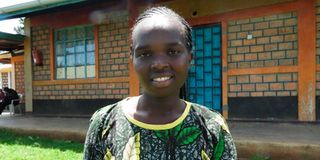
The public has supported Linet Chepkorir since she threw her hat into the ring in the Bomet woman rep race.
The frustration is palpable. "Voters should be sensitised that the Woman Representatives have very little resources at their disposal from the National Treasury as compared with MPs representing constituencies in the county, while we cover an entire county just like Senators and Governors," she explains.
Dreams meet reality
Her initial agenda was ambitious: create employment opportunities for youth, alleviate living standards for the vulnerable, support women's groups, and improve the socio-economic status of her constituents. Reality, however, has been more complex.
"It is not practically possible to secure jobs for all in the society due to scarcity of opportunities in government and the formal sector, while the informal sector presents a huge potential for growth," she acknowledges. But there's a silver lining. "Our people, especially the youth, are starting to adjust to getting an education and joining the informal sector, which includes being self-employed. Initially, everyone focused solely on the formal sector, but the narrative is slowly but surely changing."
She's adapting her approach. Currently, she's working on a model to provide capitation funds for Social Health Assurance (SHA) for 500 vulnerable homesteads—20 in each of Bomet's 25 wards. "It has emerged that there are several vulnerable members of the public who are unable to access medication due to inability to pay for SHA medical cover, thus the need to come to their rescue in the current financial year," she notes.
Misunderstood mandate
In many counties, female voters feel entitled to assistance from their Woman Reps—donations for fundraisings, hospital bills, school fees, funeral expenses, and personal problems. The process of resource allocation from the National Government Affirmative Action Fund (Ngaaf) remains poorly understood, with some voters thinking it's the Woman Rep's personal responsibility to pick and allocate funds to groups.
"I am aware that questions have been raised over the high number of tents and chairs allocated to benefiting groups in the five constituencies—Bomet East, Bomet Central, Chepalungu, Sotik and Konoin—yet it is the beneficiaries who have applied for it," Linet clarifies. "It is not in my place to choose what a group is given as I have absolutely no role in making that decision. A group applies for what the members have agreed on and upon vetting and allocation by the Ngaaf board, I only come in to distribute the funds and the equipment."
The equipment distributed tells a story of grassroots enterprise: posho mills, car wash machines, chick incubators, barber machines, sewing machines, construction equipment including wheelbarrows and hammers. Yet, demand far outstrips supply. "In the recent allocations, a total of 3,000 groups applied for funding in Bomet County, yet in the end, 24 were picked by Ngaaf as beneficiaries—a clear demonstration of the staggering numbers left out for lack of enough funds."
People living with disabilities have benefited from wheelchairs, bursaries, and funds for table banking, aimed at enhancing their livelihoods and making them economically independent. Sensitisation efforts for PWDs, other vulnerable groups, and members of the public to understand the Ngaaf application process are ongoing.
To meet job market demands for skilled human resources, Linet is implementing programs to train drivers, carpenters, plumbers, masons, hairdressers, beauty therapists, and workers in the food and hospitality industry. She's also encouraging residents with various skills to apply for jobs abroad under the guidance of the National Employment Authority.
Breaking the one-term curse
Her predecessors—Dr Ceciliah Ngetich and Joyce Korir—each served only one five-year term before venturing into other elective positions, where they lost at party primaries. Linet is determined to avoid their fate.
"I am not changing political lanes as I will be seeking re-election in the 2027 election so I can continue to implement my development roadmap for the people of Bomet County," she declares.
It's a bold statement in a region known for its impatient electorate, which routinely elects MPs for one term, kicks them out, then sometimes recycles them after realising the replacements took too long to adapt and roll out development.
"It is important for our people to change tact and elect their leaders for more than one term so they can make meaningful contributions to development by completing projects and programs they have initiated," she argues. In areas where MPs have been re-elected, better development is realised because office holders aren't starting from scratch after an election but building on their existing roadmap.
"It takes a long time for first-term legislators to learn the ropes of parliamentary business, government functions and establish a strong network. Unfortunately, when one has just found bearing, they are bundled out instead of being re-elected—a cycle I hope to overcome in the next general election," she says.
With Parliament being the heartbeat of resource sharing through various committees, senior members who've mastered lobbying are more versatile than first-term colleagues in pitching for a piece of the national cake. It's standard practice for senior MPs to chair committees based on their experience, while first-termers serve as ordinary members.
Defending the position
On suggestions that the Woman Rep position should be scrapped, Linet is unequivocal. "The suggestion is misplaced, misinformed and should simply not be entertained by Kenyans. To the contrary, the position should be strengthened and allocated more resources to at least match what goes into constituencies under the Constituency Development Fund (CDF) so that the Woman leaders can deliver on their mandate."
Voices from the ground
Emily Chepngetich, a resident of Kembu Ward, believes Linet needs to do more to secure re-election in 2027. "A high number of candidates, some with grassroots following that cannot be ignored, have declared their interest to run against her in the next election and she will have the disadvantage of incumbency, thus the need to put double efforts in delivering on her agenda."
Kenneth Towett, a youth from Kipreres Ward, takes a more sympathetic view. "When we voted her in, we were all aware that she was young and had an opportunity to learn, and she has done a great job at it, performing to the expectations of her constituents. She deserves support and not condemnation in areas that need improvement."
Betty Kirui, a teacher from Konoin, sees the emerging competition as inevitable. "The high number of candidates seeking to dislodge the Woman Representative from her position is a clear indication of the competitive nature that the position will attract moving forward."
Joyce Chemutai, a trader in Sotik, offers a different perspective on voter responsibility. "As a people, we should support leaders to deliver on their mandate and stop relying on them to sort out our personal issues including dishing out handouts, paying for our medical bills, school fees for our children and upkeep as that is not part of their job descriptions."
But in a society where voters look to politicians for solutions to socio-economic issues, Linet, like her fellow MPs, must grapple with a restless electorate's myriad challenges to remain politically relevant. "Many of my colleagues in Parliament have been branded underperformers yet they don’t have the means to reach out to voters in many areas and sort their ever-growing challenges," she observes.
A legacy beyond age
The ripple effects of Linet's election extend beyond her personal story. Many youths have declared interest in elective positions in the next poll—a sign that age may no longer be a barrier in future elections. Her victory has given young people the impetus to seek leadership positions and solve problems facing them, rather than leaving it to the elderly and often more experienced politicians.
"I am grateful to the people of Bomet for the trust they bestowed on me and I will continuously strive to put my best foot forward in serving them," she says.
As for delivering fully on her mandate, Linet is convinced of one thing: "For one to fully deliver in the leadership sphere, he or she will require more than one term as there are clear records that those who have been re-elected have gone on to be great leaders."


