On-screen motherhood queen: Angela Bassett, Whitney Houston, and Taraji Henson all called her 'Mum'
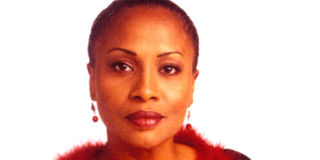
Hollywood star Jenifer Lewis. She struggled with sex addiction.

What you need to know:
- Jenifer Lewis, the 'Mother of Black Hollywood', rose from poverty, to become an acclaimed actress who portrayed maternal roles to numerous stars in over 300 productions.
- Despite her success, Lewis carried the weight of childhood trauma from sexual abuse, which led to struggles with sex addiction and bipolar disorder.
- Through therapy and determination, she eventually found healing, managing to transform her pain into powerful performances.
Jenifer Lewis has portrayed the role of a mother to several Hollywood superstars on film. She was Angela Bassett's temperamental mother in the Tina Turner biopic, What's love got to do with it. She successively played the role of Tupac Shakur's irritable mother in Poetic Justice, Whitney Houston's sassy mother in The Preacher's Wife, Morris Chestnut's hilarious mother in the 2001 hit The Brothers, and Quran Pender's inquisitive mother in the 2004 comedy, The Cookout.
She also appeared in the famous 2012 hit Think Like a Man, as Terence Jenkins's overprotective mother and played Taraji P. Henson's mother in Not Easily Broken. In 2014, Jenifer debuted in ABC's primetime black consciousness comedy hit series Black-ish and eventually won an Emmy in 2016 for her portrayal of Anthony Anderson's mother, Ruby.
She was befittingly dubbed the mother of black Hollywood and is the quintessential mother most families grew up watching on screen. Jenifer is a veteran of 300 productions, 259 episodic television programmes, 63 movies and four Broadway shows, but her immeasurable success and contingency to consistency came at a grievous cost.
As a child, Jenifer was a little barefoot poverty-stricken girl who grew up under the tutelage of a critical combative single mother Dorothy and six siblings in the small Midwestern town of Kinloch, Missouri. She started singing in church at the age of five, but when she hit puberty, the church preacher Pastor Heard molested her. She reported the traumatic travesty to her mother, who ignored her plight. That agonising experience psychologically wounded her and resulted in a consequential chain of neurotic sexual habits.
On May 25, 1979, the day after she graduated from Webster University in St Louis with a degree in Theater Arts, Jenifer flew first class on board a Trans World Airlines plane headed for New York City. Eleven days later, she was cast by music supervisor Danny Holgate on Eubie! a hit show of the 1978 and 79 Broadway season. Eubie! opened an infinite door, and Jenifer exerted the extravagant singing, dancing and acting skills she had crafted in Webster.
Her enthusiastic spectacles on stage earned her critical acclaim in the New York Times, and New York Daily News encrusted a full page picture of her wearing a costume of a white bikini, fishnets and white sunglasses. Jenifer states in her memoir, The Mother of Black Hollywood, that she was attacked at knife point in her apartment by a rapist who had seen the Daily News spread and she enacted the greatest performance of her life by talking herself out of the potentially fatal atrocity.
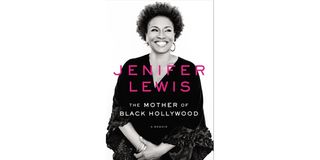
Jenifer Lewis's memoir.
The Eubie! broadway show closed on October 7, 1979, and shortly after, she was cast in a six-month nationwide tour of Eubie! During the tour, she became accustomed to seducing men at the end of every show. After every performance, Jenifer and the Eubie! crew would visit bars and nightclubs, where they'd sing, drink, and pick up a ‘piece,’ the phrase stage performers used for the individuals they’d meet and spend the night with.
Nothing could extend the thrill of a standing ovation to Jenifer like great sex with an attractive man. She possessed the unwavering conviction that she deserved a reward for an exhilarating performance. Not only was it gratifying, but she discovered that sex could lessen the post-performance depression referred to in theatrical lingo as the ‘crash’. The feeling actresses invariably incurred after exiting the stage.
It was common to have an elevated sense of self, a rush of bliss, and an uncontrollable perception of accomplishment during a performance. Similar to the adrenaline rush professional athletes feel when they're overcome by endorphins, the 'crash' after the show was equivalently intensive. It was escalated by the applause from the audience that came over the footlights in slow-motion adoration.
Her sexual infatuation transformed into an insatiable habit of using post-show sex to cope and she wore her lustfulness with a badge of honour. She used orgasms to prolong the excitement and fulfilment she felt onstage. Her naturally captivating persona enticed her prey of strangers with charm, passion and laughter. During the sexual acts, she exhibited her alpha traits by choosing the locations, positions and durations.
Jenifer graphically illustrates in her memoir that during those years of touring with the Eubie! crew, she engaged in myriad sexual encounters while crisscrossing the US. After every performance, she never went to bed alone. She was consequently inspired by the radical sexual revolution of the 1960s that persistently resulted in a liberal custom in the 1970s and cemented an accepted culture in the 1980s.
The men she slept with were stunning, talented, and accomplished. She became skilled at juggling the men she had assembled, including her famous stage co-star Gregory Hines. Reality struck in Boston when she was diagnosed with a yeast infection and gonorrhoea after sex with an alcoholic called Jack.
She was referred to Rachel, a compassionate psychologist who diagnosed her with sex addiction and placed her on medication to rein in on her manic moods and bouts of sadness. Rachel revealed to Jenifer that her hypersexuality was caused by the sexual assault she endured from Pastor Heard and was intertwined into her abandonment issues and bipolar disorder. Jenifer's sexual indulgence lessened, she managed to avoid sex for 167 days from January 1991.
The writer is a novelist, Big Brother Africa 2 Kenyan representative and founder of Jeff's Fitness Centre (@jeffbigbrother).