Spaghetti dreams and forbidden ribs: Christmas through pastoral women’s eyes
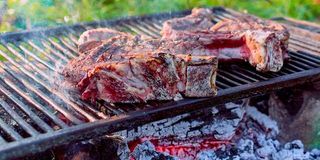
In pastoral tradition, women have little say over animals. This extends even to which parts of the meat they may eat.

What you need to know:
- Across pastoral Kenya, Christmas reveals deep gender divides; while men enjoy privilege and rest, women shoulder the labour of celebration and quietly work to protect girls from harmful traditions that intensify during the long school holiday.
- From West Pokot to Turkana, women and girls experience Christmas as a season of both joy and risk; amid feasting and family gatherings, women stand guard against practices such as FGM, early marriage and rigid cultural restrictions.
- Their efforts—through mentorship, activism and everyday choices—are slowly reshaping what Christmas means for the next generation.
In a kitchen in West Pokot, Priscah Kapchok—known to her community as Mama Chebet—has just finished milking the cows. Christmas is days away, and she knows exactly how the celebration will unfold: men will slaughter the goat, carve out the prized mbavu (ribs) roast them over an open fire, and eat together while discussing their affairs. Women like her will do everything else.
"In these parts of West Pokot, women cannot even taste mbavu," she says with a loud laugh. "We were born and found things like that, and we cannot go against it—especially when an animal has been slaughtered at home. Those who want mbavu can go and buy it in the butcheries."
Has anyone ever explained why women are forbidden from eating this particular cut? "We were told that men need to eat that particular part of an animal when they are alone. No explanation has ever been given," she says. "We pray to God that this tradition can end, because our traditional cultures will never take us to heaven."


This is December in pastoral Kenya—a season of joy and contradiction, where Christmas cheer collides with ancient customs, and where women shoulder both the burden of celebration and the weight of protecting the next generation from harmful traditions that intensify when schools close.
A girl's Nairobi dream
In Barsaloi, Samburu County, 14-year-old Angel Namunyak is playing with her two younger siblings, her heart full of anticipation. She trusts that her mother will cook chapati, beef, and spaghetti on Christmas Day. This change of diet—the first this year—will give her something to share with schoolmates when term resumes.
"I hear that people eat spaghetti and chapati in Nairobi, but I have never been there because I do not know anybody I can visit," Namunyak tells The Voice. "I would really love to see the capital city. Here in Barsaloi, no child has gone to Nairobi."
Her love for education has drawn her to science subjects, and she dreams of becoming a teacher. Years ago, such ambitions seemed impossible for girls like her. But mentorship programmes by older women, combined with awareness campaigns in pastoral communities where child marriage was once common, are gradually shifting cultural norms. Young girls now have voices to express desires beyond their villages—even if those desires are as simple as visiting Nairobi.
Namunyak's mother, Hellen Lentukunye, has found a way to bring the city to her daughter.
"I have already taught Namunyak how to cook spaghetti," she says. "This Christmas, I will cook the goat stew, then ask her to boil the spaghetti and serve her younger siblings. That way, she will feel the Nairobi part of Christmas."
But while Lentukunye plans this small gesture of joy, she knows the day's labour will fall on her shoulders. She expects at least 14 adults and several children for the family gathering. Only two women will do all the cooking.
"Here in the village, men cannot agree to cook. They say it is women's work, but they also do not budget to outsource labour," she says. "The older men slaughter the goat, then women take over."
Samosa seller with a chef's dream
Some 600 kilometres southeast in Kilifi County's Mwarandinda village, 17-year-old Fatna Kizy is also counting down to Christmas—though she has never celebrated it outside her village.
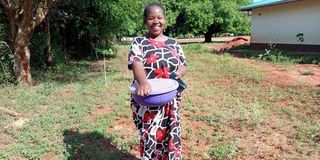
Fatna Kizzy, a Form Three student who aspires to be an international chef, during the interview at Mwarandinda in Kilifi County on December 8, 2025.
"We stay close to a shopping centre, but we do not have students from city schools who come here during holidays. Most of us learn in local schools," says the Form Three student. "I have never celebrated Christmas outside our village, but I always wish for that moment. It would expose me to life beyond here."
Fatna's dream is to become an international chef, an ambition that sets her apart from her peers. She has learned to cook from her mother and is already putting those skills to work—making and selling samosas alongside her younger sister to earn pocket money and contribute to the family's income.
"During this Christmas season, selling samosas is good business because most people here in Mwarandinda love them," she says. "This is how I make my own money while helping my mother. Even on Christmas and New Year, I will be cooking samosas and walking around selling them."
But beneath her entrepreneurial spirit lies a quiet fear. The long school holiday brings dangers that weigh on her young shoulders—the risk that she or her sister could be lured into relationships that lead to pregnancy and school dropout.
"During holidays like now, there are many boys who invite girls to their homes and have sexual affairs with them," Fatna says. "My mother always encourages me and my sister to walk together, to be each other's keeper and avoid falling victim to early sexual relationships."
The Kilimani Queens standing guard
In Isiolo County, the festive season carries a darker threat. Female genital mutilation (FGM) peaks during the December school holiday, when parents have uninterrupted access to their daughters and can transport them to rural areas for the procedure in secret.
"Parents take advantage of children being home. They take their daughters to rural parts of Isiolo to perform FGM in the most secretive way possible," says Leila Mohammed, chairperson of Kilimani Queens.
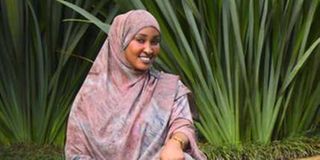
Kilimani Queens chairperson Leila Mohammed advocates against FGM during school holidays in Isiolo County.
Leila and other young women aged 18 to 22 founded the group about seven years ago to support girls' education. Since then, they have dedicated themselves to protecting younger girls from this harmful practice. Despite running her own business, Leila ensures that her first duty each day during the festive season is community outreach.
"I normally leave my house at 8am. We meet as group members at a designated place, then visit homes to talk with parents and children about the health risks of FGM until 10am, before I report to work at 11am," she says. "Today, I had conversations with community members in Bura."
Growing up as the second youngest in a family of 16 children, Leila's dream of becoming a doctor was cut short by lack of school fees. That loss fuels her determination to ensure other girls' dreams do not fail under her watch. "The girls now know us. They always run to us for rescue whenever they learn of plans to subject them to FGM," she says.
But the work has come at a cost. "The name Kilimani Queens is famous in Isiolo. Whenever people see us, they call us gossipers. We have been threatened many times by the older women who perform FGM," Leila says.
The group has taken a transformative approach—retraining the cutters themselves. "We are now taking them for training on different economic activities to equip them with skills to earn money for their livelihoods. For a long time, they believed they could only earn through the razor blade."
The results keep her going. Some of the girls they have saved are now in Grade Six; others completed Grade Nine this year. "I feel very proud because we have saved many young girls. If we were not educating the community, the majority of them would have undergone FGM."
A mother's vigil in Maasai land
In Kajiado County's Rombo village, Loise Sankaine faces a parallel battle against early marriage—another practice that surges during the long December holiday.
"Early marriages here result from bad traditional Maasai culture that some parents still practise, combined with poverty," says Sankaine, vice-chairperson of Amboseli Women Forum. "This being a long holiday, I bring many girls together at my home to create awareness. Some of them we take to rescue centres."
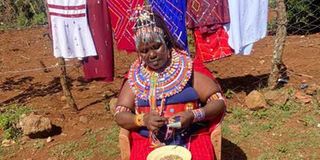
Loise Sankaine, the vice chairperson of the Amboseli Women Forum that champions women’s rights and rescues girls from early marriages.
She cannot afford to rest. "I feel that if I keep quiet and stay home because it is Christmas, many female students will drop out of school when January comes," she says.
Sankaine uses her position with the Amboseli Women Forum to teach fellow women about their rights and how to make decisions that protect those rights within their communities. While she looks forward to celebrating Christmas, the happiness of other young girls remains her top priority.
She reflects on how much has changed since her own girlhood, when education and Christianity were uncommon. "The increase of schools and churches where women's empowerment lessons are taught has contributed greatly to our development as women," she says. "It has led to many changes in how we approach life in this century.
"Our girls nowadays celebrate Christmas. We go to church together, and we give them sanitary pads, underwear, and other basic needs. We older women understand the importance of supporting young girls. That is why we take care of as many as possible to ensure they are safe and do not get swayed by men."
Decades of this work have borne fruit. Her firstborn is now a teacher. Her last-born has just completed Grade Nine and will continue her studies next year. "I have educated my children, and the older ones are already employed," Sankaine says. "My Christmas plan is to be happy. I am a Christian, so I am waiting to celebrate the birth of Jesus Christ, to stay on good terms with my children, and to have a good start to the year—even as I prepare for January, because I have children continuing with high school and university education. I am currently looking for their fees."
Sankaine, who is also a tailor selling Maasai attire, has noticed urbanisation slowly reshaping gender roles—even in celebration. "Nowadays, even we women celebrate Christmas, weddings, and graduations because we hire outside catering. In the past, we used to call all the women in the community to come and cook during such gatherings. But now we invite neighbours to come, sit, and celebrate fully—not to work. We contribute as a family, pay professionals to cook and serve us, and we enjoy eating in comfort."
The doctor who will still be on duty
Yet some traditions remain unmoved. In Lodwar, the capital of Turkana County, Dr Janerose Lokomol—a Master of Medicine student in radiology and imaging at Moi University and medical officer at Lodwar County Referral Hospital—knows that a man must slaughter the Christmas goat.

Dr Janerose Lokomol, a Master of Medicine in Radiology and Imaging student at Moi University and medical officer at Lodwar County Referral Hospital.
"Our security guard, who is a man, will slaughter a goat for Christmas Day," she says. "Usually, after church on Christmas, we roast a goat and cook loads of meat. Every homestead you visit in Turkana now, you will eat meat until you get tired of it and start wishing for beans or something different."
But Dr Lokomol will spend part of the day at the hospital, ensuring patients receive care. "We party on Christmas Day, and that means a lot of cooking. I have three nannies taking care of my two-and-a-half-year-old twin boys. They help me with cooking because I will still be on my toes making sure people get services at the hospital—we work 24 hours—while also making sure everything runs smoothly at home," says the Turkana Girls National School alumnus.
The meat women cannot taste
Back in West Pokot, Mama Chebet—mother of three and grandmother to more than 10—has embraced mixed farming to keep her family fed. She grows maize, beans, vegetables, and fruits, keeps poultry, and rears livestock. But in pastoral tradition, women have little say over animals. This extends even to which parts of the meat they may eat.
"Men slaughter the animal while fire is burning next to where the slaughtering happens," she explains. "Immediately they are done, they take the mbavu, roast it, and enjoy eating while discussing their own issues."
The soft, tender ribs remain forbidden to women and children. "Mbavu is a soft part of the animal. Its meat is very light, which is why they roast it," she says. "Unlike the intestines, which men tell us to boil quickly and eat with ugali."
She has celebrated many Christmases, and to her, the day remains much the same. But for the young generation, she observes, it feels different—more festive, more expectant.
Spaghetti and safety
As Christmas Day approaches, young Angel Namunyak's dream of celebrating in Nairobi will not come true this year. But her mother has a plan: a slaughtered goat, a pot of stew, and a daughter who now knows how to boil spaghetti.
In that small kitchen in Barsaloi, a 14-year-old girl will serve her siblings a meal that tastes, perhaps, a little like the city she longs to visit.
Across pastoral Kenya, this is how December unfolds—in the dreams of young girls, the vigilance of women protectors, the persistence of old traditions, and the slow, patient work of change.