The lawyer determined to stop masqueraders from taking over advocates’ work

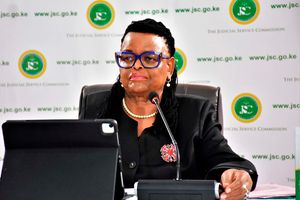
Cynthia Muthoni Gachara, who is vying for the Nairobi Representative seat in the upcoming LSK elections.

What you need to know:
- Admitted to the bar in 2020 after completing her law degree at Mount Kenya University and training at the Kenya School of Law, Cynthia practises primarily in civil and criminal litigation.
Cynthia Muthoni Gachara has spent six years navigating the pressures of legal practice in Nairobi, from managing her own firm to serving at the Nairobi branch of the Law Society of Kenya (LSK).
Now, she is taking her experience to the national stage, vying for the Nairobi Representative seat on the LSK National Council in the elections slated for February 19.
Admitted to the bar in 2020 after completing her law degree at Mount Kenya University and training at the Kenya School of Law, Cynthia practises primarily in civil and criminal litigation.


She runs her own firm in Nairobi, a venture she describes as one of the defining moments of her career.
"I started from home with no files, just holding briefs for other advocates," she recalls. "Opening my firm and sustaining it into the fourth year showed me what persistence looks like in this profession."
Her leadership journey, however, began much earlier—from serving as a prefect in primary school to holding leadership roles at university and later within the Nairobi branch of LSK.
She has served as a branch council member for two years, opting not to seek re-election at branch level in favour of pursuing a national role.
If elected, she says her priorities will revolve around what she calls a "rights-based agenda": the rule of law, independence of the legal profession, devolution within LSK, and efficiency in courts and land registries.
Devolution of resources to LSK branches is a cause she became passionate about while serving at branch level.
"Branches are closer to advocates. If adequately funded, they can respond faster and more effectively to issues affecting members," she says.
She highlights the rise of masqueraders—unqualified individuals handling legal work, from company registration to conveyancing—and says she is determined to put an end to it.
"Our bread and butter is being taken away," she says.
"Masquerading leads to undercutting, which undermines the Advocates Remuneration Order and hurts honest practitioners."
She argues that branch-level structures, if well-resourced, would be better placed to work with law enforcement and regulators to tackle the problem effectively.
Her experience as co-convener of the Litigation Practice Committee at LSK Nairobi Branch has shaped her leadership outlook. During her tenure, she says, she helped organise monthly learning forums featuring senior members of the bar and bench.
"Continuous learning is critical in this profession," she says.
"The turnout, sometimes over 500 advocates per session, showed that we were meeting a real need."
Looking back, Cynthia admits that not everything went as planned. One key challenge was her attempt to lobby for increased funding from the national office and donors, an effort she says did not yield the results she had anticipated.
On transparency and accountability, she maintains that openness must remain non-negotiable at the council level.
"Members deserve clear explanations of decisions taken on their behalf. That culture should continue," she notes.
With around 18,000 advocates on the LSK register, Cynthia hopes her experience at the Nairobi branch will persuade her peers to give her a chance at the National Council.
"I have served at the branch. I understand the pressures: financial strain, shrinking work, and mental health challenges," she says.
"Given the opportunity to serve at the National Council, I will do my best to ensure advocates' voices are heard and acted upon."