The state of Kenyan boy child: A timeline of advocacy, setbacks, and change
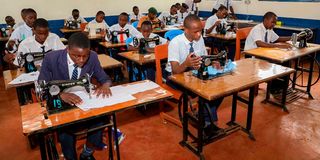
Students at Gituru Boys High School in Murang'a County attend a home science lesson on June 3, 2026. The growing participation of boys in subjects traditionally viewed as feminine reflects changing ideas about masculinity and gender roles in Kenya.


Men as allies in gender equality
In the early 2000s, when advocates of men’s involvement in care work through initiatives such as MenCare and MenEngage began raising these issues at global conferences and United Nations meetings on gender equality, they were often met with scepticism and ridicule.
Nevertheless, the conversation had begun.
In Kenya, early efforts focused less on men's rights and more on engaging men as allies to address violence against women and girls.
One of the earliest organised initiatives was led by the African Women's Development and Communication Network (Femnet), which developed the men-to-men consultation on gender-based violence (GBV) as part of its men against GBV programme. Held in Nairobi from December 6 to 9, 2001, the consultation brought together 27 men from Kenya, Malawi, Namibia, and South Africa.
Hats off to the men stepping up to ease wives' unpaid domestic and care burden
Femnet engaged participants in their various capacities as fathers, lawmakers, religious leaders, politicians, brothers, and citizens. The consultation aimed to sensitise them to the extent, forms, and impact of gender-based violence in Africa, and its implications for equality, development, and peace. Participants also examined men’s roles as perpetrators of violence, explored the factors contributing to such behaviour, and identified strategies to transform attitudes and behaviours that perpetuate inequality.
Eleven years later, the network launched the men-to-men strategy toolkit on working with men to combat GBV, further strengthening efforts to engage men in advancing gender equality.
2001 - 2005
The rise of men’s rights advocacy
By the mid-2000s, the conversation began to shift from viewing men as allies in gender equality to raising concerns about the welfare of men and boys themselves.
A major turning point came in 2006 with the establishment of Maendeleo ya Wanaume by Nderitu Njoka. Founded as the male counterpart to Maendeleo ya Wanawake, the organisation quickly became one of the most visible platforms advocating for the welfare and rights of men in Kenya.
The period also saw the emergence of organisations focused on masculinity and the wellbeing of boys and men. In 2012, the Masculinity Institute was established to promote the social, cultural and mental wellbeing of boys and men.
At the same time, public attention increasingly turned to violence experienced by men. During the 2007–08 post-election violence, some men and boys were subjected to forced circumcision, an act that constituted a serious violation of bodily integrity and later featured prominently in discussions on male victimisation during periods of conflict.
Reports of severe intimate partner violence against men also gained national attention, including physical assault and genital mutilation.
In 2014, the National Crime Research Centre released findings from a study on gender-based violence conducted in 13 counties: Nairobi, Mombasa, Kilifi, Machakos, Meru, Kiambu, Nyeri, Nakuru, Samburu, Kisii, Migori, Busia and Vihiga.
The study found that 68.9 per cent of male respondents reported experiencing bodily harm inflicted by a woman. Overall, a higher proportion of men than women reported instances of bodily harm inflicted by women on men.
The report observed that this reflected both changing social attitudes and a growing willingness among men to acknowledge experiences of victimisation that had traditionally remained hidden.
As concerns grew that boys were being left behind in education and social development, additional advocacy organisations emerged. Among them was the African Boy Child Network, established in 2016.
On its website, the organisation argues that boys face growing challenges related to identity, emotional wellbeing and societal expectations. It advocates approaches grounded in care, compassion, and positive development.
The period also witnessed the growth of programmes supporting boys and men at risk of abuse.
In 2021, for instance, Lifesong opened a halfway house in Ngong’ for boys and men who had exited prison or experienced violence, neglect, and other forms of vulnerability.
2006 - 2020Mental health, education and inclusion come into focus
Mental health
Between 2021 and 2025, media reports across Kenya documented a rise in suicides involving men and boys, drawing attention to men's mental health as an emerging public concern.
Many of the reported cases involved young men, fathers and, in some instances, children.
The stories highlighted the challenges men face in navigating economic pressures, family difficulties, illness, and social expectations that often discourage emotional vulnerability.
Counties including Kiambu, Murang'a, Migori, Nyeri, Kisii, and Homa Bay featured prominently in media reports on suicide.
According to statistics released by the Directorate of Criminal Investigations in 2021, Kiambu recorded the highest number of suicide deaths at 109, followed by Murang’a (37), Kisii (25), Kakamega (24), and Nyeri (21). Although the figures did not provide a gender breakdown, they indicate a growing mental health challenge.
In Kamahuha Ward in Murang'a County, nine suicides were reported within 10 months. Seven of those who died were male and two were female, with all aged between 12 and 29 years.
Reported causes included relationship challenges, religious influences and other personal struggles.
Are you an abused man? Here's where to find help in Kenya
In Migori County, several incidents involving men were linked to domestic disputes and family challenges. In Homa Bay, a police officer reportedly struggling with marital and work-related pressures was found dead in April 2025. In Kiambu, a 55-year-old man battling cancer died by suicide in January 2023.
Despite these challenges, support services have expanded.
In June 2021, the Dan Shieshie Foundation launched the toll-free 1198 helpline to provide counselling and guidance at a time when COVID-19 restrictions and economic pressures were contributing to rising reports of gender-based violence and mental distress.
Prostate cancer
Kenya’s gender equality milestones in 2025: Progress for women and men
Men's health has also increasingly featured in public discourse.
According to the World Health Organisation's Global Cancer Observatory, prostate cancer was responsible for 2,029 deaths in Kenya in 2022, with 3,582 new cases recorded that year.
Health experts have repeatedly warned that low screening uptake among men remains a major challenge.
Dr Joan-Paula Bor, Acting Head of the National Cancer Control Programme, has previously noted that many men delay seeking healthcare until illnesses have advanced.
Advocates have, therefore, called for male-friendly clinics and services that encourage men to seek medical attention without stigma.
One response has been the introduction of male-focused medical camps.
In Nyeri County, more than 500 men attended the inaugural in-reach clinic at Othaya Sub-County Hospital. Participants accessed cancer screening, non-communicable disease checks, blood pressure and diabetes monitoring, HIV testing and counselling, and general consultations.
The initiative reflected growing efforts to improve men's health-seeking behaviour and address preventable causes of illness and death.
Education
Recent data have also raised concerns about boys' participation in education.
A report released by Usawa Agenda in May 2026 found that more boys than girls of school-going age were out of school in Kenya. The report showed that five in every 100 boys were out of school compared with four in every 100 girls.
Usawa Agenda Executive Director Dr Emmanuel Manyasa said the findings raised important questions about why boys were increasingly dropping out of school despite being fewer in the population.
Why are more Kenyan boys dropping out of school?
He pointed to fishing communities and areas where economic opportunities compete with schooling as possible explanations.
In Meru County, for example, some boys reportedly leave school because they view the miraa trade as more lucrative than formal education.
Munyasa argued that social expectations requiring boys to become providers at an early age may also be contributing to school dropout rates.
Meanwhile, six counties recorded more girls than boys sitting the 2025 Kenya Junior School Education Assessment.
Why boys have fallen behind in Asal counties where more girls sat KJSEA
Four of the counties - Marsabit, Isiolo, Samburu and West Pokot - are in arid and semi-arid regions.
Speaking previously to the Nation, gender equality advocate in Samburu County, John Leparsanti, attributed some of the disparity to drought and pastoralist livelihoods.
“We have seen in remote areas such as Wamba and Serolipi that parents are not taking their boys to school. When there is drought, the boys are pulled out to take care of the cattle," he said.
An enduring barrier: The persistence of stigma
'Useless men; half-men': Male GBV survivors face online ridicule despite calls to speak out
While awareness of violence against men has increased, stigma remains a significant barrier.
Between March and May 2026, several prominent male survivors of domestic violence faced intense ridicule online after publicly expressing views on unrelated issues.
Some social media users dismissed them as weak or incapable of speaking authoritatively because they had allegedly experienced abuse from their partners.
The reaction highlighted a broader contradiction. Although society increasingly encourages men to speak out about abuse, male survivors often face ridicule when they do.
Research has consistently shown that stigma, shame and fear of humiliation discourage many men from reporting violence or seeking support.
A 2024 study examining myths surrounding technology-facilitated gender-based violence against men recommended identifying and challenging the misconceptions that contribute to such stigma.
Kenya’s National Policy for Prevention and Response to Gender-Based Violence also recognises that misconceptions about gender-based violence can undermine efforts to support all survivors.
The policy notes that the widespread perception of gender-based violence as exclusively a women's issue can result in the neglect of male survivors and discourage reporting.
According to the policy, stigma remains a key factor complicating responses to gender-based violence across the country.
Dan Shieshie, an advocate against violence targeting men, argued in a previous interview that greater public awareness is necessary to challenge these attitudes.
“The society is yet to accept the fact that men are equally victims, and that has contributed to few men reporting the assaults or sharing their experiences. But we must realise that we will only co-exist well if we address SGBV issues for both men and women,” he said.
2021 - 2026The way forward


The Ministry of Gender, through the State Department for Gender Affairs and Affirmative Action, has outlined a roadmap to address challenges facing men and boys in the National Male Engagement and Inclusion Strategy (2025–2030).
The strategy seeks to promote positive masculinity, encourage behaviour change and help men and boys challenge harmful stereotypes.
It also proposes creating safe spaces where men can access psychosocial support, discuss mental health challenges, and seek help without fear of judgement.
The strategy promotes advocacy to improve health-seeking behaviour among men and reduce the stigma associated with seeking healthcare.
It further proposes economic empowerment initiatives targeting men and boys, particularly those affected by unemployment, poverty, and social exclusion.
In addition, the government plans to support campaigns against alcohol, drug, and substance abuse, while also promoting the reintegration of former offenders into community life.
Whether these interventions will produce lasting change remains to be seen.