When doctors become perpetrators: The hidden face of FGM in Kenya
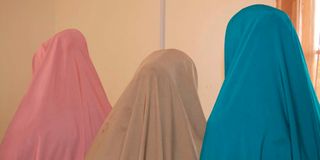
Marsabit girls who underwent medicalised FGM.

What you need to know:
- The practice is internationally recognised as a violation of human rights, with an estimated 230 million girls and women worldwide having undergone it, including four million new cases reported by the global agency.
Catherine Menganyi's excitement about the December 1997 family trip was palpable. Like every year, the 12-year-old looked forward to leaving Nairobi for her parents' rural home in Kuria, Migori County, where the extended family would gather for the festivities.
But this homecoming would be different. When they arrived, guests had already assembled at the homestead. An announcement followed: Catherine would undergo Female Genital Mutilation (FGM) the next day.
"I had spent most of my life in Nairobi, so information on FGM had remained scarce," Catherine recalls. Her grandmother offered to explain what the practice entailed, but nothing could prepare her for what came next.


The following morning, a group of women escorted Catherine and another girl to the homestead's backyard, singing and dancing as they walked. Moments later, surrounded by the women, she was pinned to the ground and undressed. A female health worker performed the cut.
"All this time, I had lots of hatred towards my violators. How were they celebrating while I was in so much pain?" Catherine says. "The entire exercise was also embarrassing. There is an age when a child doesn't willingly undress around people, but I was there, undergoing the cut right in the middle of older women, some of whom I didn't even know."
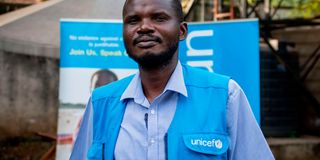
Jackson Onyando, Unicef's child protection specialist and technical leader on harmful practices in Kenya.
The singing and dancing continued as she lay on the ground, crying and bleeding, while women threw money her way. To stop the bleeding, which continued for nearly 24 hours, she was given beer and medicinal leaves. The health worker, whom Catherine now recognises as a clinical officer, proceeded to perform the cut on the other girl before leaving their compound.
For years, Catherine harboured hatred for that health worker. "To me, the health provider was in a position to protect us but had chosen to abuse her powers instead," she says.
The growing face of medicalised FGM
According to the United Nations Children's Fund (Unicef), FGM refers to all procedures involving partial or total removal of the female external genitalia or other injury to the female genital organs for non-medical reasons. The practice is internationally recognised as a violation of human rights, with an estimated 230 million girls and women worldwide having undergone it, including four million new cases reported by the global agency.
In Kenya, the latest Demographic Health Survey (KDHS) places FGM prevalence at 15 per cent, a significant reduction from 38 per cent in 1998. However, gender advocates say the numbers remain alarmingly high.
The 2022 statistics reveal that prevalence increases with age: 23 per cent of women aged 45 to 49 years have undergone FGM compared to nine percent of those aged 15 to 19 years. The report notes that "the risk of FGM increases with background characteristics including poor households, rural women, less education, and religious backgrounds."
What troubles experts most is the emerging trend of medicalised FGM. The latest KDHS revealed that while 84 per cent of FGM cases in Kenya are conducted by traditional practitioners, 16 per cent are performed by health workers. The practice remains most common in Kisii and Nyamira Counties, where KDHS places prevalence at over 60 per cent.
Jackson Onyando, Unicef's child protection specialist and technical leader on harmful practices in Kenya, explains that medicalised FGM refers to when the practice is done by a professional health expert.
"There are cases where the experts conduct the exercise in private clinics, while in some instances, they go to the survivor's home late at night," he says. The practice remains common among populations who believe it is less severe and harmful when performed by trained professionals.
But Onyando warns that whether done by a skilled health expert or a traditional attendant, the practice remains a violation of human rights. "The vice exposes the girls to school dropouts and early marriages. Despite engaging in sex having transitioned to womanhood, they face difficulty in having sex when married while also being exposed to fistula during childbirth," he says. "
Relevant studies have also shown that a woman who went through FGM is likely to have her daughter go through the same.
According to a 2025 World Health Organization report, while the health sector plays a key role in stopping FGM and supporting survivors, evidence suggests the practice is increasingly being performed by health workers in several parts of the world.
As of 2020, an estimated 52 million girls, one in every four girls and women subjected to FGM, underwent the procedure at the hands of health workers.
"The health sector has an essential role in preventing FGM. Health workers must be agents for change rather than perpetrators of this harmful practice, and must also provide high-quality medical care for those suffering its effects," said Dr Pascale Allotey, WHO Director for Sexual and Reproductive Health and Research, and the United Nations' Special Programme for Human Reproduction, in a 2025 briefing.
The silence around medicalised FGM
Catherine emphasises that the cultural rite remains a violation of human rights whether performed by a skilled medical officer or community members, often exposing young girls and women to emotional and psychological trauma.
"A number of people have turned to health workers for FGM, thinking it is more sophisticated and safer, but nobody speaks about the psychological trauma that comes with the experience," she says.
Unlike other girls often forced to drop out of school and marry after the cut, Catherine was fortunate to re-join her classmates the following year. She later pursued a nursing course, but even there, trauma followed her. Classmates who knew which community she came from would share video clips or stories about FGM.
"Some would go ahead to tell me that my community was only good at subjecting young girls to the cut and nothing else," she recalls.
Now an advocate against the practice, Catherine says medicalised FGM continues to happen in Kenya silently. Survivors who open up about their experience are rarely willing to reveal the identity of the health workers involved. In one incident she came across in 2023, the survivor only revealed that she had undergone the cut with the help of a health expert, refusing to name the perpetrator.
Onyando identifies several gaps that allow medicalised FGM to persist: entrenched social norms, infiltration by quack health professionals, power dynamics that leave women unable to make choices, and the belief that the practice is safer when done by a medic.
The long road to ending FGM
The anti-FGM expert stresses that ending the vice, which remains deeply rooted in numerous communities, is not a one-off exercise. He calls for law enforcement officers to work closely with community members and emphasises the need for FGM survivors to share their experiences to create awareness.
Unicef is currently using grassroots organisations to change community social norms around FGM and working with women-led grassroots organisations advocating against the
practice.
"We have also engaged survivor movements at county levels, sharing their experiences on community radio stations in a language that the masses can understand," Onyando says. Among Muslim communities, Sheikhs are also involved to create awareness in communities and mosques.
"Last year, we managed to get around 166 million dollars for the Anti-FGM Board that enabled them to employ additional staff," he says.
This year's anti-FGM theme, Accelerating Investment to End Female Genital Mutilation, calls for local ownership and government commitment of resources to end the vice.
However, Onyando warns that with current trends, including underfunding, the 2030 goal of eradicating FGM might never be achieved.