A Kiambu politician accused of murdering her husband has been blocked from travelling to South Korea for a government-to-government engagement, with the High Court citing concerns over her ability to return to Kenya for trial.
Gladys Njeri Mwangi alias Chania wanted to temporarily recover her passport, but the court rejected her request, saying the proposed trip scheduled for October 1 to 6, 2026 was not exceptional. It added that concerns over international flight risk remained.
She was charged alongside Morris Kamau Mbugua after police investigators examined the circumstances surrounding Mwangi’s disappearance.
George Mwangi who was found murdered and his body dumped in Kieni forest, Kiambu.
Photo credit: Family Album
Declining her application for temporary release of the travel document, Justice Bahati Mwamuye held that although Ms Chania remains presumed innocent, the proposed foreign trip was not an exceptional circumstance such as medical treatment or graduation.
"The international travel sought is not of an urgent, life-changing or monumental nature such as medical treatment, a graduation or the like. Indeed, the first accused has conceded that the visit to South Korea is part of activities she has routinely been engaged in before being charged," the court said.
The court also held that her inability to provide a refundable security deposit did not address the court’s concerns about international flight risk.
"It is thus not exceptional enough to warrant favourable exercise of discretion," the court added. Ms Chania is a former Kiambu Woman Representative candidate.
The passport had been deposited in court as a bail condition intended to secure her attendance at the murder trial, with the judge noting that any foreign travel required a specific application for its temporary release.
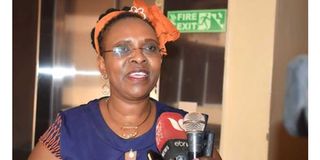
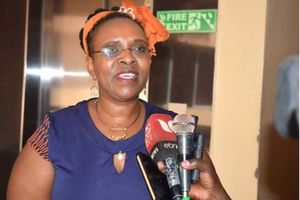
Gladys Chania and Morris Mbugua when they appeared before a Kiambu court on October 17, 2022. They are the suspects in the murder of Rwanda based businessman George Mwangi.
Photo credit: Pool I Nation Media group
Ms Chania, through her lawyer, relied on the presumption of innocence and told the court that her planned travel to the Republic of South Korea followed a government-to-government invitation for which she was one of the attendees from Kenya.
She said the activities were part of her initiatives she had pursued even before the murder case began.
The prosecution opposed the request, relying on concerns raised before she was released on bail, particularly the risk that she could flee or abscond. The State also sought additional security and sureties.
Ms Chania’s lawyer responded that the flight-risk question had already been addressed in the earlier bail and bond decision. She told the court she was financially unable to deposit any money as security.
The judge said her passport had been deposited in court under an earlier order intended to secure her attendance during the murder trial.
“A murder trial, even against the backdrop of the presumption of innocence and the prosecution being the burden of proof, is unavoidably unconvincing on accused persons,” the court held.
It added: “In order to secure attendance of the first accused person, my predecessor Judge ruled that the first accused deposits her Passport in court, and if she were to travel abroad, to apply for its temporary release.”
“That inability has not allayed, and has indeed reinforced, this court’s concern as to international flight risk, which is obviously greater than domestic flight risk,” Justice Mwamuye said.