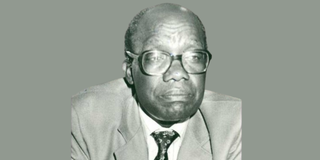
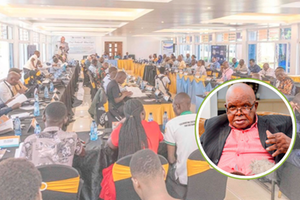
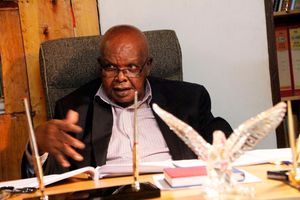
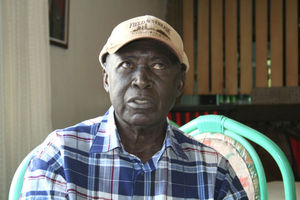
The death of Professor Godfrey Muriuki in the middle of last week marked the passing of a pioneering historian who helped change how Africa’s past was studied and whose voices counted in telling it.
Muriuki belonged to a generation of African scholars who challenged the colonial assumption that societies without extensive written records had little history worth investigating.
Their work brought oral traditions into historical scholarship, recovering accounts of migration, settlement, exchange and political organisation preserved within African communities.
Following the trail blazed by Bethwell Ogot, Muriuki enrolled at the University of London to study Kikuyu history. His research became part of a wider intellectual undertaking: establishing that the African past extended far beyond the arrival of explorers, missionaries and colonial administrators.
Ogot’s History of the Southern Luo, published in 1967, demonstrated the possibilities of reconstructing migration and settlement through oral traditions. Muriuki’s research on the Kikuyu belonged to the same scholarly transformation. Their intellectual connection also found expression in Kenya Before 1900, edited by Ogot, to which Muriuki contributed a chapter on the precolonial Kikuyu.
Together, such studies widened the foundations on which Kenya’s history could be written. African communities emerged as societies with complex pasts, shaped by their own decisions, relationships and institutions.
Born in July 1937, Muriuki followed an educational path through institutions that nurtured a generation of African scholars. He attended Ngorano Primary School and Government African School, Kagumo, before entering Makerere University College in 1959.
He studied history and graduated in 1964. Between university terms, he worked in several settings, including teaching at Tumutumu Teachers Training College and Kagumo Secondary School. In July 1964, he became a history tutor at the College of Social Studies, Kikuyu, within University College, Nairobi. Two years later, a Rockefeller Foundation scholarship took him to the School of Oriental and African Studies in London.
His doctoral research placed him at the centre of a methodological debate with implications beyond the university. If written documents remained the principal measure of historical knowledge, much of Africa’s past would continue to be viewed through records produced by outsiders. Recovering that past required historians to broaden their sources and develop rigorous ways of interpreting them.
Muriuki’s doctoral thesis, “A History of the Kikuyu to 1904”, completed in 1969, systematically collected and analysed historical traditions. His best-known book, A History of the Kikuyu, 1500–1900, followed in 1974.
Its chronological reach made an argument of its own. The society Britain conquered possessed centuries of history that demanded investigation in their own right. Colonial conquest was an episode within that history; it could no longer serve as its starting point.
Muriuki’s generation pursued this scholarship as African countries dismantled colonial rule. Political independence brought questions about intellectual authority into universities and classrooms.
Who would write Africa’s history? Whose experiences would shape its narrative? What evidence would count?
For Muriuki, Ogot, Gideon S. Were, Henry Mwaniki and William Ochieng, among others, answering those questions meant undertaking painstaking research. They showed that historical knowledge survived within institutions of memory and passed between generations long before researchers arrived with notebooks and recording equipment.
Securing recognition for oral traditions carried political significance. It challenged an intellectual hierarchy that privileged written documents while dismissing knowledge preserved through speech. It also enabled historians to investigate African societies across periods for which documentary records were scarce.
The change was substantial. Accounts of migration, exchange, conflict and institution-building became sources to be examined, compared and interpreted. Communities whose pasts had been filtered through colonial descriptions could contribute their own inherited knowledge to historical reconstruction.
This did not make documentary sources redundant. It changed their position. The writings of explorers, missionaries, traders and colonial officials could be assessed alongside other evidence, with attention to the interests and assumptions of those who produced them.
Muriuki’s contribution, however, should never be reduced to an unquestioning celebration of everything remembered. His scholarship depended on distinctions between different kinds of oral material and careful consideration of what each could establish. His thesis identified the genealogies of mbari, or kinship groups, as more useful for historical reconstruction than popular origin myths perpetuated by the likes of Jomo Kenyatta in Facing Mount Kenya. Thus, recognising oral traditions as evidence required examining how accounts had been transmitted, comparing their claims and acknowledging their limitations.
Muriuki taught us something: that a historian’s task involved listening closely and asking difficult questions. How far back could a genealogy reliably reach? What relationships did a tradition preserve? Where did the available evidence support a conclusion, and where did uncertainty remain?
His research also complicated comfortable assumptions about communal origins. To Muriuki, genealogical evidence presented the Kikuyu as a population formed from diverse elements, not a homogeneous community. That finding opened a way to understand community formation as a historical process involving movement, interaction and incorporation. Such scholarship mattered because accounts of origins could become assertions of fixed identity. Muriuki’s work demonstrated the value of investigating how communities developed over time.
Muriuki also helped build the institutions that sustained historical scholarship. He chaired the University of Nairobi’s History Department from 1975 to 1989 and became professor of history in 1987. His career included visiting appointments at Stanford, SOAS and the University of the Western Cape, alongside a Fulbright appointment in the United States. Through postgraduate supervision and examining work across African universities, he helped train and assess succeeding generations of scholars.
To remember Muriuki adequately is to recognise the intellectual labour behind changing what a discipline accepts as evidence. With Ogot and their scholarly generation, he helped establish that knowledge preserved within African communities could sustain rigorous investigation of Africa’s past.
His legacy lies in the historical possibilities that work opened—and in the discipline he brought to listening, questioning and writing.