On a busy Wednesday morning in Nairobi City, Dr Victoria Nthunya Mutiso set off in a taxi, unaware that her journey would tragically end in gunfire.
Within moments, according to police investigators, armed attackers struck before disappearing into traffic using a motorbike. The killing of the respected clinical psychologist and mental health researcher has shocked the country.
Beyond the tragedy remain questions that investigators, security experts and the public have repeatedly asked over the past decade. Why do so many of Kenya's high-profile targeted killings appear to follow the same script?
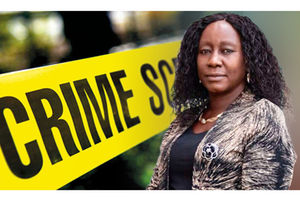
An undated photo of slain clinical psychologist and mental health researcher Dr Victoria Nthunya Mutiso.
Photo credit: Pool
The names span politics, business and the legal profession. Kabete MP George Muchai. Businessman Jacob Juma. Kasipul MP Charles Ong'ondo Were. Lawyer Mathew Kyalo Mbobu — and now Dr Mutiso.
Victims and circumstances may be different but investigators' accounts, court proceedings and police statements reveal recurring operational features that are difficult to ignore.
Attacks are often swift and brief. The victims are travelling in vehicles. Assailants appear to know their routes. The shooting is carried out at close range. The attackers vanish within seconds, frequently using motorcycles to weave through traffic before police can respond.
Dr Mutiso's killing has become the latest case to revive debate over that pattern. Police said the clinical psychologist and mental health researcher was travelling in a taxi when attackers struck before fleeing. Detectives have launched a homicide investigation and have arrested suspects as they seek to establish who planned the attack and what led to it.
“Two persons of interest are in lawful custody and are undergoing interrogation as part of ongoing investigations. Additional investigative actions remain underway as detectives continue to analyse the recovered exhibits and pursue other critical leads,” said the Directorate of Criminal Investigations on Thursday.
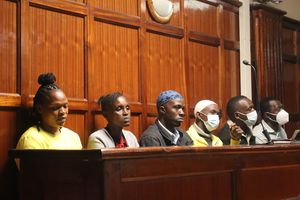
A woman and her son, who have been arraigned over the Wednesday cold-blooded murder of Dr Mutiso, will know their fate on August 3, 2026, when a court determines whether to detain them for 30 days.
Rose Mbithiwe Mulwa and Chris Mulwa before the Milimani Law Court on July 31, 2026. The two are persons of interest in the fatal shooting of Dr Victoria Mutiso that happened in Nairobi's Upper Hill area.
Photo credit: Billy Ogada | Nation Media Group
Ms Mulwa is the ex-wife of the late Dr Mutiso’s husband, Prof David Musyimi Ndetei, while her son is an advocate. The two will remain in police custody awaiting the ruling on Monday
The investigation is still in its early stages with detectives analysing forensic evidence, reviewing electronic records and reconstructing movements before and after the shooting.
The questions surrounding her death echo those that have followed several other high-profile murder investigations over the past 10 years.
One of the earliest was the killing of MP Muchai and three other occupants of his vehicle in February 2015. Gunmen ambushed the legislator in Nairobi's central business district, killing him, his two bodyguards and his driver.
Detectives said a masked gunman stepped out of a car that blocked Muchai's vehicle, shot the MP, his two bodyguards and driver at close range, then escaped in the attackers' waiting car. Investigation eventually resulted in convictions, making it one of the few high-profile political assassination cases to reach a judicial conclusion.
Although circumstances differed from later attacks, investigators regarded it as a carefully planned operation rather than a spontaneous act of violence.
The late businessman Jacob Juma, who was killed on May 6, 2016.
Photo credit: File | Nation Media Group
Businessman Jacob Juma was shot dead along Ngong Road in May 2016 after his vehicle was intercepted. His killing generated intense public interest and multiple theories, but nearly a decade later no one has been convicted. Investigators said the gunmen fled on a motorcycle, although the murder remains unsolved.
Publicly available investigative accounts indicate the attackers had tracked his movements before striking. The case cemented fears that sophisticated, targeted killings could be executed in broad daylight and remain unresolved for years.
The pattern has become one of the defining features of some of the most prominent murder investigations.
Unlike ordinary robberies, these attacks rarely involve demands for money or valuables. Detectives have instead described several of them as targeted killings in which the objective appears to be the victim rather than property.
The motorcycle has become an important part of that equation. Its advantages are obvious. It slips through traffic jams that immobilise cars.
It can access narrow roads and estates. Registration plates are often difficult to identify from surveillance footage. By the time witnesses comprehend what has happened, the attackers are long gone.
Charles Ong'ondo Were, MP for Kasipul, was killed at a red light. His killers escaped on a motorcycle.
Photo credit: File | Nation
The issue returned to the national spotlight in April 2025 when Kasipul MP Ong'ondo Were was gunned down while in Nairobi.
Investigators later reconstructed the attack using CCTV footage and witness accounts. According to police, assailants tailed the MP's vehicle before striking when traffic slowed. The gunman, riding as a pillion passenger shot the MP at a traffic stop before escaping on a motorcycle. He fired at close range.
Investigation led to arrests and prosecutions, making it one of the most extensively documented examples of a motorcycle-assisted targeted killing. The trial of the suspects is ongoing at the High Court in Kibera.
Barely months later, in September 2025 prominent lawyer Mbobu and a former member of the Political Parties Disputes Tribunal was fatally shot in a traffic snarl-up in Karen area. A gunman riding on a motorcycle opened fire on his vehicle before fleeing.
Police said attackers approached on a motorcycle, opened fire and escaped immediately. Like previous cases, investigators treated the killing as targeted rather than a random act of violence or an ordinary robbery.
Now detectives are investigating the killing of Dr Mutiso, whose death has once again revived fresh questions on the high-profile killings.
The similarities do not necessarily mean the crimes are connected. There is no evidence that the same individuals or criminal network carried out all attacks. Each investigation stands on its own facts, with different victims, different circumstances and potentially different motives.
Security analysts say the preference for motorcycles in such attacks lies in their speed and flexibility. A rider can shadow a target without attracting undue attention. The motorcycle can stop briefly alongside a vehicle, allowing a gunman to fire before disappearing into traffic or side streets that would be difficult for pursuing vehicles to navigate.
Nairobi's worsening congestion only amplifies that advantage. The capital's traffic bottlenecks create predictable choke points where vehicles slow or stop. Such locations reduce a target's ability to escape while giving attackers precious seconds to strike.
The increasing spread of CCTV cameras has also changed investigations, though not always enough to solve them. In the MP Were case, investigators relied heavily on surveillance footage to reconstruct movements before and after the shooting. In other cases, cameras have helped identify vehicles and routes but have not necessarily led to convictions.
The Muchai probe eventually produced convictions, MP Were’s case has progressed to court, and Dr Mutiso's investigation is at an early stage.
Former Kabete MP George Muchai who was assassinated on a Nairobi street in 2015.
Photo credit: File | Nation Media Group
But Juma's killing remains unresolved despite years of investigations. For victims' families, those differences matter as much as the attacks themselves.
Each unsolved killing reinforces public concern about whether those who plan sophisticated assassinations believe they can escape justice.
Crime scene reconstruction, digital forensics, mobile phone analysis and expanded CCTV networks have become increasingly important in tracking suspects whose greatest advantage lies in rapid movement rather than prolonged confrontation.
Yet technology alone cannot answer every question. Recurring appearance of motorcycles in targeted killings presents a broader public policy challenge.
Kenyans rely heavily on them for transport, trade and jobs. Millions of law-abiding riders use them daily. Any discussion of motorcycle-aided crime therefore demands careful distinction between the overwhelming majority of legitimate boda boda operators and the small number who use them as tools for violent crime.
As investigators piece together the circumstances surrounding Dr Mutiso's killing, another familiar scenario is playing.
Detectives are tracing communications, reviewing surveillance footage, interviewing witnesses and reconstructing movements minute by minute.