The testimony of slain Nairobi businessman Jacob Juma will remain part of the court record after the High Court dismissed an appeal by an accused man seeking to have it struck out on grounds that he was denied the opportunity to cross-examine the witness before his death.
In the ruling, the High Court upheld a decision by the Kibera Chief Magistrate's Court, finding that Juma's evidence had been lawfully admitted after he testified on oath in open court and that its evidential value would be determined at the conclusion of the trial.
The appeal was filed by Nairobi businessman Samwel Bryan Yongo Otumba, who is facing criminal charges arising from a 2012 complaint by Juma. The complainant accused Otumba of sending a message that allegedly caused annoyance and of threatening to kill him.
Otumba argued that retaining Juma's testimony violated his constitutional right to a fair trial under Article 50 of the Constitution because he never had the opportunity to test the evidence through cross-examination after the witness died.
He asked the High Court to overturn the magistrate's April 2, 2026 decision and order that the deceased businessman's testimony be expunged from the record.
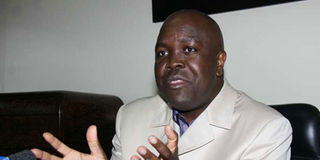
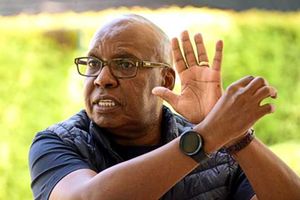
The slain businessman Jacob Juma was the local face of Cortec Mining Kenya (CMK) Limited.
Photo credit: File | Nation Media Group
However, the judge rejected the argument, holding that the central issue was not whether the testimony should be removed, but the weight the trial court should ultimately attach to it.
"The issue raised by the appellant therefore concerns the evidential weight and probative value to be attached to that testimony in light of the fact that cross-examination was not undertaken before the witness's death," the judge ruled.
The court also found that Section 33 of the Evidence Act, which Otumba relied on, did not apply to the circumstances of the case.
According to the judge, the provision governs statements made by deceased persons that are introduced into evidence through another witness after their death, not testimony that was personally given under oath in court.
"The difficulty with the appellant's argument is that the evidence in question was not a statement sought to be introduced through another witness after the death of the maker. The complainant personally appeared before the trial court and gave oral evidence on oath in open court. His testimony was received as evidence by the trial court and forms part of the record," the judge said.
The judge agreed with the trial magistrate that it would have been premature to determine the evidential value of Juma's testimony before the close of the prosecution and defence cases.
Instead, the court held, the trial magistrate will determine at the end of the trial whether the absence of cross-examination affects the reliability or weight of the evidence after considering the entire body of evidence presented.
CCTV images showing Jacob Juma driving on Uhuru Highway.
Photo credit: Pool
Otumba had also argued that the magistrate erred by dismissing his application as premature and by failing to determine whether Juma's evidence met the admissibility threshold under Section 33 of the Evidence Act.
He maintained that retaining the testimony on the record prejudiced his defence and infringed his constitutional right to a fair hearing.
The prosecution opposed the appeal, describing the application as misconceived and insisting that Section 33 was irrelevant because the complainant had already testified in court before his death.
In the judgment delivered on June 23, the High Court agreed with the prosecution, holding that Juma's testimony had been properly admitted after he appeared before the trial court and testified on oath.
The judge further observed that the High Court's supervisory jurisdiction over subordinate courts is intended to ensure the legality and regularity of proceedings, not to micromanage ongoing criminal trials or direct how evidence should be evaluated at interlocutory stages.
The appeal was dismissed, clearing the way for the criminal case to proceed to hearing and determination with Juma's testimony remaining part of the court record.