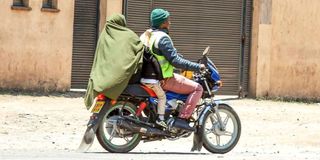
The disruption to Nairobi’s public transport system this week briefly thrust boda-boda riders into a central role in urban mobility after matatu operators downed tools in protest at rising fuel costs.
This left thousands of commuters stranded and triggered a sharp rise in demand for motorcycles across key routes in Ruiru, Kasarani, Roysambu and the Nairobi central business district.
While the shift temporarily increased earnings for riders, operators say it also came with rising fuel costs, safety risks, and unpredictable working conditions.
The standoff has since been suspended for a week following talks between transport stakeholders and government officials.
Higher demand and tougher conditions
James Mwaura, a boda-boda rider operating along the Roysambu route, says that the spike in demand has forced riders into constant fare negotiations, particularly for short trips within residential areas.
He says that he sometimes has to adjust fares or carry extra passengers to make trips viable. He notes that demand rose sharply after matatu operators stopped working.
James explains that fuel costs remain a key pressure point, adding that many passengers are uncomfortable with the new pricing, even for short trips.
“The fuel prices are still high, and at times I get customers for very short routes within the estates. Some of them are not okay with the fares we are charging. At times I am forced to carry excess passengers or to negotiate with them so that we agree on a slightly higher price,” he says.
James adds that while demand has increased due to stranded commuters in town, the situation is not straightforward.
“Of course the demand was high on Monday after PSV drivers downed their tools and left passengers stranded. It is not that we are not in solidarity with them. It’s just that it has been a boom for us business-wise,” he says.
Police officers assisting a disabled man to board a boda boda to the hospital in Machakos town. The man had become caught up in the demonstrations protesting against the increase in fuel prices. The officer paid the fare.
Photo credit: Benson Matheka | Nation
The situation has also exposed riders to risk. James recalls narrowly escaping injury while transporting a passenger who had been stranded at a bus terminus.
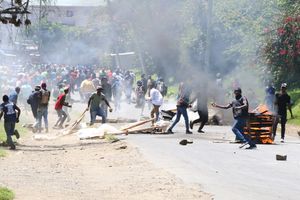
"We found ourselves near a demonstration in Roysambu and a tear gas canister almost hit us. Situations like that make the work very risky," he says.
He adds that fares have fluctuated significantly depending on traffic conditions, road blockages and perceived security risks, with some journeys that previously cost about Sh100 rising to more than Sh400.
Fuel costs squeeze riders
In Kasarani and Roysambu, riders describe demand patterns that fluctuate throughout the day as commuters navigate congestion around estates and shopping centres.
Onesmus Muhindi says the rising fuel prices are significantly affecting boda-boda riders across the country, with some riders opting to stay off the road altogether.
“Most of my fellow riders are crying about how the situation has impacted their lives. Many of them have decided to park their bodas for a while,” he says.
Onesmus adds that those still working are forced to charge higher fares regardless of distance, especially during rush hour and late at night.
"When riders stop working because of high costs, it also affects their families because that income is what many households depend on every day," he says.
On government intervention, he adds, “I pray that the government will listen to us and reduce the fuel prices. There's still time to do that.”
Within Nairobi’s CBD, riders report sustained demand, particularly for short-distance trips between offices, bus stages and residential areas.
Geoffrey Olero says his earnings have increased significantly over the past few days, although the gains have been accompanied by longer working hours and heightened exposure to insecurity.
"The rising cost of fuel affects us every month, but because matatus were not operating, boda-boda riders benefited from the increased demand. Over the last two days, I have almost doubled my daily income," he says.
Olero says riders have been forced to revise fares to reflect both higher fuel costs and shifting market conditions.
"We have had to adjust our rates to match the realities of the economy and the increasing costs we face every time we fuel our motorcycles," he explains.
However, he also expressed concern about safety during demonstrations and extortion at informal roadblocks.
"Some road users are forced to part with money to pass through certain areas, and there have been cases of robbery and destruction of property during unrest," he says.
Speaking on NTV’s Fixing the Nation programme, Dennis Achieng, the chairperson of the Council of Boda-Boda Saccos, said boda-boda operators were not involved in the matatu industry's decision to strike.
"The matatu operators made their own decision to suspend operations over fuel prices. As boda-boda operators, we were not part of those discussions. Our focus has been on guiding our members on how to continue working safely and peacefully during this period," he said.
Dennis added that, although many riders benefited from the matatu strike, others experienced no change in earnings.
"Some riders happened to earn more because they were in the right place at the right time. Others saw little difference. Business often depends on circumstances and timing," he said.