The killers of then Kabete MP George Muchai thought the darkness of the night would conceal their heinous acts.
But as detectives retraced a chain of carjackings, robberies and abductions that preceded the shooting in 2015, the gang left behind clues that would eventually lead investigators to their hideouts.
The killers’ mobile phones and, most significantly, the G3 rifle suspected to have been used to kill the politician and his three aides, were recovered in the home of one of the suspects.
Yesterday, more than 11 years later, the pieces of evidence helped secure the conviction of the four men charged with the murder.
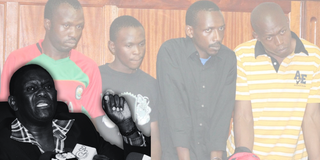
The High Court found Eric Mungera Isabwa alias Chairman, Raphael Kimani Gachii alias Kim Butcher, Mustafa Kimani Anyoni alias Musto and Stephen Astiva Lipopo alias Chokore guilty of murdering Muchai, his two bodyguards and his driver on the night of February 6 and 7, 2015.
“I therefore find all four accused persons guilty on all four counts of murder and convict them accordingly,” the judge said.
The court said that the prosecution had proved beyond reasonable doubt that the four jointly murdered Muchai alongside his police bodyguards, constables Samuel Kimathi Kailikia and Samuel Lekakeny Matanta, and his driver, Stephen Ituu Wambugu.
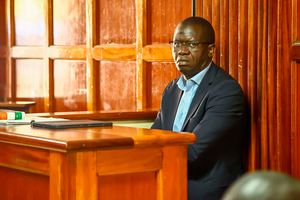
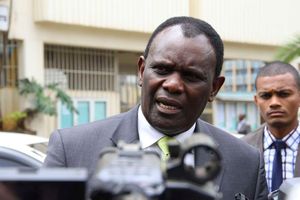
Former Kabete MP George Muchai.
Photo credit: File | Nation Media Group
To prove its case, the prosecution called 36 witnesses, including victims of a series of carjackings that investigators said were linked to the gang on the fateful night. Before Muchai was shot, the gang had allegedly carjacked motorists in different parts of Nairobi and Kiambu.
The investigators used the stolen vehicles and mobile phone records to gather crucial leads and identify people connected to the robberies. A communication analyst later told the court that investigators extracted data from the numbers used by the suspects and reconstructed their contacts before, during and after the murder.
The records showed extensive communication between some of the accused persons. Evidence showed that Kimani and Astiva exchanged more than 100 calls around the period of the murder. Other suspects were also found to have been in frequent contact.
“A coordinated conduct of the group before and after the attack shows a shared and common intention for unlawful purpose,” said the judge.
The investigators also examined CCTV footage from cameras mounted around Kenyatta Avenue and other locations. The court heard that footage containing recognisable number plates of 35 vehicles was collected. That evidence was combined with testimony from motorists whose cars had been hijacked and information obtained from the suspects’ mobile phones.
Inspector Abisalom Kagasi Maleya told the court that a search of Isabwa’s house produced the rifle used in the murder, which investigators believed had been stolen from a police officer months before the Muchai killing. Its serial number had been erased, but a ballistic examiner was able to restore the number from its working parts. Two black face masks were also recovered.
A taxi driver who had ferried two of the suspects away from the shooting scene later handed police a safety pin that had allegedly been dropped in his vehicle. Investigators said the missing pin belonged to the recovered G3 rifle. A Ceska pistol was also recovered from a house associated with Kimani. At the murder scene, police recovered five spent cartridges and a bullet head.
The physical evidence was matched against the accounts of the people who had encountered the gang earlier that night.
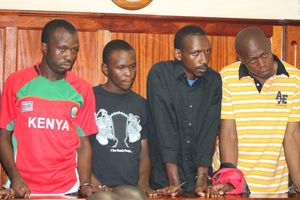
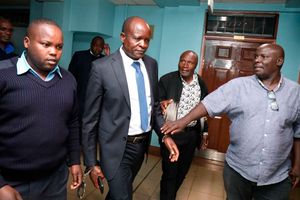
From left: Convicts Stephen Astiva, Mustafa Kimani, Raphael Kimani and Erick Isabwa at the Milimani Law Courts where they were sentenced to death for violently robbing former Kabete MP George Muchai, his driver and two bodyguards, leading to their death.
Photo credit: Billy Ogada | Nation Media Group
The defence challeged the evidence, arguing that there had been no positive identification and that the prosecution case was riddled with contradictions and unreliable electronic and documentary evidence. But the High Court found that the prosecution had proved its case beyond reasonable doubt.
Three other people who had initially been charged alongside the convicted suspects – Jane Wanjiru Kamau, Margaret Njeri Wachiuri and Simon Wambugu Gichamba – were acquitted after the court ruled that there was insufficient evidence to put them on their defence.