The Independent Electoral and Boundaries Commission (IEBC) has unveiled a roadmap for the August 10, 2027 General Election, setting out key deadlines for political parties, aspirants, independent candidates and other stakeholders, while warning public officers seeking elective positions that they have less than 230 days to resign from office.
The roadmap, launched on Tuesday at the Kenyatta International Convention Centre (KICC), marks the formal start of preparations for the 2027 polls, which are expected to be among the country’s most competitive elections.
Under the Constitution, public officers intending to vie for elective seats must resign at least six months before the election date.
Political parties have been directed to submit their membership lists to the commission by March 16, 2027. By the same deadline, parties intending to field candidates must also provide details of aspirants seeking nomination tickets, together with the dates and venues of their primaries.
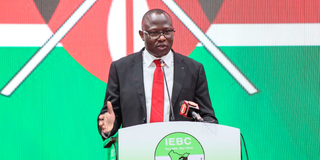
IEBC chairperson Erastus Ethekon said the commission was committed to conducting a transparent, credible and inclusive electoral process.
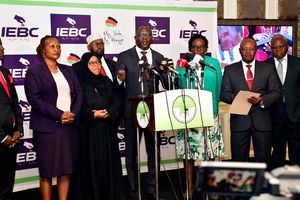
Chief Justice Martha Koome (center), IEBC Chairperson Erastus Edung Ethekon (right) and other guests during the launch of the IEBC Strategic Plan 2024–2029 and Election Operations Plan 2025–2027 at Kenyatta International Convention Centre in Nairobi on June 24, 2026.
Photo credit: Wilfred Nyangaresi | Nation Media Group
“We have listened and we will continue giving Kenyans an opportunity to be heard. There are weaknesses that have been pointed out and we will continue working so that we can iron out the differences,” Mr Ethekon said.
According to the roadmap, political parties must conclude nominations and resolve all intra-party disputes by May 9, 2027.
The deadline is also critical for independent candidates. Anyone wishing to contest as an independent candidate must have resigned from a political party by that date, at least three months before the election.
Independent candidates will also be required to submit their names and symbols to the commission by May 9, 2027.
IEBC commissioner Ann Nderitu, who chairs the Election Operations Committee, said nominations for political party and independent candidates would be conducted between May 29 and June 11, 2027.
Candidates will be required to present their nomination papers in person at designated venues within the stipulated period.
Any disputes arising from nominations must be filed by June 12, 2027 and will be determined within 10 days.
The commission further announced that campaigns for the General Election will officially begin on May 29, 2027 and end on August 7, 2027, 48 hours before polling day.
However, the launch was overshadowed by criticism from opposition leaders allied to the United Alternative Government coalition, who accused the commission of developing key election plans without adequate consultation.
Former Attorney-General Justin Muturi, who represented Wiper leader Kalonzo Musyoka and other opposition principals at the event, claimed repeated attempts by the coalition to engage the commission had not received a response.
Democratic Party leader Justin Muturi delivers his speech during the launch of the Independent Electoral and Boundaries Commission Strategic Plan 2024–2029 and Election Operations Plan 2025–2027 at Kenyatta International Convention Centre in Nairobi on June 24, 2026.
Photo credit: Wilfred Nyangaresi | Nation Media Group
Mr Muturi argued that election planning should not be left solely to the commission’s secretariat because the outcome affects all stakeholders.
“It is deeply troubling that the IEBC seeks to launch an Elections Operations Plan for the 2027 General Election without demonstrating meaningful consultation with stakeholders in the democratic space who will ultimately be affected by that plan,” he said.
“The cost of consultation is insignificant compared to the cost of a disputed election. Kenya cannot afford another electoral process whose credibility is questioned before it even begins,” Mr Muturi said.
The opposition also questioned the integrity of the voter registration process, calling for an independent audit of the Integrated Population Registration System (IPRS) before any review of the voters’ register.
According to Mr Muturi, weaknesses in the population database would inevitably affect the voter register.
“A credible voter register can only emerge from a credible population database,” he said.
He also demanded greater transparency in the procurement and deployment of election technology, including disclosure of technology vendors and stronger safeguards in the transmission of results.
“There can be no secret servers, no hidden systems, no untouchable vendors and no black boxes in a democratic election,” Mr Muturi said.
He called for independent security audits, end-to-end encryption, immutable audit trails and disclosure of system logs whenever disputes arise.
The former Attorney-General further renewed calls for reforms within the commission’s secretariat, arguing that while public scrutiny has largely focused on commissioners, the administrative structures responsible for procurement, voter registration, technology and election operations have received less attention.
He urged the commission to suspend implementation of the Elections Operations Plan and initiate what he described as a genuine and inclusive stakeholder consultation process.
Chief Justice Martha Koome delivers her speech during the launch of the Independent Electoral and Boundaries Commission Strategic Plan 2024–2029 and Election Operations Plan 2025–2027 at Kenyatta International Convention Centre in Nairobi on June 24, 2026.
Photo credit: Wilfred Nyangaresi | Nation Media Group
Chief Justice Martha Koome urged the IEBC to strictly enforce the Electoral Code of Conduct and crack down on political violence.
“If someone breaches the code of conduct, then you must disqualify them from participating in the General Election. There is a growing trend of goonism in this country to silence opponents. We must reject it in totality,” she said.
Ms Koome questioned why politically linked protests often turn violent while demonstrations by teachers and doctors remain peaceful. She urged the commission to exercise its constitutional mandate without fear or favour, saying: “Do not say your hands are tied. Exercise your mandate with courage.”
IEBC chairperson Erastus Ethekon also warned against the growing practice of politicians mobilising youths to intimidate opponents and guard votes.
“We have seen a trend where politicians hire young boys and mobilise them to guard votes. It is really worrying,” he said.