Commercial surrogacy in the country will be prohibited if the Assisted Reproductive Technology Bill, 2022, passed by the National Assembly on November 5, 2025, becomes law.
The passage of the Bill comes after the Israeli government issued a red alert, listing Kenya among dangerous countries in the world to visit for surrogacy procedures due to lack of regulatory procedures.
Israel went on to warn its citizens to avoid such tours amid growing concerns that the procedures border on human rights abuses.
The Bill sponsored by Suba North MP Millie Odhiambo and now headed to the Senate for concurrence, specifically bars foreigners from undertaking commercial surrogacy in the country following approved redrafting and amendments by Homa Bay Town MP Peter Kaluma.
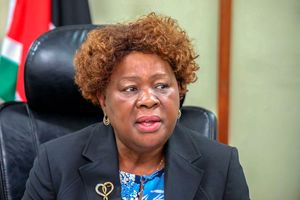
Suba North MP Millie Odhiambo Mabona speaks to Nation.Africa at Garden Hilton Hotel, Mombasa Road, on May 23, 2023. She says when she was elected for the first time, they made several laws to advance women’s rights.
Photo credit: Kennedy Amungo | Nation Media Group
Mr Kaluma revealed that the room that the Bill, in its original draft was creating for homosexuals to create children through commercial surrogacy in Kenya while exposing children to the dangers of pedophilia, pornography, organ harvesting and research on human body, among others, “has been shut”.
But even as the amended version of the Bill seeks to prohibit commercial surrogacy, it conditionally permits altruistic surrogacy only for Kenyan heterosexual couples or women whether divorced, widowed or single who are certified by an assisted reproductive technology expert to be infertile or incapable of natural conception.
“The Bill allows altruistic surrogacy only for Kenyan citizens. No room has been allowed for foreigners to undertake surrogacy or assisted reproduction in Kenya and therefore, no room for fertility tourism in Kenya,” says Mr Kaluma.
Surrogacy is a process that involves the insemination of the male sperm into the uterus of the surrogate mother who then carries the embryo of a child till its birth for the intended parents.
The proposed law therefore, aims to provide a legal framework for those unable to conceive naturally, establishes an ART directorate and prohibits practices like human cloning and includes provisions regarding the legal parentage of children born via assisted reproduction
Although many Israelis come to Kenya for surrogacy procedures, a report by the Israeli Justice Ministry’s National Anti-Trafficking Unit (Natu) raises concerns of surrogacy procedures in Kenya, Albania and Northern Cyprus.
Natu, a social rights division at the Israeli Justice Ministry says that surrogacy practice in the three countries is carried out in ways fraught with “indications of a violation of the dignity of women and their basic rights, an objectification of them and a limitation to their freedom.”
“The National Anti-Trafficking Unit in the Ministry of Justice wishes to bring to the attention of the public considering surrogacy procedures outside of Israel, relevant information and a warning against carrying out these procedures in the countries of Northern Cyprus, Albania and Kenya,” the Natu document reads.
The report titled; Notice by Natu and information to the public regarding the procedures of surrogacy abroad in Northern Cyprus, Albania and Kenya, attributes the blatant acts of human rights violations in these countries to weak laws.
The proposed law, as amended, affirms that human life begins at conception and institutes deserved legal protection of human life, the life of children born through assisted reproduction technology.
The Bill was first published in the 11th Parliament as In-Vitro Fertilization (IVF) Bill, 2014 in the name of the Suba North MP. It was not processed and therefore lapsed.
The proposed law, as amended, affirms that human life begins at conception.
Photo credit: Shutterstock
But in 2022, it was republished as Assisted Reproductive Technology (ART) Bill in the name of Ms Odhiambo with 52 clauses out of which 50 were rewritten following Mr Kaluma’s intervention.
The Homa Bay Town MP’s push for a recommittal of the Bill before passage by the National Assembly to clean up some clauses following the approved amendments and to provide for the rules of procedure for the High Court procedure, was shot down.
This means that the Senate now has the duty to clean up the provisions and align the Bill effectively.
“In all cases, where the parent is not genetically linked to the child, the Bill has been amended to require the parent to apply to the High Court for parentage rights and parental responsibility over the child,” says Mr Kaluma.
While successfully pushing for the redrafting of the Bill, Mr Kaluma notes that he was guided by the case of a pedophile who commissioned surrogacy and the case of Russia raiding Ukraine and taking away 20,000 to 30,000 children.
According to Mr Kaluma, an Australian pedophile commissioned a 21-year-old Thailand woman as a surrogate mother who delivered two children- a girl and a boy.
However, the Australian man stole the girl, exited Thailand and left with her to Australia, leaving the woman with the boy who was suffering from Down Syndrome.
It was later discovered that the man was a pedophile who had been convicted multiple times on his own plea for defiling girls as young as 3-5 years, which led Australia to passing a law in 2015 banning commercial surrogacy and permitting strictly regulated altruistic surrogacy only for her citizens.
Homa Bay Town MP Peter Kaluma. Stakeholders say the Anti-Corruption and Economic Crimes (Amendment) Bill, 2023, sponsored by Mr Kaluma, is counterproductive.
Photo credit: File I Nation Media Group
Mr Kaluma, speaking in parliament, also noted when Russia raided Ukraine in 2022, about 30,000 children were taken out of Ukraine to Russia.
“Shockingly, no parent of those children has come up to ask their whereabouts. These were children born out of commercial surrogacy, as Ukraine is the only country in Europe which opened its borders to commercial surrogacy and consequential fertility tourism,” says Mr Kaluma.
The Homabay Town MP revealed that children born out of commercial surrogacy, because they don’t have parental and legal protection are normally the victims of organ harvesting, child pornography and pedophilia and other forms of abuses.
On January 8, 2024, Pope Francis called for a global surrogacy ban stating; “I deem deplorable the practice of so-called surrogate motherhood, which represents a grave violation of the dignity of the woman and the child, based on the exploitation of situations of the mother’s material needs.”
In October 2025, the UN Special Rapporteur called for the global abolition of surrogacy and early this year, African States drafted the declaration of Casablanca for the abolition of surrogacy.
The Natu document indicates that the data it has was collected from several sources, including international sources and “information accumulated from the cases that come to the attention of the state authorities.”
“Natu sees fit to bring these serious matters to the attention of the public, so that it can consider its steps and avoid procedures which raise both moral and legal aspects,” the report says.
It highlights that weak laws have compounded how surrogacy procedures are undertaken in the three countries noting that in severe cases, it rises to the point of suspicion of human trafficking- both in the surrogates and in the babies born.