You could face up to 10 years in prison or a fine of up to Sh10 million for engaging in unethical practices related to assisted reproductive technology, if a new Bill being considered by Parliament becomes law.
The legislation awaiting presidential assent seeks to deter immoral practices ranging from the commercialisation of ART services to safeguarding the rights of parents, surrogates, and children born from reproductive technology.
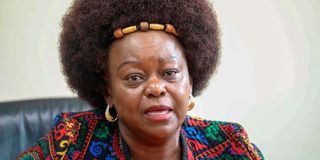
On Tuesday, the National Assembly sanctioned the long-awaited Assisted Reproductive Technology Bill, 2022, sponsored by Suba Member of Parliament Millie Odhiambo.
If enacted, Kenyans found guilty of unethical practices linked to assisted reproduction, such as sex selection, selling embryos or gametes, and human cloning, will be liable for fines of up to Sh10 million or a jail term of up to ten years.
In line with Article 43 (1)(a) of the Constitution, which guarantees the right to the highest attainable standard of health, the new law seeks to promote access to quality and affordable fertility healthcare.
Kenyans seeking reproductive technology procedures will be required to provide written consent under the law, which disallows unauthorised and posthumous use of reproductive material.
Further, individuals willing to donate gametes will only be allowed ten instances per donor, with intended parents and surrogates mandated to undergo counselling.
Regarding surrogacy, the new law upholds altruism, whereby the surrogate mother’s role protects the rights of ART-assisted conceived children, granting them equal legal status to naturally conceived children, with no payments save for medical expenses.
Surrogacy services will only be allowed to Kenyan citizens aged 25–55 (intended parents), while surrogate mothers must be 25–45 years old, have passed medical and psychological tests, and have borne at least one child.
After the birth of an assisted reproduction child, the intended parents – father and mother – will be entitled to paternity and maternity leave respectively, while the surrogates will be allowed three months’ leave.
Infertility-related health complications
To protect children conceived through ART-assisted methods and prevent abandonment and exploitation of surrogate mothers, the legislation recognises intended parents as the child’s legal guardians immediately after birth. The law establishes an Assisted Reproductive Technology Committee under the Kenya Medical Practitioners and Dentists Council (KMPDC) to license experts and clinics, regulate practice, and maintain a confidential national register for donors, embryos, and children.
The bill, upon enactment, will boost Kenya’s position on the global map as one of the few African countries that have a clear legal mechanism for assisted reproduction amidst rising global concern over infertility issues.
The ART enactment is a landmark move that offers a glimmer of hope to thousands of Kenyans silently battling infertility-related health complications.
It is a watershed moment that creates a regulatory framework for reproductive health, fertility treatment, and surrogacy in Kenya.
If assented to law, it will provide legal mechanisms for ART services, promote accountability within the sector, standardise clinical practices, and expand access to fertility care for all Kenyans regardless of their gender or marital status.
Kenyans who have long battled infertility complications will soon be assured of access to safe and ethically balanced fertility treatments ranging from embryo and gamete donation, intrauterine insemination, in vitro fertilisation (IVF), to surrogacy.
The bill now awaits presentation to the Senate for concurrence before President William Ruto’s assent through signing.
To officially become law, the Constitution stipulates that the bill should be signed by the Head of State or be referred back to Parliament for reconsideration within the 14-day period.
During Tuesday’s session, the National Assembly Speaker, Moses Wetang’ula, hailed the Bill as “a culturally sensitive and morally grounded law” which balances Kenya’s cultural and moral values with scientific advancement.
He commended the MPs for concluding what he termed “a long and protracted process,” stating that the new law will not only uphold family dignity but also protect Kenyans from foreign exploitation.
He applauded the Suba MP for her courage in championing the legislation and giving the reproductive health issue a human face by opening up about her personal struggles.
Quoting Jamaican-American poet Roy “Gramps” Morgan, “Heaven has a place for people like you,” the Speaker applauded Millie, stating that “very few people own up to their situation and do what you have done. The majority live in denial.”
He also acknowledged MP Peter Kaluma’s input, saying he played a role in refining the bill tabled by Millie in 2022.
Prohibit commercial surrogacy
In December last year, the two legislators clashed over the ART Bill after Mr Kaluma made a seemingly insensitive comment about Millie’s inability to conceive, culminating in a bitter exchange on the floor of the House.
Urging the Suba MP to appreciate what he termed “tremendous industry” by the Homa Bay Town MP, the Speaker said Kaluma assisted in making Millie’s Bill “have a moral colour and be applicable in our country, without giving a window to foreigners to come in and do things that are unacceptable to us.”
During a press conference on Wednesday, MP Kaluma reiterated that he pushed for the redrafting of the ART Bill to “prohibit commercial surrogacy in Kenya.”
He cited at least 30,000 Ukrainian children who he said were born out of commercial surrogacy, stating that “Ukraine is the only country in Europe which opened up its borders to commercial surrogacy and consequential fertility tourism.”
“Children born out of commercial surrogacy, because they do not have parental and legal protection, are normally the victims of organ harvesting, child pornography, paedophilia, and other forms of abuse,” stated MP Kaluma.
According to Kaluma, his proposals culminated in the rewriting of 50 out of the 52 clauses contained in the original ART Bill tabled by the Suba MP.
The legislator clarified that he sought recommitment of the Bill before passage by the National Assembly so as “to clean up some clauses following approved amendments and to provide for the Rules of Procedure for the said High Court process.”
However, he disclosed that the Senate will now be tasked with cleaning up the provisions since the National Assembly disallowed his recommittal request, urging the House to “expedite its consideration of the Bill.”