On a quiet morning in September 2014, a newsroom desk in Nairobi set off a chain of events that would span a decade, traverse three courts, and now land at Kenya’s highest bench.
At the centre is a journalist, a robbery claim, a suspected rogue police officer attached to the Directorate of Criminal Investigations (DCI) and allegations of torture inside Kisumu Police Station that have refused to fade.
Central to this chilling press-freedom case is whether both the High Court and the Court of Appeal sanitised an unlawful arrest and awarded token damages despite findings of constitutional violations.
The Supreme Court is now set to weigh in on whether the lower courts failed journalist Justus Ochieng, who says he was unlawfully arrested, brutally assaulted, and silenced for doing his job, after the Court of Appeal dismissed his bid for enhanced damages and upheld the token award of Sh100,000.
The petitioner says his ordeal began with a routine public complaint. A member of the public reported being robbed. Mr Ochieng followed the lead, investigated, and discovered that the alleged robber was a DCI officer attached to Kisumu Central Police Station.
On October 1, 2014, the story was published in a newspaper followed by a hard-hitting opinion column headlined “Arrest robber with CID day job,” written against a backdrop of growing threats to Mr Ochieng’s life.
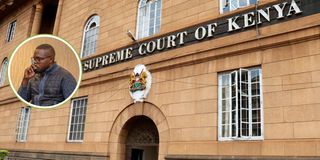
Journalist Justus Ochieng.
Photo credit: Pool
According to the pending petition, the threats came from various units of the National Police Service, including the feared Flying Squad.
“The intimidation was real and persistent,” his lawyers, Owino Kojo & Company Advocates, state, arguing that the warnings were meant to force him to stop reporting on the matter.
From complainant to captive
Instead of backing off, Mr Ochieng went to Kisumu Central Police Station on October 9, 2014 to record a statement about the threats. What happened next, he says, turned him from complainant to a captive.
He was arrested, detained for eight hours, and allegedly maimed and tortured by four police officers. The petition describes slaps, kicks, assault and verbal abuse inside the station.
He was not informed of the reason for his arrest. No criminal charge was presented, and no court appearance followed.
“The arrest was deliberate, premeditated, malicious, conspiratorial, and illegal,” his lawyers argue, adding that it was meant to intimidate him and curtail press freedom.
Released late that night at 1am, Mr Ochieng was ordered to report back to the station the next morning. He complied, only to be detained again for another five hours and released without charge after intervention by other journalists and civil society groups.
Fearing for his life after one of the officers threatened to kill him, he sought anticipatory bail at the High Court. He also lodged a formal complaint at Nyando Police Station against the officers he says tortured him, including a named DCI officer, but no charges were preferred against them.
The complaint, he argues, was never properly investigated and was not forwarded to the Director of Public Prosecutions as required by law.
'Grossly inadequate' award
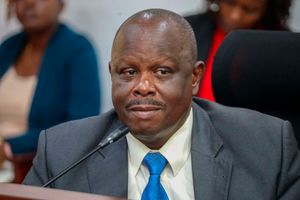
Justus Ochieng says he was arrested, detained for eight hours, and allegedly maimed and tortured by four police officers.
Photo credit: File | Nation
In 2016, the High Court agreed that his constitutional rights had been violated by the State. The court found that police actions breached Article 25 of the Constitution, which prohibits torture and cruel, inhuman, or degrading treatment. It awarded him Sh100,000 in general damages.
But Mr Ochieng was dissatisfied. He appealed, arguing that the award was grossly inadequate given the gravity of the violations, bodily harm, and the chilling effect on media freedom and freedom of expression.
The Court of Appeal, however, upheld the High Court decision and dismissed his appeal, ruling that his arrest was lawful and that his rights under Articles 49 and 51 concerning arrested persons were not breached.
Nevertheless the court acknowledged that the petitioner was tortured, detained without trial, and deprived of his freedom without just cause. That ruling is now under scrutiny at the Supreme Court, with Mr Ochieng’s advocates arguing that it ought to be set aside.
“The appellate court erred by failing to appreciate that a person who is detained or held in custody retains all relevant rights and freedoms and must not be tortured, and that the petitioner was not informed of the reason for his arrest,” say the advocates.
In the petition, the advocates accuse the appellate judges of sanitizing police brutality and ignoring uncontested evidence of torture.
They argue that a person who walks into a police station to follow up on a complaint cannot lawfully be turned into a suspect without explanation.
“It is perverse for the courts to conclude that the petitioner’s arrest was lawful when it is admitted he was never charged and was detained twice without being presented before a court,” the advocates submit.
They fault the judges for failing to interrogate why a journalist was arrested immediately after publishing a story implicating a police officer.
“This was not law enforcement. It was punishment and intimidation,” the petition argues, insisting the arrest targeted Mr Ochieng’s freedom of expression under Article 33 and media freedom under Article 34 of the Constitution.
The petition further accuses the courts of ignoring evidence that Mr Ochieng was assaulted by officers who never testified, despite being named.
Medical reports, witness testimony, and police records, the lawyers argue, corroborated his account. The officer commanding Kisumu Central Police Station at the time, Chief Inspector John Thiringi, confirmed in his report and statement that Mr Ochieng had been assaulted by police officers.
Court papers show that the same police officers were in 2016 implicated in another case where they were accused of killing another citizen.
Beyond torture, the case raises wider constitutional questions. The petitioner says his rights to access justice, fair administrative action, access to information, and human dignity were all breached when police refused to investigate his complaint or provide records relating to his arrest.
At stake is not just compensation but accountability. Mr Ochieng is asking the Supreme Court to set aside the Court of Appeal judgment, declare his arrest and detention unlawful, and reassess damages to Sh15 million for multiple constitutional violations.
The Attorney-General, representing the State, has not yet filed a response to the petition.