WhatsApp messages, call logs, and recorded conversations now sit at the centre of a legal battle pitting a High Court judge against anti-corruption investigators over an alleged Sh16 million bribery scheme.
In court filings, the Ethics and Anti-Corruption Commission (EACC) says the digital trail captures a chain of communication between former Cabinet Secretary Raphael Tuju and a network of intermediaries, who allegedly claimed they could influence a pending ruling before Justice Josephine Mongare.
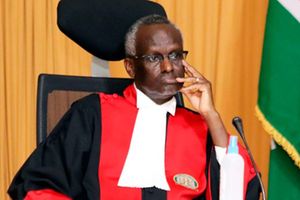
Justice Josephine Wayua Wambua Mongare of the High Court.
Photo credit: Courtesy | Judiciary
It is not yet clear from the court filings whether the three alleged intermediaries were acting on behalf of the judge, a claim that remains contested as the case proceeds.
The communication, extracted from mobile phones and preserved in a forensic report, includes text messages, call logs and WhatsApp chats that EACC investigators say trace how the alleged scheme was negotiated, escalated and executed.
According to the court documents, the conversations reference figures running into millions of shillings, including a demand in US dollars, alongside discussions of additional payments tied to multiple court matters involving Mr Tuju. The affidavit by EACC investigator Emmanuel Kubasu further details that the communication is not isolated.
He says investigators identified repeated contact between Mr Tuju and suspects, as shown in phone records, reinforcing claims that the alleged bribery scheme unfolded over time rather than as a single incident.
At the centre of the case are two complaints made by Mr Tuju to the EACC, the first in February 2026 and a subsequent report in early March 2026, detailing alleged attempts by intermediaries to solicit bribes to influence two pending court cases. The investigator says that, in one instance, Mr Tuju was asked to part with $80,000 (Sh10.3 million) in early March 2026, and in a separate demand shortly after, an additional Sh5 million was allegedly sought to influence outcomes in related cases.
In another instance, he was asked to part with Sh1 million, though the amount was negotiated down to Sh500,000 because the money was needed urgently and the judge was travelling.
He says Mr Tuju told the EACC that at least three individuals had approached him, claiming they could secure favourable court outcomes in cases pending before the Commercial and Tax Division of the High Court in Nairobi.
The individuals included an auctioneer and a debt restructuring and recovery consultant, who acted as an intermediary and allegedly received part of the money. The others are said to be a lawyer and a former judge, who were part of the network, presenting themselves as capable of influencing the court outcome.
The affidavit states that these individuals acted as brokers, coordinating communication, arranging meetings, and relaying the alleged financial demands tied to the court cases.
The report further states that, in an attempt to convince the complainant that he was in contact with the petitioner (Justice Mongare), the consultant made a call to her in Mr Tuju’s presence and placed the judge on speakerphone.
Explicit monetary demands
“The complainant alleged that during that conversation, it was apparent that details of his case before the petitioner were openly discussed. It was further alleged that the complainant was convinced the caller was speaking to the petitioner due to the level of detail discussed,” says the investigator, Mr Kubasu.
He describes how the approach began with assurances and gradually shifted into explicit monetary demands.
In one account, the intermediaries allegedly proposed a financial benefit of Sh5 million and later escalated the figure, suggesting larger sums would be required depending on the scope of the cases involved.
The filings indicate that the alleged negotiations were tied to a long-running commercial dispute involving Dari Limited and the East African Development Bank, a case that has moved through multiple courts over several years, in which Mr Tuju lost.
During a subsequent meeting, the consultant claimed that the judge was travelling and required some urgent money.
“He allegedly requested the complainant to give him a total of Sh1 million. After negotiations between the two, they allegedly settled on Sh500,000,” narrates the investigator, adding that this followed persistence from the consultant.
“It was alleged that out of concern that the consultant might influence matters against him, based on the manner in which he spoke to the petitioner on the phone, the complainant sent Sh250,000 from his mobile phone to the consultant’s mobile phone number,” says the investigator.
Mr Tuju gave the said debt recovery consultant the remaining Sh250,000 in cash. Mr Kubasu has attached a copy of the digital forensic examination report of the complainant’s phone.
Against this backdrop, investigators say the alleged scheme took a more concrete turn in early March 2026.
According to the affidavit, Mr Tuju reported the matter to EACC after being asked to pay money to secure a favourable ruling.
What followed was a controlled sting operation in early March 2026, with officers handing Mr Tuju treated money (Sh1 million) and wiring him with audio-visual recording devices before he met the suspects at Entim Sidai Retreat.
On the day of the meeting, investigators monitored from a distance as the complainant allegedly handed over Sh1 million to the suspects.
Moments later, officers moved in. Two suspects were arrested, and the treated money recovered, forming a key part of the evidence now before the court.
The affidavit states that subsequent analysis of the recordings and digital communications suggests that the alleged payments to the intermediaries were being made on behalf of a broader scheme to influence judicial decisions.
Investigators say the conversations “heavily inferred” the involvement of the judge in whose court the matter was pending, though this claim remains contested in court.
But that move triggered a sharp legal response. Justice Mongare moved to court in mid-March, accusing the EACC, the National Police Service and the Office of the Attorney General of harassment, intimidation and unlawful overreach.
She argues that any allegations against a sitting judge must be handled through the Judicial Service Commission (JSC), not through direct criminal investigations by external agencies.
In her filings, she says the manner in which the summons was issued violated her rights and undermined judicial independence.
The High Court has since issued conservatory orders halting investigations, arrests and any adverse action against her pending determination of the petition.
However, behind the legal arguments lies a deeper institutional question on how far anti-corruption agencies can go when investigating members of the judiciary.
In its replying affidavit, the EACC takes a firm position, arguing that while judges enjoy independence in decision-making, that protection does not extend to criminal conduct.
“Whereas the Constitution guarantees judicial independence under Article 160 (1), the said provision protects judicial decisions but does not grant judges immunity from investigations into alleged criminal conduct,” says Mr Kubasu.
The commission maintains that it has a statutory duty to investigate allegations of bribery and corruption, regardless of the office held by the subject of the inquiry.
The affidavit further states that requiring all such investigations to pass through the JSC would undermine the commission’s constitutional mandate.
It also cites a letter from the Chief Justice encouraging investigative agencies to probe corruption within the judiciary, signalling institutional support for such inquiries.
Former Cabinet Secretary Raphael Tuju speaks on a phone call as heavily armed security officers seal off the Dari Business Park property in Karen along Ngong Road in Nairobi during an early-morning operation on March 14, 2026.
Photo credit: Wilfred Nyangaresi | Nation
Court documents show that Mr Tuju’s legal battles with lenders and auctioneers have been fought across multiple jurisdictions, including the superior courts and international forums.
The alleged bribery scheme, investigators say, emerged from attempts to influence the outcome of those disputes.
The forensic evidence adds another layer. A digital examination report filed in court details how investigators extracted data from mobile devices, including SMS messages, call logs and WhatsApp chats between the complainant and suspects.
The report confirms multiple exchanges between the parties, including messages linked to mobile money transactions and calls placed around the time of the alleged meetings.
However, Justice Mongare insists that the allegations are unfounded and that the investigative process itself is flawed.
She argues that allowing direct probes into judges risks exposing the judiciary to external pressure and undermining public confidence in the courts.
The case, set for mention on May 6, 2026, sits at the intersection of law, power and accountability. On one side is an anti-corruption agency armed with recordings, digital data and the results of a sting operation.
On the other is a sitting judge asserting constitutional protection and challenging the legality of the EACC summons.