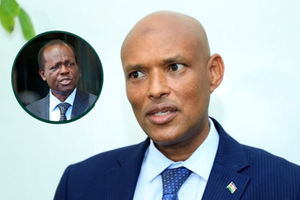
A Sh1 million cash exchange at a quiet Karen hotel has triggered a legal battle, turning what began as a meeting to secure legal representation into an alleged bribery scheme of a sitting judge leading to the arrest of a lawyer and a former judge.
At the centre of the saga is former Cabinet minister Raphael Tuju, former High Court judge Joseph Mutava, and senior advocate Kimani Wachira and claims of entrapment by the anti-corruption agency.
Their March 9 meeting at Tuju’s Entim Sidai Wellness Sanctuary in Karen, Nairobi, was in relation to a billion-shilling commercial dispute in which Tuju was seeking urgent legal intervention after an adverse High Court ruling.
The meeting led to the dramatic arrest of the lawyer, the former judge and businessman Thomas Awili.
A demand letter by Wachira’s advocates has now laid bare the sequence of events that culminated in the arrests, sharply disputing the bribery narrative advanced by the Ethics and Anti-Corruption Commission (EACC) investigators.
Family members, friends, and staff of former Cabinet Secretary Raphael Tuju gather at The Karen Hospital on March 24, 2026, after his transfer from Karen Police Station.
Photo credit: Wilfred Nyangaresi | Nation
But in a letter to the EACC, Mr Wachira’s lawyers describe the arrest as “unlawful, procedurally unfair and an abuse of process,” and demand an immediate halt to investigations.
They want bail refunded, property returned, and a public apology issued, warning of constitutional litigation if the agency fails to comply.
According to the letter and a supporting statutory declaration by businessman Thomas Awili, Tuju initiated contact in February while grappling with several court cases tied to his company, Dari Limited, and prime properties in Karen.
Mr Awili says Tuju requested help to identify a competent and reputable advocate to work with his legal team to handle the matters, leading to Wachira’s introduction.
The declaration shows the three parties first met in February but deferred formal engagement pending a High Court judgment scheduled for March 9.
When the ruling went against Mr Tuju, events moved quickly. Awili says Tuju called him “frantically” on the morning of March 9 at around 11 am, insisting on an urgent meeting with the lawyers.
The meeting was set at Entim Sidai Wellness Sanctuary in Karen, where former judge Mutava, who is also a private advocate, joined after Wachira became temporarily unavailable over the preceding weekend.
Entim Sidai, a recreational resort owned by Mr Tuju.
Photo credit: Pool
“Unfortunately, Advocate Wachira was unavailable for meetings over the weekend of March 7 and 8. To this end I decided to call former Justice Joseph Mutava, who is now a practicing advocate known to me for discussions on post judgment procedures,” Awili narrates.
It is at this meeting that the alleged bribery incident occurred. But Awili disputes that any bribe was solicited.
“As soon as the meeting started, Hon. Raphael Tuju said that he had enough money to instruct the advocates and immediately took out Sh1 million in cash from his bag without any solicitation or demand and placed it on the table,” he states.
He says the money was presented as his payment for facilitating legal representation, not to influence a judge.
Moments later, EACC officers moved in and arrested the two lawyers. Awili claims the arrest was pre-arranged. “That arrest by EACC officers on allegastions of soliciting a bribe was a set up,” he states in the declaration.
Wachira’s lawyers adopt this account, arguing that their client acted strictly within his professional duties and never solicited or received any bribe.
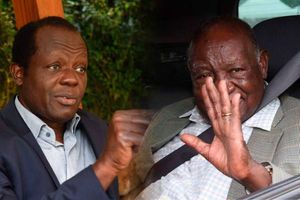
Justice Joseph Mutava.
Photo credit: File
“The alleged act of solicitation did not originate from the undersigned (Wachira) and the circumstances strongly suggest a premeditated and orchestrated scenario,” the letter states.
They argue the timing of the arrests, immediately after a commercial court loss, raises questions about motive and intent.
The lawyers say this undermines the credibility of the complaint and calls into question the integrity of the investigation.
The dispute is intertwined with a wider commercial row involving more than Sh1.9 billion linked to Aero Handling EA Limited, a company associated with Tuju.
Awili claims the National Treasury released funds to the Ministry of Defence for payment, but the money was never fully remitted to the company.
That dispute, already the subject of litigation, forms the backdrop to the urgent legal consultations that preceded the arrests.
Wachira’s lawyers now argue that the bribery allegations may have been used to advance parallel interests tied to that commercial conflict. They maintain that continuing investigations without credible evidence violates constitutional protections on fair hearing and fair administrative action.
“In the premises it is our position that the continued investigation of the undersigned (Wachira) is wholly unsupported by credible evidence and constitutes an unjustified infringement of his constitutional rights,” the letter states.
The unfolding case places the EACC under scrutiny over its handling of high-profile operations and raises broader questions about the use of sting tactics.
At stake is whether the Sh1 million cash exchange was a genuine bribery attempt or a meeting that spiralled into a contested and possibly orchestrated arrest.