The discovery of hundreds of bodies linked to religious extremism in shallow graves in Shakahola Forest from March 20, 2023 exposed a tragedy that had been years in the making.
At the centre was controversial preacher Paul Nthenge Mackenzie, a charismatic televangelist whose teachings led followers to the wilderness in the belief that fasting to death would make them meet Jesus.
The roots of the tragedy date back to 2003, when Mackenzie founded the Good News International ministry (GNI) as evangelical churches continued to mushroom across the country. Perhaps neither the preacher nor his surviving followers imagined that, two decades later, the ministry would be linked to mass deaths that would shock Kenya and draw international attention.
Registrar of Societies officially registered the ministry in 2010, with Mackenzie as its chairperson alongside five other officials. Two years later, in 2012, the ministry registered Good News Media (K) Limited, which operated Times TV, a broadcasting station based in Malindi.
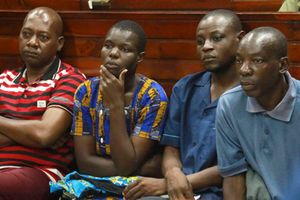
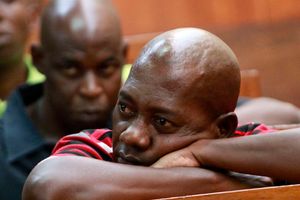
Paul Mackenzie at Shanzu Law Courts in Mombasa on November 20, 2023.
Photo credit: File | Nation Media Group
The station would play a key role in promoting GNI and spreading the end-times message that later became central to Mackenzie’s preaching.
The deaths in Shakahola did not occur overnight. They were the culmination of years of activities and missed opportunities for intervention.
Reports, including one by the Kenya National Commission on Human Rights, The Senate as well as subsequent government admissions, have pointed to warning signs that preceded the 2023 tragedy.
Between 2012 and 2019, Mackenzie’s activities repeatedly brought him into conflict with the law. Yet, on several occasions, he escaped consequences that might have provided opportunities to curb his influence and prevent the tragedy that would later unfold in Shakahola.
The year 2017 marked a critical point in the making of the Shakahola massacre. The State had several opportunities to intervene as concerns about Mackenzie’s teachings and their impact on children mounted, but his activities continued.
Court testimonies indicated that GNI discouraged followers from seeking modern medical treatment, pursuing formal education and accessing government services. Instead, they were taught to view the government as the serpent and rely on prayer for healing and solutions to their problems.
Known in the ministry’s coded language as Wateule (the chosen ones), followers were expected to surrender their earthly possessions and focus on spiritual matters. Yet Mackenzie continued to enjoy a comfortable lifestyle while his followers were taught to renounce worldly wealth.
It was against this backdrop that Mackenzie was first charged in court, facing a series of cases that yielded little in the way of lasting consequences.
On October 17, 2017, Mackenzie faced criminal charges for the first time over alleged radicalisation, operating unregistered educational institutions and failing to ensure his children received compulsory education.
In Malindi Criminal Case No. 182 of 2017, he was charged alongside Winne Alexander Gandi and Betty Mwaka with offering basic education at an unregistered institution. The three entered into a plea bargain with the Office of the Director of Public Prosecutions (ODPP), after which the court discharged them and ordered them to maintain good behaviour.
In a separate case, Malindi Criminal Case No. 790 of 2017, Mackenzie pleaded not guilty to charges including radicalisation and failing to ensure his child received compulsory education. The prosecution opposed his release on bail, prompting the court to order the opening of care and protection files for his children and the preparation of a pre-bail report.
He was released on bail on October 19, 2017, and ordered to report weekly to the Officer Commanding Station at Malindi Police Station. The case was concluded in October 2021, when he was acquitted.
Concerns about the welfare of children linked to the ministry also prompted separate court proceedings. In Malindi Miscellaneous Criminal Application No. 176 of 2017, the State sought permission to detain Mackenzie and 20 others for 30 days as investigators pursued allegations of radicalisation involving children.
The application followed the discovery of 73 children at a church, where investigators suspected they were being radicalised. The court ordered age assessments for four suspects believed to be minors and issued care and protection orders.
In another case, Malindi Children Protection and Care Case No. 57 of 2017, 43 children aged between one and 13, including Mackenzie’s three children, were rescued from GNI premises in Mayungu in May 2017. They had reportedly been confined, kept out of school and subjected to religious instruction.
On October 18, 2017, the court considered a children’s officer’s report and ordered their release to their families after counselling and medical care.
A view in one of the Pastor Paul Mackenzie's living rooms when High Court Judge Justice Wendy Kagendo visited his homestead in Shakahola Forest in Malindi Sub-County on June 24, 2026.
Photo credit: Kevin Odit | Nation Media Group
By November 2019, concerns about Mackenzie’s activities had reached the justice sector’s coordination forums. According to the Judiciary, the Kilifi County Court Users Committee (CUC), chaired by the then Presiding Judge at the Malindi Law Courts, discussed complaints against Mackenzie and his co-accused at a quarterly meeting.
“The CUC discussed the issue of radicalization of children by Mackenzie through his church and TV station,” the Judicial Service Commission (JSC) said in a statement after the Shakahola deaths came to light in 2023.
The matter was escalated to the National Government Implementation Committee and the Communications Authority of Kenya. The CUC was informed that it had been forwarded to the Cabinet for discussion in the coming weeks.
The Communications Authority later revoked Times TV’s licence. However, the JSC said it had received no feedback on the proposal to deregister the church or the Cabinet’s decision. The lack of feedback raised questions about whether the authorities had acted adequately on the warnings.
Following the discovery of mass graves in Shakahola in 2023, the JSC said it would investigate the handling of Mackenzie’s earlier cases to establish whether there had been any lapses in the administration of justice. That was the commission’s last public statement on the matter, and it has yet to inform the public of the outcome of its investigations.
Mackenzie’s legal troubles continued in Malindi Criminal Case No. 366 of 2019 over films distributed through Times TV. He was charged with incitement to disobedience of the law for allegedly possessing films intended to discourage children from attending school and incite Christians against Hindus, Buddhists and Muslims.
He was also accused of distributing films that had not been examined and classified by the Kenya Film Classification Board, as well as operating a filming studio and producing films for public consumption without a valid licence.
Mackenzie denied the charges and was released on bail. The State argued that the films discouraged school attendance and promoted hostility towards other religious groups. He maintained that his preaching focused on the end times, not religious conflict.
He further argued that the DVDs in the end-times countdown series featured pastors and churches from around the world and that the prosecution had not proved the material was broadcast on Times TV on behalf of GNI. He admitted posting his end-times messages on the station’s YouTube channel but denied that their content amounted to incitement.
On November 10, 2023, the court convicted Mackenzie of distributing unclassified films and operating a filming studio without a valid licence. He was sentenced to one year and six months in prison but acquitted of incitement to disobedience of the law.
Other proceedings highlighted the consequences of the ministry’s teachings for followers and their children. In one case, a church member was convicted of cruelty and neglect involving his three children, aged six, four and two. He had been accused of denying them education, medical treatment and other basic necessities between September 2019 and March 2020.
Their mother, a nurse, had also died at home from tuberculosis after reportedly refusing medical attention because of the church’s teachings against seeking treatment.
Meanwhile, followers who would later die in the Shakahola tragedy began moving to the forest in 2019, with the influx intensifying during the Covid-19 pandemic in 2020.
According to the prosecution’s account, now confirmed by the High Court, indoctrination continued in the forest, where fasting was presented as a path to heaven.
Children were to die first, followed by women and then men, with Mackenzie expected to die last. He was reportedly to ascend to heaven from the centre of Malindi in June 2023.
After nearly a year of investigations, Mackenzie and 30 co-accused were formally charged with the murder of 191 children.
Officers from the Directorate of Criminal Investigations at the site where more graves were discovered at Kwa Binzaro area, within Shakahola Forest, Kilifi County on August 15, 2025.
Photo credit: Kevin Odit | Nation Media Group
The charge sheet states that, on diverse dates between January 2021 and September 2023, the suspects jointly murdered Nathan Mathu, Evabra Dito, Seth Ngala, Sifa Edison and 187 others in Shakahola, Kilifi County. All pleaded not guilty.
The trial, however, did not begin immediately. Mackenzie and his co-accused challenged the legality of the charges, arguing that the charge sheet was defective and that the 191 murder counts were oppressive and unconstitutional.
In a ruling delivered on May 17, 2024, the High Court in Malindi agreed with the defence and ordered the Office of the Director of Public Prosecutions (ODPP) to reduce the charges to no more than 12.
The court observed that prosecuting the suspects on 191 murder counts could make the trial virtually unmanageable and cause unnecessary delays, contrary to the public interest and the interests of justice.
The ODPP challenged the decision at the Court of Appeal, which, on April 11, 2025, reinstated all 191 murder charges.
“The very fact that they jointly face one charge of murder allegedly perpetrated by means of the same series of acts or transactions dispels the fear that the trial would prejudice them,” the three judges ruled.
The decision cleared the way for the prosecution to proceed with its case against Mackenzie and his co-accused, including his close aide, Smart Deri Mwakalama, and Stephen Sanga Muye.
After months of legal wrangling between the prosecution and the defence, the murder trial finally got under way in August last year, when the first witness took the stand, and eventually the judgment delivered at the Mombasa High Court on Monday.