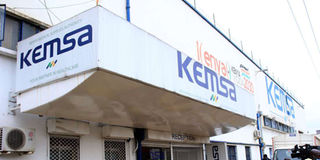
The public procurement board has cleared the Kenya Medical Supplies Authority (Kemsa) to proceed with the purchase of lifesaving antiretroviral (ARV) drugs worth Sh2.8 billion, averting a potential disruption in HIV treatment that could have endangered millions of Kenyans.
The Public Procurement Administrative Review Board (PPARB)’s decision comes amid fragile drug supplies and international funding turbulence that has strained Kenya’s HIV response.
Kemsa’s award to Indian firm Hetero Labs Limited for the supply of adult ARV medicine under a $22 million (Sh2.84 billion) tender had been challenged by Pharmachoice Pharmaceuticals Limited, a disappointed bidder.
The Canadian company was disqualified at the preliminary stage for failing to meet mandatory requirements. Hetero Labs emerged as the lowest evaluated responsive bidder at a unit price of $7.29 per pack, translating to the $22 million contract value.
The two firms were among eight that bid for the tender advertised last September under a Global Fund-supported programme.
Pharmachoice sought to have the tender award overturned, arguing it was unfairly excluded and not promptly notified of the outcome.
The company claimed Kemsa failed to communicate the tender result as required by law, insisting that procedural flaws marred the procurement process.
However, the Board ruled that Kemsa's process and decision to proceed with procurement were lawful and necessary.
The key issues were whether Kemsa properly notified unsuccessful bidders and whether Pharmachoice was wrongly disqualified for submitting a Tax Compliance Certificate that appeared valid but had expired on 24 March 2025, as confirmed by the KRA’s iTax portal.
“The Applicant’s Tax Compliance Certificate … failed to meet the requirements of Section 55 of the Act,” the Board ruled, upholding the disqualification.
The Board also found that Kemsa’s notification to Pharmachoice, though initially sent to the wrong email address due to a typographical error, was eventually received and did not hinder the company’s ability to seek redress.
Crucially, the panel ordered Kemsa to formally issue a corrected notification and directed the authority “to proceed with and supervise the procurement process … to its lawful and logical conclusion” in compliance with tender rules and the Public Procurement and Asset Disposal Act.
Pharmachoice told the Board it was never formally informed of the bid loss and only learned the outcome after visiting Kemsa offices in mid-December—weeks after other bidders received notifications.
The ruling has significant implications for Kenya’s efforts to maintain uninterrupted ARV supplies—medicines that suppress HIV and prevent thousands of deaths annually.
Kenya has one of the world’s largest HIV epidemics, with an estimated 1.4 million people living with the virus and heavily dependent on antiretroviral therapy.
ARV supply stability has been threatened for over a year, primarily due to a freeze on US foreign aid that disrupted funding flows under the President’s Emergency Plan for Aids Relief (Pepfpar).
In early 2025, a US administration-ordered freeze halted disbursements from the US Agency for International Development (USAID), blocking the release of approximately $34 million worth of ARVs and other medical supplies stored in warehouses.
The freeze forced clinics to ration stocks, leaving thousands of patients with one-month refills instead of the standard three- to six-month supplies, sparking widespread anxiety among patients and health workers.
Government and health officials sought to reassure Kenyans, stating that stock levels remained above critical thresholds and efforts were underway to mitigate donor funding gaps.
The National Syndemic Diseases Control Council (NSDCC) and the Ministry of Health reported that central stores held multiple months’ worth of ARVs, with additional shipments expected to sustain treatment continuity.
However, the broader outlook remains concerning. Kenya’s HIV response has long relied on external donors, with Pepfpar and the Global Fund providing most support for ARV procurement and programme delivery.
The U.S. funding disruptions exposed vulnerabilities in essential health services, demonstrating how donor shifts can destabilise supply chains.
Health advocates warned that any ARV supply delays risked treatment interruptions, potentially leading to viral resistance and increased infections.
Even before recent funding shocks, Kenya faced sporadic stockouts and procurement delays, forcing clinicians to adjust prescriptions or prioritize limited supplies.
The PPARB’s decision to allow the procurement to proceed reinforces procurement rules and highlights the urgent need for stable drug supplies.
The Board emphasised that procurements affecting public health interventions must strictly adhere to statutory and procedural requirements to ensure integrity, transparency, and fairness.
“Given that this procurement—GF ATM HIV GC7/OIT02/2025-2026 for the supply of adult ARV medicine—is a key intervention for vulnerable groups, strict adherence to statutory and procedural requirements is paramount,” the Board stated.
While criticizing Kemsa for poor communication oversight, the Board declined to halt the process. It ordered Kemsa to formally reissue Pharmachoice’s notification for record-keeping but allowed the procurement to proceed.