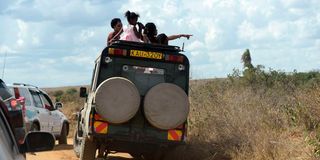
The Kenya Wildlife Service (KWS) has proposed new conservation and access fee regulations for national parks and reserves, which would grant free entry to senior citizens, people with disabilities, young children, and frontline tourism workers.
The Ministry of Tourism and Wildlife, in partnership with KWS, convened a stakeholder validation forum in Nairobi on the draft Wildlife Conservation and Management (Access and Conservation) (Fees) Regulations, 2025.
According to the draft regulations, Kenyan citizens aged 70 and above, children under five years, and persons with disabilities will be exempted from paying fees when accessing national parks, reserves or sanctuaries.
The exemptions will also apply to frontline tourism workers such as tour drivers and guides, boat crew and porters registered with the relevant authority and licensed by the Tourism Regulatory Authority. In addition, fishing boats registered under Beach Management Units (BMUs) will be exempt from anchoring fees in marine protected areas.
To qualify for the waivers, the exempted groups must present valid identification documents such as a national ID or passport, and a disability card or professional licence.
Kenya Wildlife Service Director-General Erustus Kanga.
Photo credit: File | Nation
KWS Director-General Prof Erustus Kanga said the changes were designed to ensure Kenya’s wildlife heritage is accessible to all and to recognise the contribution of frontline tourism workers.
“The new regulations have considered vulnerable and special groups. This is about fairness, dignity and recognition. The people who connect visitors to our wildlife and those who have given their lives to this country should not be excluded from enjoying our natural treasures,” Prof Kanga said.
For years, Kenya’s national parks and reserves have been criticised for being financially inaccessible to ordinary Kenyans, especially families, persons with disabilities and the elderly. The proposed exemptions aim to break these barriers and give more citizens the chance to experience the nation’s natural heritage.
The draft regulations also propose a major shift in how visitors are categorised. Currently, visitors are classified as either citizens or non-residents, each further divided into adults and children.
The new framework introduces four distinct categories: East African citizens, Kenyan residents, African citizens and non-residents, each with its own fee structure.
East African citizens will include nationals of EAC member states while Kenyan residents will be those living in Kenya on valid residence permits but who are not Kenyan or East African citizens.
African citizens will include nationals from other African countries outside the EAC while non-residents will cover visitors from outside Africa.
Officials say the framework is meant to enhance fairness, promote regional integration and diversify revenue by formally recognising African visitors beyond East Africa.
Despite the new exemptions, KWS still projects that revenues will grow significantly.
In the 2024 financial year, KWS collected Sh7.98 billion. It now targets to more than double this, projecting Sh16.5 billion by 2028.
People enjoy a day at Nairobi Safari Walk on April 14, 2019.
Photo credit: File | Nation
Prof Kanga stressed that the funds will be reinvested in conservation, including ranger patrols, habitat restoration and upgrading visitor facilities such as roads, toilets and rest areas.
“These regulations are not about raising prices but about raising value. Every shilling collected will go back into protecting wildlife and improving the visitor experience,” he said.
The ministry also noted that part of the revenue will be set aside to cushion conservation areas from climate change and natural disasters. For example, during the 2023 drought, KWS diverted resources to provide water and supplementary feed for wildlife. Officials say a dedicated allocation will ensure faster responses to future crises.
KWS assured participants that the government is committed to resolving the issue and is working with county wildlife committees to ensure timely compensation.