The unusually high stocks of maize being held by traders in Kenya’s coastal counties are raising fears of speculative hoarding and higher food prices as farmers’ reserves dwindle, while forecast floods between October and December threaten to disrupt food supplies and movement.
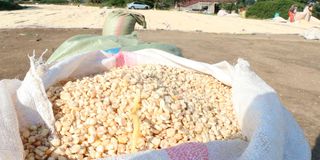
The 2026 Long Rains Assessment Report by the Kenya Food Security Steering Group (KFSSG) shows maize stocks held by traders in the coastal region were at 115 per cent of normal levels, compared with only 58 per cent held by farmers.
The wide disparity, according to the report, has raised concern over the availability of grain in local markets, with the assessment attributing part of the pressure on maize prices to speculative grain hoarding.
The development comes as Kenya faces a projected maize shortfall of nearly 19 million 90-kilogramme bags following an uneven March-May rainfall season, with some areas recording crop losses despite receiving substantial rains.
The Kenya Food Security Steering Group projects the long-rains maize harvest at 27.1 million bags against annual domestic requirements of about 46 million bags, leaving a deficit of 18.9 million bags.
The projected shortfall comes as the Government moves to facilitate the importation of 25 million bags of maize to bridge a supply gap caused by drought in key maize-growing regions.
A Kenyan farmer inspects his maize crop.
Photo credit: File | Nation Media Group
Agriculture and Livestock Development Cabinet Secretary Mutahi Kagwe told the Nation last month that the importation would be undertaken by the private sector, with the Government opening the market to commercial traders.
“It is the private sector that will purchase the maize. The money does not come from the government exchequer,” CS Kagwe said.
The decision followed drought in major maize-producing counties, including Uasin Gishu and Trans Nzoia, where farmers reported losses as crops dried in the fields.
Mr Kagwe said the Government had earlier asked farmers holding maize to deliver it to the National Cereals and Produce Board (NCPB) to strengthen strategic reserves, but only 180,000 bags were received.
He said the quantity was insufficient to meet the country’s requirements, prompting the Government to allow private traders to import maize through normal commercial channels.
“The Government is not going to buy 25 million bags. We are simply opening the market for maize to be brought in and normal private-sector trade to take place,” he said.
The planned imports come against a backdrop of uneven maize availability across the country, with the KFSSG assessment showing that some regions have depleted farmer-held stocks while traders are holding unusually large quantities.
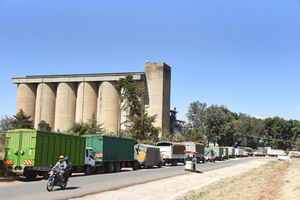
Workers offload maize that arrived at the Mombasa port. The government will import up to 25 million bags of maize this season.
Photo credit: File
According to the 2026 Economic Survey by the Kenya National Bureau of Statistics, maize imports in 2025 jumped by 51.4 per cent to 468,109 metric tonnes, driven by a duty-free window for yellow maize.
The data indicates that the country imports more than it exports with food items such as maize ballooning the country’s imports in 2025, further deteriorating the trade balance to Sh1.6 trillion.
At the Coast, for instance, trader-held maize stocks stood at 115 per cent of normal levels, compared with 58 per cent held by farmers.
“The disparity has raised concerns over speculative hoarding, particularly at a time when national production is below demand and food prices remain vulnerable to supply disruptions,” says the KFSSG in part.
In the Coast, the pressure is compounded by flooding that has disrupted farming, transport and markets during this year’s long rains.
According to the assessment, Tana River was among the counties badly affected. Its May 2026 Flood Rapid Assessment Report shows that about 40,420 households were affected by floods, with 9,012 displaced.
The floods damaged farmland, settlements, roads and other infrastructure, disrupting the movement of people and commodities.
Households that rely heavily on markets for food, such disruptions can quickly translate into higher prices and reduced access to basic commodities. Crop losses and displacement have also weakened the ability of affected families to produce food or earn income to purchase it.
“The high level of maize held by traders therefore comes at a sensitive time. The concentration of grain in commercial hands could affect the quantity reaching markets, particularly where transport infrastructure has been damaged,” the report warns.
As concerns over maize hoarding grow in the coastal region, poor rainfall distribution during the long-rains season has resulted in sharp declines in crop production across the Arid and Semi-Arid Lands (ASALs) regions, with Samburu emerging as a striking example
The KFSSG assessment puts the county’s projected maize production at 2,700 90-kilogramme bags, compared with a reported long-term average of 240,000 bags.
“The figure would represent about one per cent of the stated long-term average and points to an extremely poor maize season,” states the report.
However, the reported 240,000-bag long-term average projection raises questions because the county is predominantly pastoral and has a relatively limited area under rain-fed crop production.
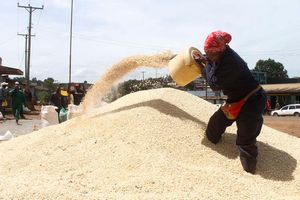
Farmers dry maize in Elburgon town, Nakuru County.
Photo credit: File | Nation Media Group
Samburu households largely depend on livestock, although crop farming is practised in parts of the county and provides an alternative source of food and income for some communities.
A poor maize harvest therefore adds another vulnerability to households already exposed to drought, livestock losses and other climate-related shocks.
The assessment attributes the poor crop performance to rainfall that started early, catching some farmers unprepared for land preparation, followed by dry spells and an early cessation of the rains.
The Kenya Food Security Steering Group in its 2026 Long Rains Assessment, says most parts of the country received near-average to above-average rainfall between March and May, with some areas recording significantly more rain than usual.
However, the rains did not translate into the expected improvements in food and nutrition security, the report says, due to prolonged dry spells, poor temporal distribution and early cessation.
The long rains began earlier than usual in some areas, towards the end of February and early March, but were largely characterised by early cessation across much of the country.
The season also ended earlier than normal in several pastoral areas, with rains stopping in Wajir during the first week of May and in most parts of Mandera in late April.
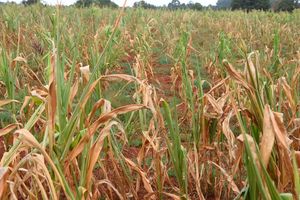
Farmers inspect their failed maize crop in Mirera, Naivasha, Nakuru County, on July 12, 2026.
Photo credit: Boniface Mwangi| Nation Media Group
In Isiolo, the rains ended in late April in many locations, according to the assessment. The early cessation shortened the growing period and limited the recovery of crops, pasture and water sources.
Rainfall distribution was also a major challenge. About 67 per cent of Samburu’s seasonal rainfall was received in March, according to the assessment.
Although the early rains created conditions for planting, the moisture was not sustained through the crop-growing period.
The rains stopped between late April and mid-May in the Pastoral Northwest, shortening the growing period and leaving crops vulnerable to wilting.
Bean production was also affected, with Samburu County projected to harvest 1,800 bags against a reported long-term average of 10,000 bags.
Other ASAL counties recorded similar challenges. In Turkana, maize production declined by 40.5 per cent against the long-term average, while sorghum fell by 52.7 per cent and cowpeas by 33 per cent.
In Makueni, maize production dropped by 41 per cent, while Fall Armyworm outbreaks in Kitui forced some farmers to replant, delaying crop maturity and reducing yields.
Some crops performed better under the prevailing conditions. Green grams and cowpeas, which have shorter maturity periods, recorded stronger performance in several ASAL counties.
Green-gram production was 60 per cent above the long-term average, while cowpea production was double the average.