Recurrent systemic challenges, operational and policy gaps, coupled with financial management, are among the core threats to the successful implementation of the Social Health Authority (SHA).
According to a report by the National Assembly committee on Health, the challenges threatening the success of President William Ruto’s core health pillar transcend health facilities offering services and have everything to do with policy gaps.
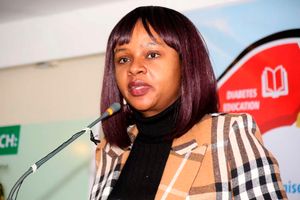
National Assembly committee on Health chairperson and Seme MP James Nyikal.
Photo credit: Jared Nyataya | Nation Media Group
In its report, the committee chaired by Seme MP James Nyikal noted that reimbursements to health facilities under SHA have been inconsistent with some recording no disbursements at all.
“A substantial backlog of arrears inherited from the defunct National Health Insurance Fund (NHIF) remains unresolved. Approved but unpaid claims continue to accumulate across facilities, further straining the financial stability of hospitals,” reads the report.
The committee also noted erroneous payments, a move that has caused financial strain on health facilities.
For instance, the committee noted that Nyeri County Referral Hospital lost over Sh16 million to a neighbouring private hospital due to payment processing errors, with recovery efforts proving unsuccessful.
The committee also decried that most hospitals under SHA continue to suffer financial distress due to the high rate of claim rejection, even in cases where adequate supporting documents have been provided to the authority to facilitate payment.
“Hospitals reported the absence of a clear and transparent mechanism for claim resubmission, with feedback on rejected claims often delayed well beyond the 90-day statutory period,” reads the report.
“Furthermore, the increasing reliance on AI-driven claim processing and approvals without sufficient human oversight has led to unjust denials, causing significant strain on facilities,” adds the report.
On the systematic challenges facing SHA, the committee said that the frequent system that normally occurs up to four times a month disrupt hospital operations and delay service delivery.
In its visit to 10 hospitals across the country, the committee noted that there are biometric challenges , especially for patients without the national IDs or those with faint fingerprints.
The committee also noted that SHA has not operationalised the claims management office as required under section 35 (1) OF THE Social Health Insurance Act.
“This gap has led to inconsistencies in the utilisation of primary healthcare funds disbursed by SHA, inefficiencies in the processing and management of claims, limited accountability and irregular communication with health facilities,” reads the report.
The committee also noted that there are governance and coordination gaps among key regulatory and oversight bodies such as the Kenya Medical Practitioners and Dentists Council (KMPDC), the Social Health Authority (SHA), the Digital Health Agency and the county governments.
“There is weak coordination between the agencies, which produces contradictory directives. There is also an absence of written compliance guidelines and fragmented regulations,” reads the report.
One year since its operationalisation, the report notes that the Dispute Resolution Tribal has not been established, a move that has left healthcare providers and beneficiaries without a structured mechanism to address grievances and resolve disputes.
There is also confusion on the Facility Improvement (FIF), which the committee noted varies across counties, creating inconsistencies in governance and financial management.
In Homa Bay County, for instance, the committee noted that the variation has created confusion in the collection, retention and utilisation of facility-generated revenues, thereby hindering the uniform implementation of health financing reforms.
According to the report, there are certain groups, such as teenage mothers without IDs, who continue to face registration barriers, a move that denies them and their infants access to essential maternal and child health services.
“Similarly, prisoners, indigent persons and individuals living with chronic conditions experience inconsistent coverage across facilities,” reads the report.
The committee also noted that the requirement for lump-sum annual premium payments has further excluded many poor households, undermining the basic principle of SHA, which is Universal Health Coverage (UHC)
The report also noted that there is no clear national policy governing the provision of accident and emergency services, despite the provision in law which provides for reimbursement of ambulance services, but the majority of health facilities said they have not received any funds for such services.
“The absence of adequate ambulance funding undermines the effectiveness of the referral system, which is a critical component of healthcare delivery. Additionally, reported discrimination in patient transfers, for instance, refusal by the Kenya Red Cross to transport patients from mission hospitals, undermines the referral continuum,” reads the report.
The committee noted that the delayed supplies of drugs, oxygen and other essentials to hospitals by the Kenya Medical Supplies Authority (Kemsa) compromised the care the facilities give to patients, with some cases ending in preventable deaths.
According to the report, due to the delayed payments by the authority, many hospitals are unable to pay staff salaries for several months, a move that has led to strikes, hence most hospitals rely on volunteers to run their critical services.