The Kenya Wildlife Service (KWS) plans to hive off 76 acres from the Nairobi National Park as part of the Sh41.9 billion Bomas of Kenya expansion project and relocation of the 62-year-old animal orphanage.
The National Environment Management Authority (Nema) issued a licence on December 3, 2025, allowing the KWS to convert 31 hectares (76 acres) of land currently occupied by indigenous trees.
Against protests by conservationists, the KWS has started clearing the trees to start construction, which will include a connecting bridge to the Sh41.9 billion Bomas International Convention Centre (BICC), which is facing its own queries related to alleged illegal procurement before the National Assembly.
Neither the Nema licence nor the environmental impact assessment (EIA) have been made available to the public, while some conservationists have accused the KWS of conducting a sham public participation process.
On Friday, the KWS in a statement said it has followed due process in the animal orphanage project, and that the new facility is intended to cater for increased demand, while also tapping into the Bomas footfall for more visitors.
The service maintains that the relocation is a carefully planned and lawful initiative designed to align with modern international standards for animal welfare. According to KWS, the current 60-year-old facility is no longer adequate for increasing visitor numbers or modern rescue requirements.
“KWS wishes to clarify that the claims by FoNNaP (Friends of Nairobi National Park) alleging that the upland forest in Nairobi National Pack is being destroyed are misleading, unfounded and inflammatory…the relocation and upgrade of NAO (Nairobi Animal Orphanage) is a carefully planned, lawful, and forward looking initiative aimed at enhancing wildlife conservation education and visitor experience,” said part of the statement.
According to the service, the move is intended to provide larger, more natural enclosures and a modern wildlife hospital with surgical capabilities.
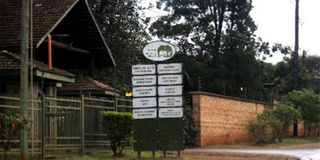
An entrance to Bomas of Kenya in Nairobi on December 20,2025
Photo credit: Evance Habil | Nation Media Group
Furthermore, the service maintains that the new facility will improve visitor flow, create over 500 direct jobs for young Kenyans, and allow the existing site to be restored and re-wilded.
Friends of Nairobi National Park, an environmental lobby, argues that by moving the animals, the government has created a legal Trojan horse to bypass conservation laws and turn a national heritage site into a commercial annex.
While a NEMA licence was issued on December 3, 2025, the organisation notes that this only came to light in February 2026 and was not preceded by any genuine public participation.
“No EIA document was ever distributed or even mentioned during the October 2 meeting, nor was the completed EIA report shared online for public review. Furthermore, the project continues despite being declares irregular in Auditor-General audits. We demand an immediate halt to works,” said part of a March 24 FoNNaP statement.
Blueprints seen by the Nation and the NEMA licence reveal that the KWS is moving the animal orphanage to a new site approximately 1.5 kilometres away, opposite BICC.
“The modern parking car parking will be constructed adjacent to the orphanage entrance integrated with entrance from Bomas. The facility will accommodate up to 1300 vehicles,” said the environmental impact assessment for the proposed relocation and upgrading of NAO, prepared by the Kenya Wildlife Service.
Architectural designs by the KWS indicate that the new animal orphanage will include a parking bay, which will sit on eight acres.
The physical link between the two projects is etched into the architectural models of the new BICC. According to the project layout and the Nema licence No NEMA/ENVIS/CPR/LIC 0940, this parking hub is designed to provide integrated access between the Bomas of Kenya and the new wildlife sanctuary.
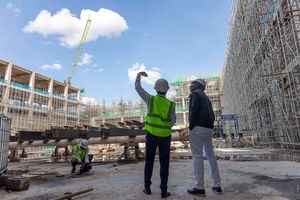
The ongoing work at the Bomas International Convention Centre in Nairobi.
Photo credit: PCS
A permanent white ring pedestrian overpass is set to rise across Lang’ata Road, physically bridging the gap between the commercial complex and the new orphanage site.
The Nema certificate, explains that the objective was to relocate the animal orphanage to a larger well planned site within the Nairobi Park.
“This relocation aims to enhance animal welfare, improve conservation, education…and enrich experience for all visitors,” said the NEMA Environmental Impact Assessment certificate.
Despite the Environmental impact assessment for proposed relocation and upgrading of NAO and associated facilities citing a need for bigger parking, the size and the entry into the orphanage raise questions.
The Executive Director for PILAE, an environmental advocacy organisation, Akshay Vishwanath, suggests that the scale of the infrastructure simply does not match the requirements of a wildlife sanctuary.
“If you compare this to Sarit Centre, which handles up to 25,000 visitors daily with 1,500 to 4,000 parking slots, it is clear the animal orphanage does not attract that much traffic. One can only imagine that a parking lot of this size is really an attempt to build for the BICC across the road. The relocation is simply a cover up and an excuse to develop this parking lot,” says Mr Vishwanath.
The works which are at the upland forest in the park are already underway to make room for the infrastructure, which the government announced was to be concluded by May 2026.
According to FoNNaP, tree felling and bush clearing began on 21 March 2026, displacing the wildlife that inhabits these 100 acres of wild forest.
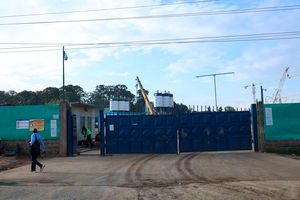
The gate to the Kenya Wildlife Service Headquaters and the Nairobi National Park along Langata Road
Photo credit: File
In a press release issued on 24 March 2026, FoNNaP raised an urgent alert regarding the destruction of 100 acres of upland forest within the Nairobi National Park.
“NNP, represents the rich living heritage of Kenya. KWS is mandated to protect the natural habitat and the wildlife that lives within the ecosystem, not to destroy it through piecemeal development project. Once the 100 acre of forest is gone, it undermines the integrity of this critical ecosystem and much loved public treasure,” said part of the press statement.
According to FoNNaP the stakeholders had raised objections to the 1300 capacity parking during the public participation held on the October 2, 2025.
“The parking lot is far in excess what the orphanage needs. The relocation is clearly an excuse to build parking facility that will primarily serve the new BICC,” said FoNNaP.
While the project layout cites the need for expanded facilities to accommodate a growing number of guests, the math remains difficult to reconcile. According to internal KWS projections, the facility expects to host 600,000 visitors annually. This breaks down to an average of approximately 1640 people per day.
For an attraction receiving fewer than 1700 people a day, a 1300 vehicle parking hub represents a near 1:1 ratio of parking slots to visitors.
This scale of infrastructure is virtually unheard of in tourism management for a walk in sanctuary where groups often arrive in shared buses or vans.
The organization cites a violation of the Nairobi National Park Management Plan 2020-2030, which classifies the chosen area as a Low Use Zone. This zone is explicitly designated for minimal human intervention, with strict guidelines that include no new roads or infrastructure, no off-road driving, no prescribed burning, and very little disturbance.
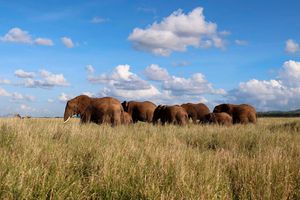
“This low-use zoning is critical for protecting endangered and vulnerable species, including black rhino, white rhino, Maasai giraffe, vultures, secretary birds, bateleur eagles, grey crowned cranes, kori bustards, lions, leopards, and the occasional cheetah,” said the FoNNaP board.
The project was originally intended for a 64-acre site and included a 9-hectare ecological corridor linking the new location to the Nairobi Safari Walk.
While the project layout includes a 9-hectare ecological corridor, Mr Vishwanath argues the designation is misleading.
“Rather than serving as a natural transit for wildlife, this strip may actually be a high traffic walkway for visitors. The shift toward commercialization within the park appears to go beyond the orphanage itself. We are hearing rumours that there is a hotel being planned to be built within that KWS complex. What we're really talking about here is the grabbing of land from what should be a protected area in the public interest for private commercial interests,” says Mr Vishwanath.
The conservation groups, have faulted the approval for the relocation which they say was conducted in total secrecy.