It was a direct jab at the Kiambu mafia, a powerful ring of politicians who had coalesced around President Kenyatta and embodied the arrogance, and secrecy of the post-independence elite. Keen said what many Kenyans already suspected; that JM had not fallen to strangers outside the system, but to men within it.
At Ol Kalou MP David Kiaraho’s funeral service last week, Nyandarua Senator John Methu transformed the funeral platform into a political theatre when he told President William Ruto to his face that he respected him but did not fear him.
Kinangop MP Kwenya Thuku grabs microphone from Senator John Methu in bid to stop his speech
In the same vein, former Deputy President Rigathi Gachagua used the occasion to flex political muscle and deride the president: “You fired me from my position, but to remove me from the hearts of these people will be akin to cutting the fig tree with a razor blade.” In that instant, Kiaraho’s burial became what many had expected: a political theatre.
To understand why political funerals in Kenya so often become platforms of confrontation, one must return to the years when the State narrowed democratic space, and the opposition learnt to improvise. Long before current rivalries, funerals had become one of the few spaces where freedom of expression was exercised.
Pio Gama Pinto.
Photo credit: File | Nation Media Group
It was during Pio Gama Pinto’s burial that a funeral turned into a political stage. Pinto’s assassination in 1965 was the first great warning that independent Kenya could turn dangerous to its own dissenters, and they found a space to speak up.
For his part, Oginga Odinga, who was under siege, criticised the Kenyatta government and warned that Pinto was a victim of “forces that knowingly or unwittingly were helping imperialism keep a grip on Kenya” . Pinto was not just another politician. He was a journalist, organiser and radical nationalist, a man who believed independence was supposed to alter the structure of power itself. When he was gunned down, a chill passed through the young republic, and the question was no longer simply who had killed Pinto. The deeper question was what kind of country Kenya was becoming so soon after Uhuru.
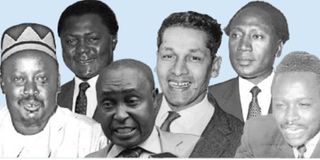
But it was the break between Kenyatta and Oginga Odinga that changed the grammar of Kenyan politics. When Odinga and his allies formed the Kenya People’s Union in 1966, they created a space where political rebellion could mushroom. The KPU attracted those who believed Uhuru had been captured by a narrow elite, that land, wealth, and patronage were being concentrated in a few hands.
Kenya's first Vice President Jaramogi Oginga Odinga.
The State responded with suspicion and force, especially on those critical of the Kenyatta government. Meetings required licences and police could break them up at will. More so, party activity was restricted as provincial administration exercised their powers. Opposition leaders were not only harassed but constrained.
The result was predictable. Shut out from conventional platforms, KPU figures turned to harambees, churches, Parliament and funerals. That is where the modern political funeral in Kenya was born: not as a cultural disorder, but as a political necessity. Once ordinary opposition space was fenced off, the graveside became an alternative parliament.
Tom Mboya’s assassination in 1969 transformed that chill into national trauma. Mboya was young, brilliant, internationally connected and politically formidable. He represented not just a leader, but a possibility. When he was shot dead in Nairobi, the country shook. The mourning that followed was not the quiet mourning rite. It was tense, suspicious and explosive. Vice-President Daniel arap Moi was stoned by mourners. At All Saints Cathedral, President Kenyatta’s car was attacked. Cries of “Dume”, the KPU slogan, rang through the anger.
Tom Mboya.
Photo credit: File | Nation Media Group
Mboya’s funeral, at Rusinga Island, showed that once politics becomes lethal, funerals cease to be private rites. The Mboya funeral gave the opposition the voice it had missed, and to have KPU some new energy to speak back to power. But for a short while. In 1969, as Kenyatta was opening the New Nyanza Hospital, Oginga Odinga took him head on and critised him in public. As Kenyatta spoke, there was an exchange between him and Odinga as the crowd heckled the president. The result was violence, and tens of people were shot dead by the presidential guard.
The late politician Josiah Mwangi (JM) Kariuki.
Photo credit: File | Nation Media Group
By the time J M Kariuki was abducted and murdered in 1975, this grammar of political mourning was already well established. His funeral was so emotionally charged and provoked such anger, precisely because he was not a marginal rebel. He was an insider who had become too popular, too eloquent, and ultimately too dangerous.
During the 1974 general election, Kariuki had been denied the opportunity to address the public directly: he was not licensed to campaign publicly and had to rely solely on printed posters. His funeral, therefore, was not simply the burial of a politician, but a political arena in which anti-government speech could be openly voiced. The Moi years did not end this tradition. They deepened it. If the Kenyatta years taught the opposition improvisation, the Nyayo years taught it pain. Detention, torture, surveillance and humiliation became part of the national experience.
The State did not merely seek to defeat opponents; it often sought to break them physically and morally. It is impossible to understand later funeral politics without understanding the emotional residue of that era.
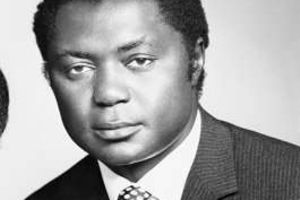
Former Minister of Foreign Affairs the late Dr Robert Ouko.
Photo credit: File | Nation Media Group
The death of Robert Ouko brought that residue into sharp focus. Ouko was not an outsider, but a senior minister within the regime, and his killing in 1990 exposed the fear, suspicion, and moral decay at the heart of the state. His death generated grief, but also something more politically volatile: a sense that violence had reached into the very centre of power.
As with earlier funerals, mourning became inseparable from accusation, and burial became a stage on which public anger, distrust, and suppressed speech could be voiced. Moi attended the funeral, which was the most policed in Kenya’s history.
Kinangop MP Kwenya Thuku grabs microphone from Senator John Methu in bid to stop his speech
But when Moi attended Oginga Odinga’s funeral in 1994 he found that it was hard to police political speeches at a funeral ceremony. James Orengo, then Ugenya MP turned to President Moi and his entourage: “Woe unto you hypocrites who tortured and detained this great man, and now you come here in false praise of his greatness. Hypocrites will forever be the swine of human civilisation.”
It was Orengo’s chance to talk back to power and using a funeral platform as the available space. Moi left Bondo politically bruised and personally furious. Using the funeral as an excuse to end the Kanu-Ford Kenya alliance, Moi announced: ‘I will not accept to be abused, and, therefore, I will not cooperate with them . . .’ In death, Jaramogi had once again done what he so often did in life: disturbed the State and altered the political weather.
Veteran politician Kenneth Matiba waves at a crowd on May 19, 2016. Matiba was an agitator for multiparty democracy and a leading figure against then President Moi.
Photo credit: File | Nation Media Group
No figure captures the cruelty of the system more than Kenneth Matiba’s ordeal . Detained during the clamour for multi-party democracy, Matiba was kept in solitary confinement and suffered a stroke. Years later, Matiba’s funeral service could never be politically neutral. Too much pain had gathered around his name, and there was outright anger at those who had broken him and those who were shedding “crocodile tears.”
In January 2025, Public Service Cabinet Secretary Justin Muturi was unable to read President Ruto’s condolence message during the burial of former Embu Senator Lenny Kivuti’s son after mourners rejected it. That was not a random embarrassment but continuity of having funerals become political stages.
Thus, Methu and Gachagua were not improvising from nowhere. They were drawing from a deep Kenyan archive. Methu’s challenge to Ruto belonged to the old opposition register. Beneath the insults lay the familiar struggle over legitimacy.
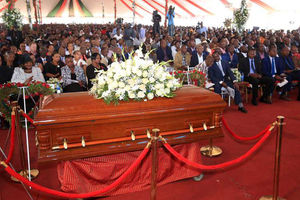
President William Ruto, his Deputy Kithure Kindiki, Speaker of the National Assembly, Moses Wetangula, other leaders arrive at Captain grounds in Ol Kalou during a requiem mass for area MP David Kiaraho on April 8, 2026. (inset) Former DP Rigathi Gachagua and Nyandarua Senator John Methu.
Photo credit: Boniface Mwangi | Nation Media Group
Ruto, as presidents always do when funerals become tests of sovereignty, defended the dignity of office and implied that politics should be fought elsewhere. But Kenyan history says otherwise. Politics is fought there because it cannot be fully contained elsewhere. The funeral is where the republic’s suppressed arguments come to seek witnesses.
From the KPU years, when funerals became platforms for an opposition denied ordinary political space; through the assassinations of Mboya, Kariuki and Ouko; through the anguish of Matiba’s detention, the Methu-Gachagua confrontation with Ruto at Kiaraho’s funeral shows that funerals have become an accepted arena for the exercise of power.