The National Transport and Safety Authority (NTSA) has clarified that the instant traffic fines system remains in force despite court orders affecting part of the programme.
The authority stated that the Minor Traffic Offences Rules, which provide for the identification and enforcement of traffic offences through automated systems and police notices, have not been suspended and continue to be enforced nationwide.
According to NTSA, court orders issued by the Kiambu Law Courts only affect the Public Private Partnership (PPP) component of the programme, particularly the planned expansion of enforcement cameras.
Traffic lights on Kenyatta Avenue in Nairobi on August, 2013.
Photo credit: File | Nation Media Group
“The Minor Traffic Offenses Rules is being implemented. We have orders from Kiambu Law Courts directing us to keep records of payments and another order suspending the implementation of the PPP component,” NTSA Director General Eng. Nashon Kondiwa said.
The clarification comes amid public confusion over the status of the instant fines system following legal challenges filed against aspects of its implementation. NTSA explained that the suspension applies solely to the deployment of additional cameras under the PPP arrangement and does not affect enforcement of the Minor Traffic Offences Rules.
“It is important to note the difference between PPP implementation and the Minor Traffic Offences Rules implementation. They are not the same. No one has suspended the rules,” Eng Kondiwa emphasised.
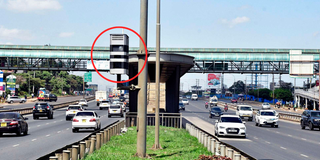
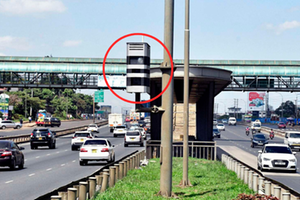
Traffic offences continue to be identified through cameras already installed by the Kenya National Highways Authority and the Kenya Urban Roads Authority. Enforcement also proceeds through police notices issued manually and offences captured via the enforcement application used by traffic officers.
This means motorists can still be cited and required to pay instant fines for violations detected through existing mechanisms, even as the court battle over the PPP component continues.
The instant fines system was introduced to enhance compliance with traffic regulations by allowing motorists accused of minor offences to pay prescribed penalties without undergoing lengthy court processes. However, its rollout has faced legal challenges from motorists and civil society groups questioning its legality and administration.
NTSA maintains that while it is complying with court directives regarding payment records and the suspended PPP arrangement, enforcement of the Minor Traffic Offences Rules remains fully operational.
Eng Kondiwa noted that the legal challenge against the system remains before the courts, with the matter scheduled for directions on June 21, 2026.
“The courts instructed NTSA to proceed but keep the payment records,” he said.
The new instant fines system relies on automated cameras, police enforcement, and digital technology to identify and process traffic offences. Violations such as speeding, running red lights, and lane indiscipline are detected and linked to vehicle registration details.
Once verified, the registered vehicle owner or driver receives a notification detailing the violation, including where and when it occurred and the applicable penalty. Motorists then have the option of paying the prescribed fine within a specified period.
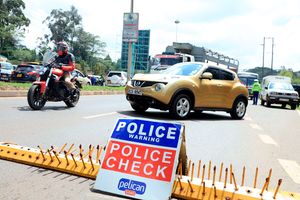
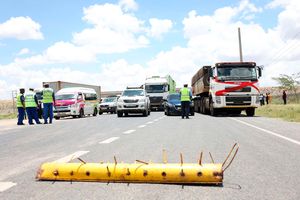
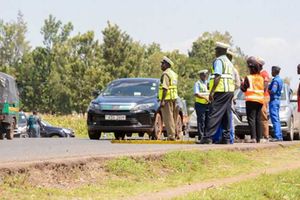
Police officers inspect vehicles along the Nyeri-Nyahururu road during a routine traffic check.
Photo credit: File | Nation Media Group
Payments are recorded in compliance with court directives. Motorists who fail to pay within the required timeframe may face further enforcement action, including prosecution or restrictions on access to NTSA services.
Kondiwa dismissed claims that authority is pursuing the programme as a revenue-generation initiative, stressing that monies collected from instant fines are remitted to the Exchequer.
“These are Exchequer revenues, not NTSA revenue. NTSA’s focus and mandate is road safety. The National Treasury would be better placed to provide revenue projections,” he said.
He added that court orders disrupted the original rollout plan for the PPP programme, which was expected to facilitate installation of 1,000 additional enforcement cameras within two years.
“The PPP rollout, which was to add 1,000 cameras in two years, is suspended. Any existing schedule will have to be adjusted until the court process is complete,” Kondiwa explained.
Meanwhile, NTSA is pressing ahead with integration of existing enforcement infrastructure, including cameras operated by the Kenya National Highways Authority, the Kenya Urban Roads Authority, and the National Police Service. This integration is expected to be completed within six months, strengthening automated enforcement of traffic regulations.
President William Ruto has strongly supported the instant fines system, arguing that stricter enforcement is necessary to reduce Kenya’s escalating road mortality.
While receiving a road safety report at State House Nairobi, the President ordered immediate implementation of what he described as “painful to pay” fines. He said the current enforcement system is undermined by corruption and lengthy court processes that encourage motorists to bribe traffic officers rather than face legal consequences.
Dr Ruto emphasised that the instant fines' structure aims to make compliance easier while raising accountability for traffic offenders by requiring swift enforcement and payment of penalties. He also directed an increase in technology-driven enforcement, including installation of CCTV and speed monitoring cameras on key routes, noting that automated methods provide objective evidence while minimising opportunities for human interference.
Traffic jam on Jogoo Road in Nairobi.
Photo credit: File | Nation
The framework combines camera-based detection with digital enforcement tools and police-recorded breaches, allowing motorists found guilty of defined offences to receive notices and settle penalties through an administrative process.
The initiative is part of a broader government strategy to reduce traffic crashes and fatalities, which claim thousands of lives annually and impose a heavy economic burden. The government believes that better enforcement, enhanced technology, and faster processing of offences will help curb reckless driving, bribery, and delays associated with court-based prosecution of minor traffic offences.
President Ruto has stressed that effective implementation of traffic regulations requires coordinated efforts among transport agencies, law enforcement, the judiciary, and other government institutions.