Justice Omondi Tunya’s death closes the file on one of Kenya’s most controversial judicial careers.
To the Judiciary, he was a “distinguished” career officer who rose from the magistracy to the High Court. But to many former detainees, lawyers and pro-democracy activists, his name belongs to a darker archive.
Tunya is remembered as the magistrate whose courtroom became a theatre of Moi-era repression; where sedition charges, coerced pleas, denied bail and hurried sentences gave executive fear the appearance of law.
When the post-Moi purge of the Judiciary targeted judicial officers suspected of compromise, Omondi Tunya chose to leave rather than submit himself to public scrutiny.
Born in South Nyanza in 1949, Tunya emerged in the public eye during one of the most repressive periods in Kenya’s post-independence history.
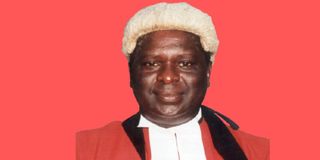
Retired High Court judge Justice Godfrey Omondi Tunya.
Photo credit: File | Nation Media Group
By the late 1980s and early 1990s, the State had perfected a system in which political dissent was criminalised through the language of sedition, public order, unlawful assembly and possession of proscribed publications. As the courtroom became an extension of the security state, a network of torturers, prosecutors and magistrates emerged.
Tunya was not the pioneer of this courtroom tradition. As Paul Mwangi writes in The Black Bar, he took the place of Chief Magistrate Joseph Mango “and handled the position with the same dishonesty.”
In political memory, his name came to be associated with the coercive security architecture around powerful provincial administrator Hezekiah Oyugi and Bernard Chunga.
While Oyugi symbolised the dark intelligence power of the Moi presidency, Chunga, as Deputy Public Prosecutor, became the courtroom face of many political prosecutions. For critics of the regime, Tunya’s court was where the journey from Nyayo House to prison was completed.
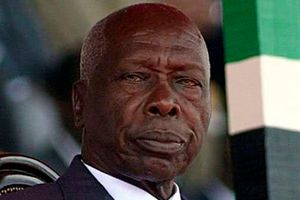
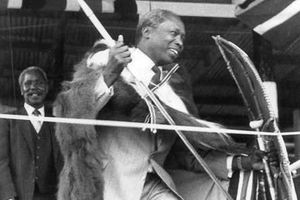
President Daniel Toroitich arap Moi, 59, is nominated as the sole candidate for the presidency, August 24, 1983.
The pattern was chilling and often began with an abduction or illegal arrest. Suspects would disappear into the interrogation chambers of Nyayo House and other “safe houses”. They would emerge broken, frightened, and often with confessions whose origins were never properly tested.
Then they would be brought before Tunya’s court, sometimes late in the evening, where they would enter guilty pleas and be sentenced almost immediately. Under the law then, a conviction based on a guilty plea was extremely difficult to challenge. Once the plea was entered, the prison gate opened.
The prosecution did not have to prove its case in the ordinary manner. Tunya’s court rarely subjected the confessions to serious scrutiny or demanded a proper inquiry into how they had been obtained. Allegations of torture were brushed aside.
Amnesty International repeatedly raised concern over these sedition trials and Tunya’s name was listed alongside that of President Moi, Prosecutor Bernard Chunga and Attorney-General Mathew Guy Muli as it sought an end to criminalisation of non-violent political opinions.
The case of Reverend Lawford Ndege Imunde remains one of the clearest illustrations of that absurdity. In October 1990, after he had been missing for twelve days, Omondi Tunya jailed the Presbyterian minister for possessing a private diary whose contents were deemed seditious. Imunde had written that Foreign Minister Robert Ouko had been murdered with the connivance of the government. Though he had not published the diary or shared its contents with anyone, Tunya still found him guilty.
As such, Tunya converted private reflection into criminal evidence and a diary ceased to be a personal entry. While in police custody, Imunde was allegedly forced at gunpoint to sign a self-incriminating “confession” and in court he blamed “Satan” for misleading him. Africa Watch argued that Imunde’s trial was a warning to the churches and clergy that they could also be silenced.
It was during the same period that George Anyona, Ngotho Kariuki, Edward Oyugi and Njeru Kathangu were accused of possessing a proscribed publication which turned out to be the manifesto of a proposed political party, the Kenya Social Congress. Another document, later tabled in Parliament by John Keen, purported to list a shadow Cabinet headed by Kenneth Matiba. Keen would later admit that the list had been fabricated by security agencies and handed to him.
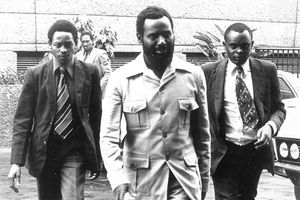
Former Kitutu East MPGeorge Anyona, Ngotho Kariuki, Edward Oyugi and Njeru Kathangu were accused of possessing a proscribed publication, which turned out to be the manifesto of a proposed political party, the Kenya Social Congress.
Photo credit: File| Nation Media Group
Tunya remained unmoved as Anyona and his co-accused gave harrowing accounts of torture. At one point, as the accused applied for a constitutional court to hear their complaints, one newspaper captured the mood in the courtroom with the headline: “Crowd sobs in court.” Tunya rejected the plea. He refused to pause the proceedings and examine the ordeal they said they had undergone.
Initially charged with treason for allegedly plotting to overthrow the government, the four men later had their charges reduced to sedition. Magistrate Francis Mabele, another figure in this judicial circus, ultimately sentenced them to seven years in prison.
March 18, 1991: Former legislator George Moseti Anyona(centre) on trial for alleged sedition, tells existence of ''torture chambers" at Nairobi's Nyayo House where he said he was interrogated for 14 days.
Photo credit: File| Nation Media Group
Gitobu Imanyara’s case placed Tunya directly in the war against the independent Press. Imanyara, editor of The Nairobi Law Monthly , was arrested in March 1991 and charged with publishing a seditious publication. The alleged offence arose from an editorial titled “Tribalism”, which questioned the ethnic imbalance in public institutions under the Moi regime. The same edition of the magazine had also carried the manifesto of a proposed opposition political party associated with Oginga Odinga and other critics of the government.
Tunya refused bail to the ailing Imanyara and ordered the Press out of his court while delivering the ruling. Though Imanyara’s lawyer complained that he had been arrested without a proper warrant, denied access to lawyers and family, and not brought to court within the time required by law, such complaints rarely moved the political courts of that era.
The crackdown on Mwakenya and other underground movements also passed through Tunya’s court aided by prosecutor Bernard Chunga.
Former chief justice Bernard Chunga who on July 8, 2019 declined to take up the chairman’s position in the task force for operationalisation of the inspectorate unit at the Office of the Director of Public Prosecutions. PHOTO | FILE | NATION MEDIA GROUP
Students, academics, lawyers and perceived dissidents were charged with possession of seditious or proscribed publications. Stories of torture and being detained incommunicado did not move Tunya to demand investigations. Years later, Tunya’s victims would seek compensation after suing the government.
Caleb Mokaya Gichana’s case revealed the darker logic of this machinery. Arrested alongside Anyona and others, Gichana was initially released. According to Amnesty International, he was later pressured by police to sign documents and become a prosecution witness. When he refused, he was re-arrested and charged with possession of a Mwakenya publication and taken to Tunya’s court.
In court, Gichana complained that he had been denied medication and food. Although Tunya ordered that he be allowed to buy the medicine prescribed for him, he appeared to cast doubt on the claim that Gichana had been starved, wondering how anyone could survive for a fortnight without food.
Caleb Mokaya Gichana(left) was arrested and charged with possession of a Mwakenya publication and taken to Tunya’s court.
Photo credit: File|Nation Media Group
Then there was Koigi wa Wamwere, one of the most persistent critics of the Moi regime. In 1990, while in exile in Uganda, he was abducted and brought back to Kenya. Koigi later described how men stormed his hotel room, overpowered him, drugged him and transported him to Nairobi. During the pre-trial hearing, Tunya, who committed Koigi to face treason trial in what was described as a defective order, refused to order an investigation into allegations of torture, asserting that such complaints could only be heard by the High Court. At the High Court, the judge said that such allegations could only be addressed by the lower court.
Tunya’s reputation was not built only on sedition trials. His courtroom temperament also drew sharp criticism from lawyers.
One of the most revealing episodes involved activist Beatrice Nduta and Philip Murgor, a son-in-law of the then Chief Justice. The incident, recounted in Paul Mwangi’s The Black Bar, arose after an altercation at the Carnivore Restaurant. Nduta was one of the emerging political women of the time, alongside figures such as Martha Karua, then Martha Njoka. When the prosecution sought to have Nduta remanded for two weeks, more than two dozen lawyers, led by Paul Muite, appeared in court to resist the application.
Muite attempted to explain the circumstances of the case, but Tunya cut him short. “Don’t give evidence and don’t touch on the evidence leading to the circumstance of the case,” he reportedly told him. When Muite pleaded for an opportunity to explain, Tunya insisted that the details could not be stated before him. He then banged the table and walked out of the courtroom. The lawyers moved to the High Court at 5pm, where Nduta was granted bail.
The episode became one of the defining confrontations between the emerging Black Bar and a Bench seen as too comfortable with executive power.
Chief Justice Allan Robin Winston Hancox (1989-1993) later sided with Tunya, accusing the lawyers of jeering and barracking the magistrate until the proceedings could not continue. Muite challenged the Chief Justice to take action and punish the lawyers if he believed they were guilty of contempt or professional misconduct. The Chief Justice did not charge them.
By 1992, Tunya’s transfer to Mombasa triggered protest from Coast lawyers. They argued that he had been instrumental in ensuring that people charged under sedition laws, the Public Order Act and the Chief’s Authority Act were jailed. The protest showed that his name had become a symbol. He was no longer just an individual magistrate but represented a style of judicial conduct associated with the dark years of authoritarian legality.
Later, as a High Court judge, Tunya handled civil cases, including defamation matters. One notable example was Wilson Kalya & another v Standard Limited, where he awarded substantial damages against The Standard.
Later legal reporting cited the award as including Sh9 million general damages and Sh2 million special damages to one plaintiff, with further damages to another. To critics of the Press, such awards were corrective. To defenders of Press freedom, they formed part of a worrying trend in which large defamation damages could chill journalism and public-interest reporting.
In 2003, Tunya’s judicial career came to an end during the anti-corruption purge popularly known as “radical surgery”. The exercise, led by Justice Aaron Ringera, targeted judges and magistrates accused of corruption or misconduct as part of an effort to restore public confidence in the Judiciary after the end of the Moi era. It resulted in the suspension or exit of several judges and magistrates. Tunya’s name featured in that crackdown. Rather than face his accusers through the full process, he left the Judiciary.
That departure was symbolic. The officer who had presided over some of the most controversial political cases of the Moi years exited during the first major attempt to cleanse the Judiciary of the old order. Tunya’s judicial legacy can only be read through the prisoners of conscience, the sedition charges, the denied bail applications, the frightened accused persons and the lawyers who fought in hostile courtrooms.
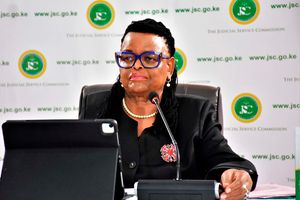
In mourning Tunya’s death, Chief Justice Martha Koome said he had offered “faithful service” and “contributed significantly to strengthening the rule of law and advancing the cause of justice in our country.” She also said he had “served with distinction, diligence, and an unwavering commitment to the fair and timely administration of justice.”
Chief Justice Martha Koome.
Photo credit: File | Nation
Those remarks sit uneasily beside this history and expose the danger of institutional amnesia. The question is not whether Omondi Tunya served the Judiciary but the kind of justice his court represented during Kenya’s darkest political years.
For many who passed through that courtroom, and for many who watched from the Bar, the answer remains painful: it was justice delivered in the shadow of power.