On a quiet Sunday morning in Sino K’Agolla Village in Rachuonyo South, Homa Bay County, April 7, 2024, began like any other day. Life moved at its usual pace, guided by routine, as in most rural homes.
Nothing about that morning suggested that by sunset, one man would be dead and an entire community left grappling with the brutality of his final moments.
The two were not strangers. One of them, Suleiman Onyango Kabasa, was a cousin, while the other was known to the family. Their presence did not raise alarm.
The men asked for Okiro, exchanged brief pleasantries, and declined an offer to share porridge before leaving with him. He walked casually with them towards a waiting vehicle, a departure that carried no visible sign of danger.
“When the vehicle approached, I was in the kitchen. At first, I thought it was the man who had rented our land, but later I established it was Onyango, my husband’s cousin, a Kenya Defence Forces officer. They declined to even sit, insisting there was no need because they had already found the person they were looking for. They left with my husband; that was the last time I saw him alive,” she recalls.
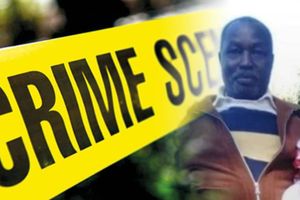
Collins Okiro, 30, who was allegedly murdered by his two cousins and a mysterious man on April 7, 2024 in Sino K’agolla village in Rachuonyo South, Homa Bay County.
Photo credit: Courtesy
Okiro's lifeless body would later be discovered at a neighbour's compound a few kilometres from their matrimonial home.
After weeks of investigations, Onyango was arrested in connection with the murder, following a video that circulated online showing him and his brother, Robinson Kabasa, assaulting Okiro before his death and the dumping his body.
Onyango was arraigned in court, where he pleaded not guilty, setting the stage for a long court battle.
During her testimony, Ms Awino told a Homa Bay High Court that after her husband left with the two men, she decided to rest, expecting Okiro to return home before lunchtime, as he always did.
Hours later, concern began to set in. Okiro had not return home as expected. She went looking for him at his usual workplace, a small phone repair shop, but he was not there.
She told the court that while on her way back, an encounter with a woman on the road began to unravel the horror her husband had gone through at the hands of the men known to them.
“She asked me what had happened to my husband. She had heard him screaming and pleading for his life, asking why they were killing him. He told the men he had a young wife and a child,” she told the court.
What followed was not speculation, but eyewitness testimony corroborated by video evidence that had circulated widely on social media, sparking outrage across the country.
Residents, including Ms Linet Akoth, who appeared in court as the third prosecution witness, told the court they heard screams that initially sounded like children playing, only to realise it was a grown man in distress.
In her testimony, Ms Akoth, who was at home with her daughter, said Okiro could be heard pleading for his life, insisting he was not a thief, but the attackers ignored him.
She further told the court that Okiro’s hands and legs were bound, he was blindfolded, and stripped naked. Completely immobilised, he was subjected to a sustained assault, which was recorded.
The recordings later became central to the case, not because they merely showed an assault, but because they documented intent, control, and sustained brutality.
The footage, later presented as evidence in court, includes a first video running for two minutes and 20 seconds, showing Okiro lying helpless on the ground as two men assaulted him.
In the video, he is blindfolded with a red piece of cloth, his hands tied in front of him, and his legs bound, leaving him immobilised and unable to shield himself from the blows that follow.
In the video, Robinson Kabasa, Onyango’s brother, is seen stepping on Okiro’s face and mouth, pinning him down.
Robinson, who describes himself on social media as an electrician born in 1996, plays a singular and chilling role: restraining Okiro, ensuring he cannot cry out or move as the assault continues.
Onyango, dressed in a striped shirt and cap, is captured moving around him and striking him repeatedly. He appears to be armed with a stick, though the object is not clearly visible.
As Robinson steps on Okiro’s head, Onyango moves around him, stepping on his legs and striking him repeatedly, delivering blows with force and persistence that suggest punishment rather than restraint.
Despite being restrained and unable to defend himself, the beating continued. Okiro can be heard screaming and writhing in pain, his voice rising in desperation as he begs.
Each attempt by Okiro to move or cry out was met with more force, more pressure, and more blows. The men did not retreat or pause. They continued.
As the video progresses, his screams, initially loud and desperate, gradually weaken. Eventually, they fade.
A second video captures what happened next. Okiro, barely conscious, is lifted and dumped into the boot of a Subaru Forester.
He was later taken to another location, Onyango’s home. Those who witnessed the violence were told that the man in the boot was a dangerous thief and a menace to society who needed to be discipline.
“Onyango told me Okiro was a thief, that they were disciplining him, and that he was the ringleader of people who were stealing chickens. When I told him they would kill the man, he told me to mind my own business,” Akoth told the court.
When the men realised that Okiro was dead, they dumped him in a neighbour’s compound before fleeing.
A post-mortem revealed the extent of the injuries: deep head wounds, a severe cut on the leg, and signs consistent with strangulation using a wire.
When Okiro's body was found, it bore marks of extreme violence.
“He was naked and his body cold. Safari ants were all over his mouth and eyes,” Awino said in her testimony.
As the case unfolds in court, it has become more than a murder trial. It is now a test of the justice system’s ability to act decisively in the face of clear and disturbing evidence.
The prosecution, led by State Counsel Gloria Ongubo, is building its case against Onyango, while the defence, represented by advocate Linda Agwanda, has sought to challenge the consistency of witness accounts.
The trial, presided over by Justice Olga Sewe, is expected to determine whether the actions captured on video meet the legal threshold for murder.
However, critical questions remain unanswered.
Robinson, who appears prominently in the footage, has not been arrested. The identity of the person who recorded the attack has also not been publicly clarified.
For the family, these gaps represent more than investigative delays; they are a source of fear and frustration.
They have rejected a plea bargain that would have seen the main suspect plead guilty to a lesser charge of manslaughter, insisting the case must proceed to full hearing.
Okiro’s killing was not concealed. It happened in daylight, in the presence of witnesses, and was documented in real time.
As the trial continues, the family waits not just for a verdict, but for accountability. Anything less, they say, would not be justice.