The 2027 General Election is witnessing a steady registration of political parties as mistrust, fears of betrayal, and coalition negotiations seem to replace ideological considerations.
Last week alone, the Office of the Registrar of Political Parties (ORPP) issued full registration certificates to an additional six outfits, pushing the total number to 107 ahead of the polls. More than 30 others have also obtained provisional registration.
The country had a total of 90 parties in the run-up to the 2022 polls. The proliferation of new outfits has been linked to the desire by political leaders to be in control of parties to give them a bigger voice during coalition negotiations and to guarantee tickets during primaries.
The desire to benefit from billions of shillings from the political parties fund, which is pegged on performance in the General Election, and nomination fees that can run into millions of shillings for popular parties also top the push factors.
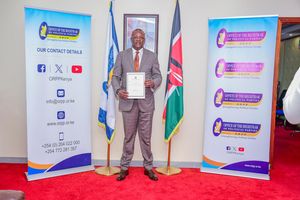
The new entrants in the country’s political space include Mwongozo Mpya Party (MMP), Imarisha Uchumi Party (IUP), United Super Alliance Party (USAP), Forward Kenya Party (FKP), People's Prosperity Party (PPP) of former ICT Cabinet Secretary Eliud Owalo and Freedom and Opportunity Party (FOP) of former Kisumu County Assembly Speaker Onyango Oloo.
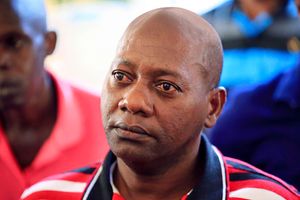
The People’s Prosperity Party leader Eliud Owalo displays the party's full registration certificate from the Office of the Registrar of Political Parties on October 15, 2026.
Photo credit: Pool
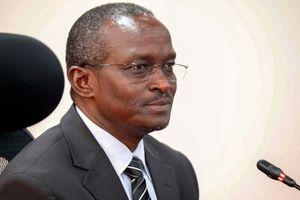
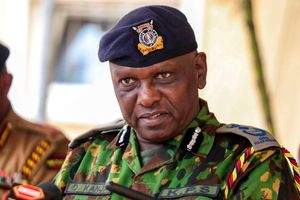
While presiding over the issuance of the certificates, Registrar of Parties John Cox Lorionokou urged the newly registered parties to uphold their constitutions. He also emphasised the importance of adhering to established rules and principles that guide the running of parties.
"Political Parties are shapers of the country's democracy. You must propel this as a party and provide equal opportunity to all, including Persons with Disability and the youth, who at times are left out in party governance, operations and activities", Mr Lorionokou said.
Other parties registered in the recent past include We Alliance Party (TWAP), the Democracy for the Citizens Party of former Deputy President Rigathi Gachagua , National Economic Development Party (NEDP), People’s Renaissance Movement (PM) of Saboti MP Caleb Amisi and Kenya United Generation Party (KUG).
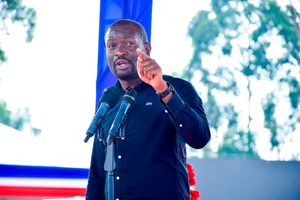
DCP leader Rigathi Gachagua addresses the media at the party’s offices in Nairobi on August 11, 2026.
Photo credit: Francis Nderitu | Nation Media Group
Other leaders in the 2027 contest have acquired and rebranded existing parties. Nairobi Senator Edwin Sifuna recently acquired The Equitable Party (TEP), which is already undergoing rebranding as Linda Mwananchi Movement (LMM).
Embakasi East MP Babu Owino also acquired the Muungano Party of former Kitui Governor Kivutha Kibwana and rebranded it as the Mwananchi Party (TMP), while Kiharu MP Ndindi Nyoro acquired the People’s Party of Kenya (PPK) for his presidential bid. Similarly, Trans Nzoia Governor George Natembeya also acquired the United Democratic Party (UDP), formerly of the late Cyrus Jirongo.
Apart from the billions of shillings from the exchequer, major political parties have already opened their usual collection bowls, receiving millions of shillings from aspirants desperately scouting for 2027 election vehicles. In what now appears to be a major stream of revenue for political parties, just showing interest in running on an outfit attracts a registration fee as high as Sh50,000. President William Ruto’s UDA, ODM and DCP are some of the parties already collecting fees from those seeking to run on their party tickets.
In the run up to the 2022 polls, Parliament amended the Political Parties Act, making running of parties a lucrative venture.
In the past, it was only two major parties that were benefiting from the public purse. But dozens of parties that never benefited from the millions of shillings started receiving allocations after the 2022 elections.
Parliament – in the run up to the polls – amended the Political Parties Act, opening up the fund to more parties. The Act provides that 70 per cent of the money be distributed proportionately, based on the total number of votes secured by a political party in the preceding election.
Another 15 per cent is distributed proportionately to parties based on the number of candidates from special interest groups elected in the preceding General Election.
Ten per cent is shared out proportionately to parties, based on the number of representatives from the party elected in the preceding General Election, while the remaining five per cent is for administration expenses by the ORPP.
Apart from the monies, having a party confers the legal authority to field candidates. Only registered parties can officially nominate contenders for elective office, making party ownership a critical gateway to electoral participation. Nomination seasons, in particular, have become lucrative moments. Aspirants pay nomination fees – sometimes running into hundreds of thousands of shillings – creating a steady revenue stream for party owners.
In outfits with weak internal competition, the leadership effectively controls who gets a ticket, turning nomination into a powerful commercial and political tool. Coalition politics has further amplified the value of being a party leader.
Kenya’s elections are increasingly won through alliances rather than standalone parties, and registered outfits – regardless of size – are gaining negotiating power during coalition talks. Parties that field candidates for elections also stand a chance to benefit from the 12 nomination slots in the National Assembly and 20 in the Senate.
A party that wins more elective seats benefits more in the sharing of the nomination slots, while parties that participate in the General Election also stand to benefit from the more than 700 nomination slots in the 47 county assemblies.
Party leaders have in most instances joined coalitions as principals, placing them at the highest decision-making organs of the formations. In the end, they are able to negotiate for power and positions in government.