Nairobi Senator Edwin Sifuna is increasingly emerging as one of Kenya's most visible opposition figures, with a growing list of diplomatic engagements adding an international dimension to his rapidly expanding political profile.
The latest development came on September 18, 2026, when United States Embassy Chargé d’Affaires Susan Burns and her team hosted Mr Sifuna at her official residence in Nairobi. The meeting placed the senator among political leaders who have attracted the attention of foreign diplomatic missions operating in Kenya.
“The engagement is significant not because it necessarily signals political endorsement, but because it reflects a growing perception among international actors that Mr Sifuna has become an important figure in Kenya's evolving political landscape,” says lawyer and political analyst Tom Maosa.
Just two days earlier, on September 16, Mr Sifuna met Dutch Ambassador Henk Jan Bakker at the ambassador's residence in Nairobi. Following the meeting, the senator described the ambassador and his staff as warm and welcoming, saying their “hospitality reflected the cordial relationship between Kenya and the Netherlands.”
The Dutch engagement came less than a month after another diplomatic meeting, when Mr Sifuna held discussions with British High Commissioner Matt Baugh at his residence in Nairobi.
Before that, on August 20, outgoing French Ambassador Arnaud Suquet paid a farewell visit to the senator as his diplomatic assignment in Kenya came to an end. He was accompanied by Deputy Head of Mission Alexandre Peaudeau and Political Counsellor Romain Boyer.
A day earlier, the senator had hosted Australia's acting High Commissioner Andrew Barnes and his delegation at his Nairobi office.
Taken together, the meetings tell a story that goes beyond routine diplomatic courtesy. Foreign diplomatic missions regularly engage political leaders across the political divide as part of their responsibility to understand developments in host countries.
Nairobi Senator Edwin Sifuna with United States Embassy Chargé d’Affaires Susan Burns.
Photo credit: Pool
Yet the frequency of such engagements involving Mr Sifuna has drawn attention because they coincide with a period during which his political influence appears to be expanding well beyond the traditional confines of party politics.
For much of the past decade, Mr Sifuna was primarily known as a key official within the Orange Democratic Movement (ODM). As the party's secretary-general, he became one of the most recognisable political communicators in Kenya, vigorously defending party positions and articulating the views of ODM leader Raila Odinga and the wider opposition movement.
At the beginning of 2026, many observers still viewed him largely through that lens. That perception has changed dramatically over the course of the year.
His split with sections of the ODM establishment transformed him from a party administrator and spokesman into an independent political figure with national ambitions and a growing following among young voters.
When ODM's National Executive Committee removed him from the position of secretary-general following protracted internal disagreements, many political observers interpreted the decision as a major setback.
In the short term, it undoubtedly was, given that the office of secretary-general provided visibility, influence and direct access to one of Kenya's largest political organisations.
Yet as events have unfolded, the removal appears to have produced an unintended consequence. It liberated Mr Sifuna from the constraints of party office and allowed him to build a political identity that transcends ODM's internal structures.
Instead of being seen merely as an ODM official, he increasingly began positioning himself as a national opposition voice.
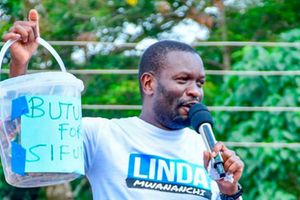
That transition accelerated through the emergence of the Linda Mwananchi movement, which opposed attempts to draw ODM closer to President William Ruto's administration. The movement quickly evolved from an internal party debate into a broader national conversation about the future of opposition politics in Kenya. Mr Sifuna became one of its most prominent faces.
Political analysts argue that this shift fundamentally changed how the public viewed him. Rather than defending organisational interests, he began advocating broader political ideas centred on accountability, transparency and opposition independence.
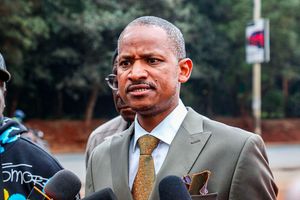
Nairobi Senator Edwin Sifuna.
Photo credit: Alex Odhiambo | Nation
The distinction proved politically important, with party supporters who were not necessarily invested in ODM's internal battles paying attention to the senator's message.
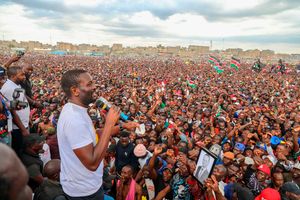
As Linda Mwananchi activities spread beyond Nairobi into Western Kenya and other regions, Mr Sifuna increasingly found himself addressing ordinary citizens about national issues rather than party administrative matters.
The transformation elevated him from party official to national political actor. At 44, he belongs to a younger generation of leaders seeking to connect with voters frustrated by traditional political arrangements.
Political commentator Barrack Muluka believes this distinction explains why many observers are beginning to view the Nairobi senator as a serious national prospect.
"If you are a foreign envoy in Kenya today, you must worry about your country's interests in the country and in the region," says Mr Muluka.
According to him, Kenya is approaching a critical political moment that requires fresh thinking and new leadership. "The country needs rebooting. And Sifuna represents freshness. There are other possible leaders. But they are legacy politicians who come with historical baggage. Sifuna represents hope," Muluka states.
Prof Macharia Munene of USIU-A adds another dimension: “First, Sifuna was virtually unknown six months ago, but he has emerged as a force despite the initial odds against him. He looks like the political reincarnation of Tom Mboya: Nairobi-based, brilliant, charismatic, youthful, and with a promising future. They (diplomats) do not want to be caught in a political surprise and would like to be identified with and to help shape that future.”
Mr Maosa cautions against misinterpreting the diplomatic attention: “It is their practice, especially when it comes to African politics. This is especially when they see him being trolled or followed by many people in Kenya. They would like to know what sticks out in him and whether he has enough weight to tilt their standard scales and interests, then they report back home. They want to join the Kenyan crowds because of a new kid on the block. Foreign diplomatic groups each represent their interests. Embracing him cannot be tantamount to his being accepted or being a preferred candidate.”
Those remarks reflect a broader debate currently taking shape across the country. Can a younger politician effectively challenge established figures who have spent decades building political organisations and support networks?
That question remains unanswered, but Maosa says Sifuna certainly faces substantial political obstacles. Unlike some of his competitors, he lacks a long-established regional political machine. He also does not command the vast financial resources that often shape national campaigns.
Nairobi Senator Edwin Sifuna with foreign envoys (from left) British High Commissioner Matt Baugh, Dutch Ambassador Henk Jan Bakker and United States Embassy Chargé d’Affaires Susan Burns.
Photo credit: Pool
Moreover, Kenya's political history shows that popularity and media visibility do not always translate into electoral success. Building a national movement requires organisation, funding, alliances and a clear electoral strategy.
“Nevertheless, the political momentum surrounding him is becoming increasingly difficult to ignore. Every diplomatic meeting, public rally and political appearance contributes to a perception that he is becoming a figure of national significance,” Maosa opines.
“Diplomats routinely meet influential politicians because understanding future leadership possibilities is an essential component of diplomatic work. The fact that American, British, French, Dutch and Australian representatives have all engaged Mr Sifuna within a relatively short period highlights his growing relevance within Kenya's political conversation,” says Maosa.
Importantly, he insists, these meetings should not be misinterpreted as endorsements. Foreign governments generally maintain working relationships across political divides and engage a wide range of stakeholders.
What is evident about Sifuna, however, is that his political profile has expanded significantly beyond the role he once occupied inside ODM.
Now, with diplomatic engagements ranging from the United States to Europe and Australia, growing popularity among opposition supporters, and increasing recognition as a representative of generational change, Edwin Sifuna stands at the centre of one of the most intriguing developments in Kenya's evolving political landscape.