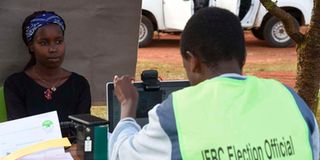
The Independent Electoral and Boundaries Commission (IEBC) has revealed plans to ensure that the 6.3 million new voters target ahead of the 2027 General Election is achievable, even as MPs expressed doubts.
Doubts over the figures have emerged as the commission launches the Continuous Voter Registration (CVR) exercise in Kajiado today. The exercise, which is expected to cost taxpayers around Sh7 billion, seeks to boost the 22.1 million Kenyans who registered for the 2022 General Election.
The target, IEBC Chairperson Mr Erastus Ethekon said, will be augmented by a series of month-long Enhanced Voter Registration (EVR) or Mass Voter Registration (MVR) exercises before the general election.
Mr Ethekon revealed that the commission has come up with plans to mobilise Kenyans, including online and social media campaigns targeting the non-registered youths, as well as setting up registration centres in institutions of higher learning.
“We will use all messaging tools available to target the youths who are not registered. This includes setting up voter registration centres within the precincts of institutions of higher learning as well as using mobile voter registration facilities,” said Mr Ethekon.
The registration exercise will take place at the commission’s constituency offices, save for the 24 electoral areas preparing for the November 27, 2025, by-elections.
IEBC Chairperson Erastus Ethekon, Vice-Chairperson Fahima Zubeda, and commissioners Alutalala Mukhwana and Anne Nderitu during a forum with security stakeholders at English Point Marina, Mombasa, on September 5, 2025.
Photo credit: Wachira Mwangi| Nation Media Group
The IEBC Chairperson noted that the target of new voters was arrived at based on the data from national government agencies- Kenya National Bureau of Statistics (KNBS) and the National Registration Bureau (NRB) of Kenyans who have attained the voting age- 18 years- but haven’t registered as voters.
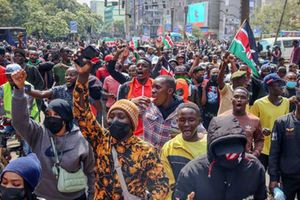
The IEBC boss noted that 70 per cent of the electorate are youths and that it is important they are sensitised on the importance of voting because “it is their time.”
“The commission has already gazetted the registration officers and assistant registration officers to oversee this exercise. This provides the legal basis and accountability framework for the rollout,” said the IEBC chairperson.
Suba South MP Caroli Omondi, the chairperson of the Constitution Implementation Oversight Committee (CIOC) of the National Assembly, had wondered how the commission would hit the 6.3 million new voters.
Suba South MP Caroli Omondi.
Photo credit: Dennis Onsongo | Nation Media Group
This, even as he suggested that political goodwill and not just the will of the IEBC will be critical in hitting the target.
“I have a Bill that proposes that national identity cards be issued in High Schools to make it easier for the young people to get the document and enlist as voters,” said Mr Omondi, with Tiaty MP William Kamket wondering, “how achievable is that target?”
Under the Registration of Persons Act, an identity card, a legal identity issued to citizens who have attained 18 years and other eligible individuals residing in Kenya, is a primary document critical not just for voting but also for applying for bank accounts and accessing various government and public services.
Articles 38 (3) and 83 of the Constitution recognise the rights of eligible Kenyans to be registered as voters.
Independent Electoral and Boundaries Commission chairperson Erastus Ethekon (centre), flanked by fellow commissioners, addresses the media at Pride Inn Paradise in Shanzu, Mombasa County on July 19, 2025.
Photo credit: Wachira Mwangi | Nation Media Group
Despite these constitutional provisions, the commission has not conducted CVR after the 2022 general election because it took more than two years to recruit new IEBC commissioners following the exit in January of 2023 of the former commissioners who had served their non-renewable term of six years.
An advisory rendered by the Supreme Court stated that voter registration is a policy issue that can only be handled and approved by the commission sitting at the plenary- where decisions are made.
The IEBC secretariat had sought guidance on whether it can undertake the constitutional exercise in the absence of the commissioners. However, the commission, inaugurated on July 11, 2025, gazetted September 29, 2025, as the date for the resumption of the CVR exercise.
Independent Electoral and Boundaries Commission (IEBC) Commissioner Anne Njeri Nderitu.
Photo credit: Dennis Onsongo | Nation Media Group
IEBC commissioner Ms Anne Nderitu, who chairs the commission’s subcommittee on voter education, revealed that a comprehensive review and mapping of registration centres across the country has been finalised pending gazettement of 27,000 areas as registration centres.
“It is critical that the young Kenyans of voting age are sensitised on their voting rights. That’s what we are doing as a commission. We plan to mobilise the youths at grassroots levels, digital messaging platforms to bring them on board,” said Ms Nderitu.
Ms Nderitu also noted that the commission has a fully-fledged youth committee established to target the youths.
“This committee will be financed to look at all the institutions in the country that work with the young people, whether public or private, for the sole purpose of sensitising them on voting as an inalienable constitutional right,” said Ms Nderitu.
Ms Nderitu noted that the commission has, in the past, relied on census data to map the eligible population and estimate voter registration targets by calculating the population of persons who would have attained the voting age by the time of the general election.