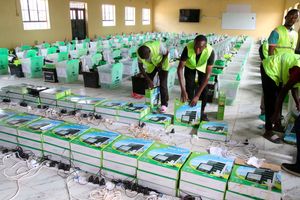
The Independent Electoral and Boundaries Commission (IEBC) has warned that the Sh22 billion funding gap it has risks crippling seven key activities as it prepares for the 2027 polls.
The commission told the National Assembly during its fourth retreat in Naivasha that activities such as voter education and civic awareness, particularly for special interest groups, and legal and regulatory reforms could be affected by the funding gap. Other activities to be affected are communication and countering misinformation; stakeholder engagement and dispute prevention; election security preparedness; staff training, welfare and logistics; and procurement of election materials and settlement of legal bills.
The Sh63 billion budgetary requirement, according to the commission, was arrived at after putting into consideration the projected voter population growth, required expansion and maintenance of electoral infrastructure, technology and systems requirements.
The money will also go towards election security needs, statutory and constitutional inclusion obligations, fulfilment of the lessons drawn from previous electoral cycles and post-election evaluations, and benchmarking.
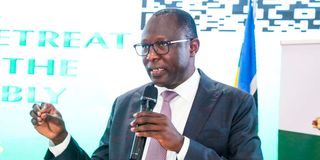
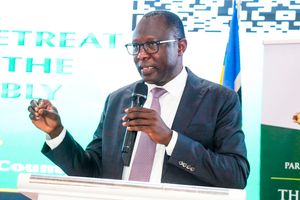
“While the commission recognises the broader fiscal constraints facing the government, this gap significantly limits preparations at a critical stage and may affect compliance with constitutional timelines and standards,” Mr Ethekon told MPs.
He added that the legitimacy of elections is not only limited to the polling day, but also depends on the entire electoral process such as legal preparedness, voter education, stakeholder engagement, security coordination and post-election accountability.
“The current funding gap limits the commission’s ability to implement these interlinked activities effectively,” Mr Ethekon said. “Collectively, these constraints elevate operational, reputational and security risks and undermine the constitutional principles under Articles 10 and 81.”
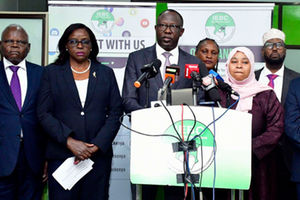
Independent Electoral and Boundaries Commission chair Erastus Edung (center) flanked by fellow commissioners address the media at the commission offices in Nairobi on January 27, 2026.
Photo credit: Francis Nderitu | Nation Media Group
He expressed concern that the commission is suffocating under pending bills of Sh4.9 billion arising from the 2022 elections.
“All requisite documentation has been submitted to the Pending Bills Verification Committee, and the commission awaits guidance on settlement,” he said.
Mr Ethekon warned that failure to settle the pending bills on time will put the commission in a compromised position when it comes to the procurement of election-related materials.
According to the chairman, the pending obligations have resulted in supplier reluctance, increased procurement costs, erosion of institutional credibility, reduced operational flexibility and financial dependence.
“You may note that the enumerated challenges arising from the pending bills are consequential to the optimal delivery of our mandate. Adequate, timely, and predictable funding for the commission should, therefore, be viewed not merely as expenditure, but as a strategic investment in national stability and democratic continuity,” Mr Ethekon told MPs.
The commission told MPs that stakeholder engagement is vital throughout the electoral cycle as it helps the commission to access expertise and resources, gather feedback to improve transparency and address public concerns on key processes.
Ahead of the 2027 elections, Mr Ethekon said the commission is particularly focused on outreach, sensitisation and education activities to promote informed, inclusive and ethical citizen participation, encouraging value-based and people-centred politics, fostering national unity and peaceful coexistence after elections.
“One of the key objectives of the commission’s strategic plan is to enhance public trust and participation in electoral processes. This requires meeting stakeholder expectations, encouraging involvement and fostering confidence through collaboration, awareness and openness,” he said.
Mr Ethekon said that the plan provides for reviewing the experiences of voters, candidates, officials and political parties to ensure continuous improvement in electoral governance, and these activities cannot be undertaken without adequate funding.
“Stakeholder engagement is not just a process; it is the lifeblood of credible elections. Together, through collaboration and shared responsibility, we can deliver elections that inspire trust, uphold democracy and strengthen our nation,” he said.